Archive

April 2, 2026

Browsing

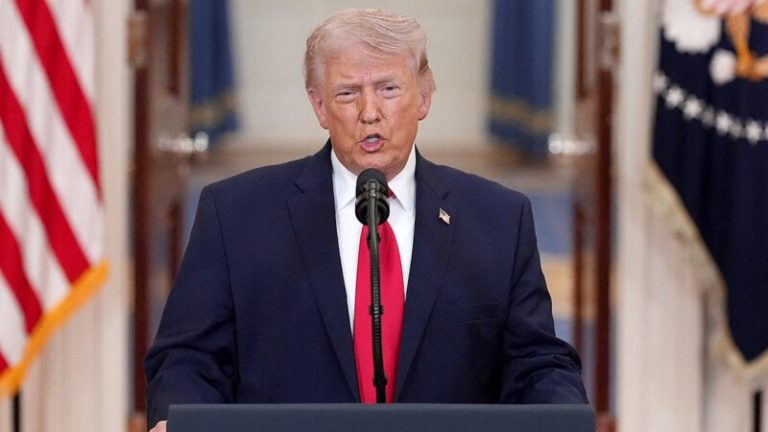
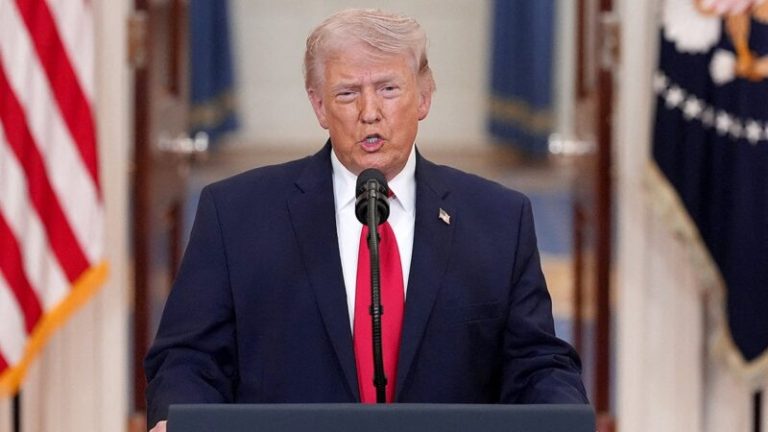
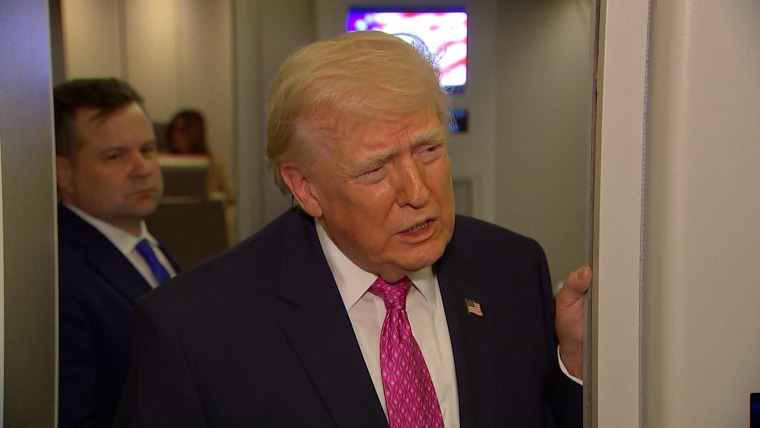
President Donald Trump is expected to address the nation at 9 p.m. Eastern Time Wednesday about U.S. operations in Iran after one month of combat. 

The message will be an “important update” about the war, White House press secretary Karoline Leavitt wrote on X. 

The president will give an operational update on the mission known as Operation Epic Fury and is expected to reiterate the two-to-three week timeline for a drawdown of the operation that he gave in comments to reporters Tuesday, a White House official told Fox News Digital Wednesday. 

“He will highlight the United States military’s success in achieving all of its stated goals prior to the operation: destroy Iran’s deadly ballistic missiles and production facilities, annihilate their Navy, ensure their terrorist proxies can no longer destabilize the region and guarantee that Iran can never obtain a nuclear weapon,” the official added.

US EYES SEIZING IRAN’S OIL LIFELINE — BUT IT MAY NOT CRIPPLE TEHRAN

Trump told reporters Tuesday he expected the mission to end in two to three weeks. He posted on Truth Social Wednesday that Iran had asked for a ceasefire, but the U.S. was not open to negotiation until the Strait of Hormuz is open for shipping. 

“We will consider when Hormuz Strait is open, free, and clear,” Trump said. “Until then, we are blasting Iran into oblivion or, as they say, back to the Stone Ages!” 

Iran’s Foreign Ministry spokesperson, Esmail Baghaei, said the claim that Iran had asked for a ceasefire was “false and baseless,” according to Iranian state TV. 

Trump has sent mixed signals in recent days, at times suggesting the conflict could end soon while also threatening intensified strikes if Iran does not meet U.S. demands.

The president told multiple news outlets Wednesday he is strongly considering pulling the U.S. out of NATO over frustrations at what he sees as insufficient military support from allied countries in the Middle East. 

“I was never swayed by NATO,” Trump told The Telegraph in an interview published Wednesday.

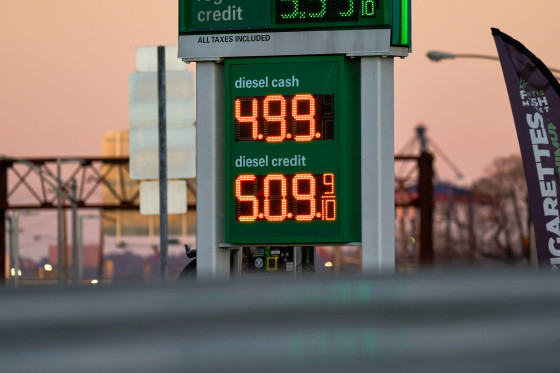
European nations so far have resisted pressure to offer warships to reopen commerce in the Strait of Hormuz, through which 20% of the world’s oil supply typically passes. The average price of a gallon of gas surpassed $4 Tuesday, a first since 2022. 

Several key European allies have moved to restrict U.S. military access as the Trump administration presses forward with operations against Iran. Spain has closed its airspace to U.S. aircraft tied to strikes and France is imposing limits on certain overflights carrying military supplies.

PRESIDENT TRUMP SAYS US COULD FINISH IRAN OPERATION WITHIN TWO TO THREE WEEKS

“We’ve been there automatically, including Ukraine. Ukraine wasn’t our problem. It was a test, and we were there for them, and we would always have been there for them. They weren’t there for us.”

Administration officials have suggested U.S. objectives in the conflict are nearing completion, raising the possibility that Trump could outline a path toward winding down operations.

At the same time, thousands of paratroopers from the 82nd Airborne division and a task force of 2,500 Marines from the USS Tripoli have reached the Central Command theater in recent days, raising speculation of a potential ground invasion. 

The USS George H.W. Bush, an aircraft carrier with 6,000 sailors, deployed Tuesday to join the USS Abraham Lincoln already in theater.

Operation Epic Fury began Feb. 28. 

Since then, U.S. forces have struck more than 12,000 targets inside Iran and damaged or destroyed 155 naval ships, according to the Central Command. Thirteen U.S. service members have died in the operations, and 350 have been injured.  

President Donald Trump addressed the nation Wednesday night, saying the United States’ “core strategic objectives” in Iran are “nearing completion” just a month after Operation Epic Fury began and warned that the U.S. will hit Tehran “extremely hard” over the next several weeks.

“Tonight, I’m pleased to say that these core strategic objectives are nearing completion,” the president said, touting the United States military and their “extraordinary” efforts.

Here are the top five takeaways from the president’s address: 

Trump says Operation Epic Fury is ‘nearing completion’

President Trump told Americans Wednesday night that after 32 days of Operation Epic Fury, Iran is “essentially really no longer a threat.” 

The president, upon the announcement of Operation Epic Fury, detailed the United States’ objectives. Trump said, “We are systematically dismantling the regime’s ability to threaten America or project power outside of their borders.”

“That means eliminating Iran’s navy, which is now absolutely destroyed, hurting their air force and their missile program at levels never seen before, and annihilating their defense industrial base,” the president said Wednesday night.

INSIDE IRAN’S MILITARY: MISSILES, MILITIAS AND A FORCE BUILT FOR SURVIVAL

“We’ve done all of it,” he continued. “Their navy is gone. Their air force is gone. Their missiles are just about used up or beaten. Taken together, these actions will cripple Iran’s military, crush their ability to support terrorist proxies and deny them the ability to build a nuclear bomb.” 

“Our armed forces have been extraordinary,” the president said. “There’s never been anything like it militarily. Everyone is talking about it.” 

“And tonight, I’m pleased to say that these core strategic objectives are nearing completion,” he said.

Meanwhile, the president thanked U.S. allies in the Middle East — “Israel, Saudi Arabia, Qatar, the UAE, Kuwait and Bahrain.”

“They’ve been great, and we will not let them get hurt or fail in any way, shape or form,” he said.

“I’ve made clear from the beginning of Operation Epic Fury that we will continue until our objectives are fully achieved, thanks to the progress we’ve made,” he said. “I can say tonight that we are on track to complete all of America’s military objectives shortly. Very shortly.”

The president warned that the U.S. is “going to hit them extremely hard over the next two to three weeks.”

“We’re going to bring them back to the Stone Ages where they belong,” he said. “In the meantime, discussions are ongoing. Regime change was not our goal. We never said regime change, but regime change has occurred because of all of their original leaders’ deaths. They’re all dead. The new group is less radical and much more reasonable.”

Trump says rising gas prices in the US are ‘short term’

Since Operation Epic Fury began, gas prices in the United States have increased. The president acknowledged that development, and expressed confidence that those increases are “short term.”

The average price of a gallon of gas surpassed $4 Tuesday, a first since 2022. 

“Many Americans have been concerned to see the recent rise in gasoline prices here at home,” the president said. “The short-term increase has been entirely the result of the Iranian regime launching deranged terror attacks against commercial oil tankers and neighboring countries that have nothing to do with the conflict.”

WHY TRUMP, IRAN SEEM LIGHT-YEARS APART ON ANY POSSIBLE DEAL TO END THE WAR

“This is yet more proof that Iran can never be trusted with nuclear weapons. They will use them, and they will use them quickly. It would lead to decades of extortion, economic pain and instability worse than we can ever imagine,” the president said. “The United States has never been better prepared economically to confront this threat. You all know that we built the strongest economy in history.”

The president touted the economy under his leadership, saying that he has “taken a dead and crippled country — I hate to say that, but we were dead and crippled country after the last administration — and made it the hottest country anywhere in the world by far, with no inflation, record-setting investments coming into the United States, over $18 trillion and the highest stock market ever with 53 all-time record highs in just one year.”

The president said those economic gains “all positioned us to get rid of a cancer that has long simmered.”

“It’s known as the nuclear Iran, and they didn’t know what was coming. They’ve never imagined it,” he said. “Remember, because of our drill baby drill program, America has plenty of gas. We have so much gas.”

The president said that, under his leadership, the U.S. is the “number one producer of oil and gas on the planet without even discussing the millions of barrels that we’re getting from Venezuela because of the Trump administration’s policies. We produce more oil and gas than Saudi Arabia and Russia combined.”

“Think of that — Saudi Arabia and Russia combined,” he continued. “And that number will soon be substantially higher than that. There’s no country like us anywhere in the world.”

The president stressed that “the hard part is done.”

“When this conflict is over, the strait will open up. Naturally. It’ll just open up naturally. They’re going to want to be able to sell oil because that’s all they have to try and rebuild,” he said. “It will resume the flowing and the gas prices will rapidly come back down.”

The president said it was necessary to “take that little journey to Iran to get rid of this horrible threat with our historic tax cuts, where people are just now talking about receiving larger refunds than they ever thought possible, they are getting so much more money than they thought. That’s from the great big, beautiful bill.”

He added: “Our economy is strong and improving by the day and it will soon be roaring back like never before. It will top the levels that it was a month ago.”

Trump thanks US troops for work in Middle East, Venezuela

The president began his address Wednesday night by thanking U.S. troops for “the massive job they did in taking the country of Venezuela in a matter of minutes.”

“That hit was quick, lethal, violent and respected by everyone all over the world,” Trump said, referring to the January operation.

“We’re working along with Venezuela are, in a true sense, joint venture partners,” Trump said. “We’re getting along incredibly well in the production and sale of massive amounts of oil and gas — the second-largest reserves on Earth after the United States of America.”

POLL POSITION: WHERE TRUMP STANDS AMONG AMERICANS AS HE FACES THE NATION IN PRIMETIME

Shifting to Operation Epic Fury and the progress made, the president honored “the 13 American warriors who have laid down their lives and this fight to prevent our children from ever having to face a nuclear Iran.”

“Twice this past month, I have traveled to Dover Air Force Base, and it’s been something I wanted to be with those heroes as they return to American soil,” he said. “And I was with them and their families, their parents, their wives, their husbands.”

“We salute them, and now we must honor them by completing the mission for which they gave their lives,” the president said. “And every single one of the people, their loved one said, please, sir, please finish the job, every one of them, and we are going to finish the job and we’re going to finish it very fast. We’re getting very close.”

Trump urges Americans to keep the Iran conflict ‘in perspective’

“It’s very important that we keep this conflict in perspective,” the president said. “American involvement in World War One lasted one year, seven months and five days.”

“World War Two lasted for three years, eight months and 25 days,” he continued. “The Korean War lasted for three years, one month and two days. The Vietnam War lasted for 19 years, five months and 29 days.”

“Iraq went on for eight years, eight months and 28 days,” the president said.

“We are in this military operation, so powerful, so brilliant against one of the most powerful countries for 32 days,” he said. “And the country has been eviscerated and, essentially, is really no longer a threat.”

FOX NEWS LIVE UPDATES ON THE U.S. WAR WITH IRAN

Trump said that Iran was “the bully of the Middle East, but they’re the bully no longer.”

“This is a true investment in your children and your grandchildren’s future,” he said. “The whole world is watching, and they can’t leave the power, strength and brilliance. They just can’t believe what they’re seeing. They leave it to your imagination, but they can’t believe what they’re seeing — The brilliance of the United States military.”

He added: “Tonight, every American can look forward to a day when we are finally free from the wickedness of Iranian aggression and the specter of nuclear blackmail. Because of the actions we have taken, we are on the cusp of ending Iran’s sinister threat to America and the world. And I’ll tell you, the world is watching.”

Trump rips into Obama’s Iran Nuclear Deal

President Trump said ending former President Barack Obama’s Iran nuclear deal was among his top achievements as president, telling the nation he was “honored” to do it.

“I terminated Barack Hussein Obama’s Iran nuclear deal disaster,” Trump said. “Obama gave them $1.7 billion in cash. Green, green cash took it out of banks from Virginia, D.C. and Maryland. All the cash they had.”

The president went on to say that Obama “flew it by airplanes in an attempt to buy their respect and loyalty. But it didn’t work.”

“They laughed at our president and went on with their mission to have a nuclear bomb,” Trump said. “His Iran deal would have led to a colossal arsenal of massive nuclear weapons for Iran, and they would have had them years ago, and they would have used them, would have been a different world.”

The president said, “There would have been no Middle East and no Israel right now, in my opinion, the opinion of a lot of great experts, had I not terminated that terrible deal that I was so honored to do it.”

“I was so proud to do it It was so bad right from the beginning,” he said. “Essentially, I did what no other president was willing to do.”

He added: “They made mistakes, and I am correcting them.”

The president said his “first preference was always the path of diplomacy, yet the regime continued their relentless quest for nuclear weapons and rejected every attempt at an agreement.”

“For this reason, in June, I ordered a strike on Iran’s key nuclear facilities and Operation Midnight Hammer. And nobody’s ever seen anything like it. Those beautiful B-2 bombers performed magnificently,” he said. “We totally obliterated those nuclear sites.”

But the president said the Iranian regime “then sought to rebuild their nuclear program at a totally different location, making clear they had no intention of abandoning their pursuit of nuclear weapons.”

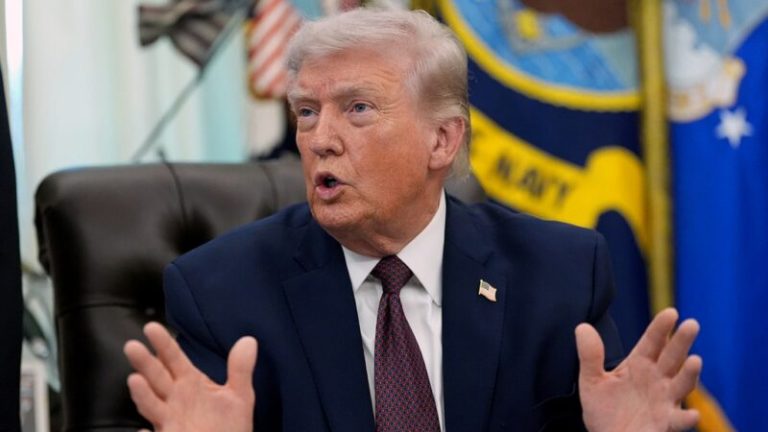
President Donald Trump revealed during Wednesday night’s Iran address that one of his top achievements against Iran, which he described as spanning across both his terms, was shredding former President Barack Obama’s 2015 nuclear deal.

Trump described the efforts in the Middle East as making “tremendous progress” and called Operation Epic Fury “necessary for the safety of America and the security of the free world.” 

Meanwhile, he slammed Iran as “fanatical,” “murderous” and “thuggish,” arguing that letting them have a nuclear weapon “would be an intolerable threat.” While slamming Obama’s 2015 deal, the president cited the $400 million cash payment the former president’s administration flew to Iran in an effort to “buy their respect and loyalty.”

“The most violent and thuggish regime on Earth would be free to carry out their campaigns of terror, coercion, conquest and mass murder from behind a nuclear shield. I will never let that happen, and neither should any of our past presidents,” Trump said, leading into his comments about Obama’s “terrible” deal with Iran. 

IRAN FIRES BACK WITH FLAT DENIAL AFTER TRUMP CLAIMS TEHRAN REQUESTED CEASEFIRE: ‘FALSE AND BASELESS’

“I did many things during my two terms in office to stop the quest for nuclear weapons by Iran. First, and perhaps most importantly, I killed Gen. Qasem Soleimani in my first term. He was an evil genius, brilliant person, a horrible human being. The father of the roadside bomb,” Trump continued. “And then, very importantly, I terminated Barack Hussein Obama’s Iran nuclear deal. A disaster. Obama gave them $1.7 billion in cash – green, green cash. Took it out of banks from Virginia, D.C. and Maryland. All the cash they had.”

Trump slammed Obama’s administration for using airplanes to transport that cash, around $400 million, in January 2016, which Trump said was done “to buy their respect and loyalty.” 

“But it didn’t work,” Trump continued. “They laughed at our president and went on with their mission to have a nuclear bomb. His Iran deal would have led to a colossal arsenal of massive nuclear weapons for Iran, and they would have had them years ago, and they would have used them – would have been a different world. There would have been no Middle East and no Israel right now, in my opinion… Had I not terminated that terrible deal – I was so honored to do it. I was so proud to do it. It was so bad right from the beginning.”

Trump added that he is currently “correcting” the “mistakes” of former presidents, like Obama, noting he has been willing to do what they have not.

PRESIDENT TRUMP SAYS US COULD FINISH IRAN OPERATION WITHIN ‘TWO TO THREE WEEKS’

Obama’s Iran nuclear deal, the Joint Comprehensive Plan of Action (JCPOA), exchanged sanctions relief to Iran for certain limits and international monitoring of Iran’s nuclear program, which the administration said would push Tehran further from a bomb, a take that has been contested by critics, including Trump. 

Critics argued the effort actually empowered Iran, pointing in part to the Wall Street Journal reporting that the U.S. secretly airlifted $400 million in cash to Tehran that coincided with the release of four American prisoners.

The Obama administration maintained that the payment was not part of the nuclear pact itself, but that it was the first installment of a separate settlement stemming from a decades-old pre-revolution arms dispute.

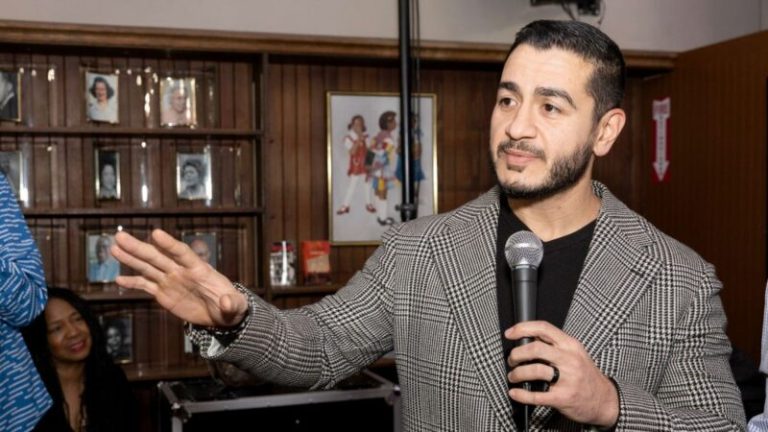
Democratic Michigan Senate candidate Abdul El-Sayed is facing pushback from conservatives on social media and the Republican he’s running against over an appearance where he was accused of equating the “radicalism” of Iran with the “MAGA movement.”

“There are many people who see the downfall of the regime as a good thing, but the question of whether or not it was pursued legally, that’s a different question,” the progressive candidate told “America’s Newsroom” on Wednesday. El-Sayed was responding to controversy over a Washington Free Beacon report on leaked audio of him explaining why he shouldn’t take a public position on the death of former Iran Supreme Leader Khamenei because of people in Dearborn, Michigan, who are “sad.”

“Whether or not its worth $31 billion of our taxes and counting a billion dollars a day, that’s another thing. Whether or not we should be paying higher rates at the pump every single time we try to just get where we’re going and pump gas… that [is] a big question, and I’ll tell you what, there are a lot of people who are really sad about the fact that they thought that the era of foreign wars, of never-ending regime change wars were over, and here we are.”

During another point in the interview, El-Sayed was asked, “Would we all not be better off if the radicals in Iran did not make decisions for the people?”

DEMOCRATS TEAM UP WITH FAR-LEFT STREAMER WHO ONCE SAID ‘AMERICA DESERVED 9/11’

El-Sayed responded, “Radicalism of any sort is bad, which is why this MAGA movement taking us into yet another war in my lifetime, and I’m only 41, is so ridiculous.”

El-Sayed quickly faced pushback from Republicans who accused him of not sufficiently explaining his comments in the leaked audio and equating the ayatollah’s regime with the Trump administration. 

“Democrats in 2026,” GOP communicator Matt Whitlock posted on X. “Abdul Al Sayed is asked point blank if the world is better off without the world’s largest state sponsor of terror. And gives a word salad about how the Ayatollah’s radicalism and Trump’s MAGA support are the same.”

“Democrat Abdul El-Sayed compares the Trump administration to the Ayatollah,” the Republican National Committee account posted on X. 

“What?!” Mark Levin Show producer Rich Sementa posted on X

MICHIGAN SENATE CANDIDATE RESPONDS TO BACKLASH OVER KHAMENEI COMMENTS, CALLS IRAN CONFLICT ‘WAR WE DON’T NEED

The campaign of Republican Senate candidate former Rep. Mike Rogers also took aim at El-Sayed.

“You would think sympathizing with a terrorist regime would be disqualifying, but apparently, for Democrats, it’s a fast pass to the front of the primary,” Alyssa Brouillet, Rogers’ campaign communications director, told Fox News Digital. “No amount of Abdul’s attempts to distract or deflect will be enough to hide how dangerous he and the Democrat party really are for Michigan.”

El-Sayed also faced some push back online over his answer to a question about his upcoming event with progressive commentator Hasan Piker, who has been accused of making antisemitic remarks and downplaying the October 7 massacre by Hamas.

“To me, it’s about speaking to a broader audience,” El-Sayed explained. “I’m wanting to speak with Hasan’s audience too.”

Fox News Digital reached out to El-Sayed’s campaign for comment. 

The Senate race in battleground Michigan is one of a handful in this year’s midterm elections that will determine if the Republicans hold their 53-47 majority in the chamber. Michigan, where Democratic Sen. Gary Peters is retiring, is one of the National Republican Senatorial Committee’s (NRSC) top targets as they try to not only hold onto their seats, but also possibly expand their majority.

Rogers, a former FBI special agent who later served as chair of the House Intelligence Committee during his tenure in Congress, launched his campaign last April. Rogers is making his second straight run for the Senate, after narrowly losing the 2024 election to now-Sen. Elissa Slotkin in the race to succeed Democratic Sen. Debbie Stabenow, who retired. Slotkin, who vastly outspent Rogers, only edged him by roughly 19,000 votes, or a third of a percentage point.

Michigan’s Democratic Senate primary will be held on Aug 4 as El-Sayed squares off against Michigan state Sen. Mallory McMorrow and Democratic Rep. Haley Stevens to earn the chance to replace Peters in November.

The 48-day Department of Homeland Security shutdown is one step closer to ending after the Senate moved to fund most of the department Thursday morning.

The Senate agreed via voice vote to send a bipartisan deal funding the whole department except for President Donald Trump’s immigration enforcement and border security efforts to the House for consideration.

The chamber is not expected to vote on the legislation until House lawmakers return to Washington on April 13. 

The Senate vote follows GOP leaders endorsing a two-track approach to funding DHS on Wednesday, with President Trump giving lawmakers a hard deadline to end the record-breaking funding lapse. 

HOUSE CONSERVATIVES RAGE AGAINST SENATE DHS SHUTDOWN DEAL

The Senate bill accomplishes the first phase of the plan by working with Democrats to fund as much of DHS as possible on a bipartisan basis. However, it would zero out funding for ICE and much of the Border Patrol, save for $11 billion in customs funding going to the agency. Additionally, $10 billion teed up for ICE won’t be funded under the measure.

As for ICE and the Border Patrol, Republicans have said they will seek three full years of funding for both of these agencies in a party-line budget reconciliation package that will bypass Democrats’ opposition. Trump says he wants the forthcoming bill on his desk by June 1.

“We are going to work as fast, and as focused, as possible to replenish funding for our Border and ICE Agents, and the Radical Left Democrats won’t be able to stop us,” Trump wrote on Truth Social on Wednesday. 

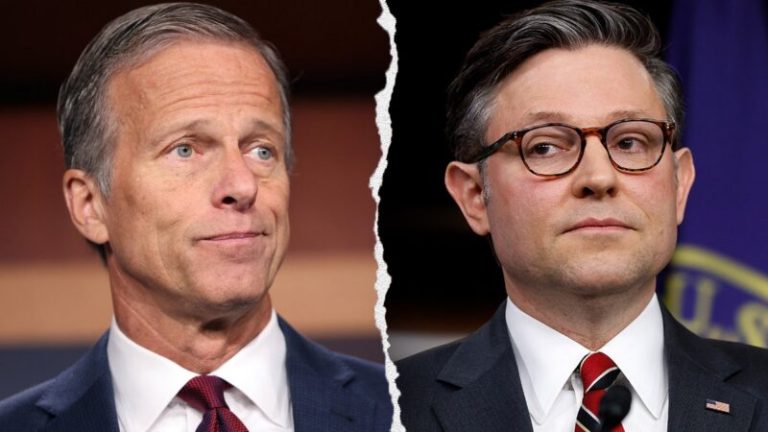
The Senate bill’s passage on Thursday was a déjà vu moment for Senate Majority Leader John Thune, R-S.D., who helped steer the same measure through the upper chamber last week.

But House GOP leadership sharply rejected it, calling the measure’s exclusion of ICE and CBP money a “crap sandwich” and warning about the risks of funding those entities using the budget reconciliation process. The chamber then put forward a rival proposal that Senate Minority Leader Chuck Schumer, D-N.Y., made clear was “dead on arrival” in the Senate. 

Thune said shortly after the vote that he was hopeful the House would move onto the bill quickly, and that the next step would be budget reconciliation. Still, he blamed Senate Democrats, and not Republicans in-fighting at the finish line, for the current position Congress was in. 

“I think this whole where we are is just a regrettable place. We have the Democrats who are holding the appropriations process hostage and their anti-law enforcement, open borders, defund the police wing is the ascendant wing,” Thune said. “And there, I think everybody’s afraid of them, and so we’re stuck in a spot that’s just not good for the country, the future of the appropriations process, or, for that matter, the future of the Senate.” 

House Speaker Mike Johnson, R-La., appeared to relent Wednesday after Trump issued a statement outlining an end to the shutdown that appeared to side with Thune’s two-part approach to funding the department. 

GOP INFIGHTING, DEMOCRATS’ UNMET DEMANDS AND A CLEAR WINDFALL: WHO’S WINNING AND LOSING THE DHS SHUTDOWN

As the DHS shutdown drags on, Trump and congressional Republicans are gambling that budget reconciliation will be the way to fund immigration enforcement for several years to come. Some Republicans have floated funding ICE not just through Trump’s term, but for up to a decade.

The GOP used the same process to fund ICE last year, teeing up $75 billion for enforcement operations for the next four fiscal years.

But the party-line process comes with a host of challenges that could test Republican unity in an election year.

GOP lawmakers will have to identify spending cuts to pay for it. When Republicans used the process to pass Trump’s One Big Beautiful Bill Act in July 2025, lawmakers nearly stumbled at the finish line over disagreements on cuts to federal Medicaid spending and food assistance programs.

Without a looming deadline like the expiration of Trump’s 2017 tax cuts that Republicans extended in July 2025 through the “big, beautiful bill,” some GOP lawmakers have voiced concern that the party will stay unified.

Republicans have proposed adding other issues into the reconciliation mix, including supplemental funding for the Iran war, affordability measures, the president’s tariff regime and pieces of the election integrity-focused SAVE America Act.

The budget reconciliation process allows a party with control of the White House and both chambers of Congress to pass tax and spending priorities with a simple majority threshold, though the process is governed by stringent requirements for what is eligible to be included.

Punting ICE and CBP money to a future spending bill could also negatively affect support staff employed by both agencies who have not been paid during the seven-week shutdown.

Democrats have repeatedly blocked funding for ICE and the Border Patrol in the Senate since the beginning of the shutdown in mid-February. Though none of their proposals to reform immigration enforcement have been adopted, Democratic leaders claimed victory on Wednesday. 

“Throughout this fight, Senate Democrats never wavered,” Senate Minority Leader Chuck Schumer, D-N.Y., said Wednesday. “We were clear from the start: fund critical security, protect Americans, and no blank check for reckless ICE and Border Patrol enforcement. 

“We were united, held the line, and refused to let Republican chaos win.”

The Senate deal funding most of DHS could still face roadblocks in the House. A handful of conservatives have already said they will vote “no” while using the same messaging employed by House GOP leadership to oppose the bill last week.

“Let’s make this simple: caving to Democrats and not paying CBP and ICE is agreeing to defund Law Enforcement and leaving our borders wide open again,” Rep. Scott Perry, R-Pa., wrote on social media Wednesday. “If that’s the vote, I’m a NO.”

Global oil prices continued their recent climb and the S&P 500 closed lower Monday after a weekend when Iran-backed Houthi militants launched ballistic missiles at Israel and 3,500 additional U.S. troops arrived in the Middle East.

The conflict between Iran, the U.S. and Israel has entered its second month, with disruptions to oil and other energy and commodities supplies starting to reverberate around the world.

Brent crude oil, the global benchmark, gained 1.5%, to more than $114 a barrel, while U.S. West Texas Intermediate crude climbed almost 5%, to about $104 a barrel, settling above $100 for the first time since 2022.

Rising oil prices are one of the more immediate consequences of the war. Average U.S. gasoline prices hit $3.99 a gallon Monday, according to AAA, the highest since the summer of 2022. Patrick De Haan, chief analyst at Gas Buddy, projected Monday afternoon they would rise to $4 within 24 hours as the average price of gasoline in Florida surged to $4.29.

De Haan estimates that U.S. drivers will soon have spent an additional $10 billion on gasoline since the conflict began just one month ago.

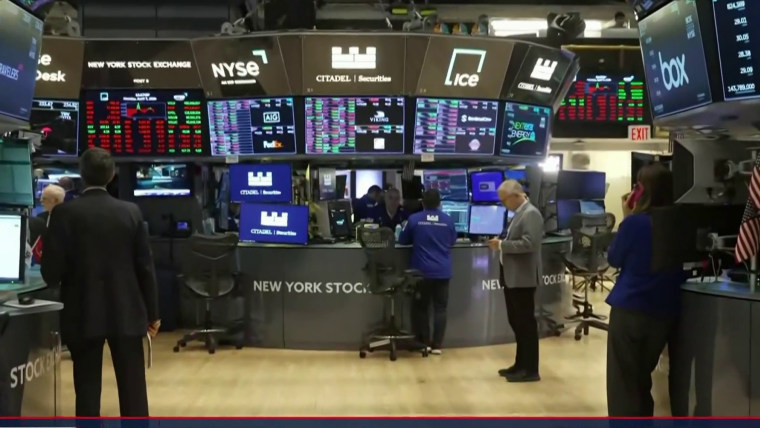
The S&P 500, one of the broadest measures of stocks, fell 0.4% Monday and is now within less than a full percentage point of having declined 10% since its most recent high in January. The tech-focused Nasdaq Composite Index is already in correction territory, down more than 13% from its October high.

Some investors have begun to question President Donald Trump’s ability to reassure financial markets without material progress on the ground.

Investors also increased their purchases of U.S. government bonds Monday over fears of an economic slowdown, sending bond yields lower and dragging down stocks.

Traders now believe higher oil prices may put a damper on overall demand for goods and services.

Bloomberg News reported that U.S. officials and Wall Street analysts have begun considering the prospect that oil prices could surge to as much as $200 a barrel as the largest oil shock in decades continues to reverberate.

That prospect has led analysts to project a global economic slowdown that would hit a U.S. economy already facing suddenly higher gasoline prices.

Earlier Monday, Trump said “great progress has been made” in talks with Iran. At the same time, he threatened to destroy Iran’s civilian energy and water infrastructure if a deal to end the war and reopen the crucial Strait of Hormuz is not reached soon.

Tehran has said U.S. proposals were “unrealistic” and “unreasonable.”

“I think we’ll make a deal with them, pretty sure, but it’s possible we won’t,” Trump told reporters late Sunday. He later said a deal could come “soon.”

Trump also said that Iran “gave us most” of a 15-point plan the U.S. sent Tehran to end the war, which Iran has yet to publicly confirm, and that 20 boatloads of oil — on top of 10 the previous week — will be passing through the Strait of Hormuz beginning Monday “out of a sign of respect.”

Trump separately told the Financial Times on Sunday that an Iran deal could be made “fairly quickly” and that he wants to “take the oil in Iran.”

Surging oil prices continue to ripple through the global economy because of the war with Iran. Now, some analysts say the worst could still be ahead as the conflict drags on.

The concern is that beyond immediate knock-on effects from rising gasoline prices, the war’s disruption could come in waves — ones that will play out over weeks and months and leave few parts of the global economy untouched.

“We haven’t seen the brunt of it yet,” said Samantha Gross, director of energy security and climate at the Brookings Institute. “I feel like markets are so far underestimating the effect of the war. It seems that they expect this war to go quickly, and they expect that we can go back to the world before when it’s over. And I don’t think either of those ideas is true.”

The warning signs are already here. The global oil price benchmark, Brent crude — which heavily influences U.S. gasoline prices — briefly topped $119 a barrel last week, the highest since the war began and a level last seen in July 2022 amid the pandemic-era inflation wave. As of Monday, Brent prices had settled at about $113 a barrel.

The average price of a gallon of gasoline hit $4 Tuesday for the first time since mid-2022, as the cost of oil surges due to the Iran war.

In the month since the United States and Israel attacked Iran, the average price of unleaded gas has spiked more than a dollar a gallon. On Tuesday morning, the average price nationwide was $4.02 per gallon, motor club AAA said.

It’s not just retail gasoline. The diesel fuel used to power trucks delivering goods to stores, farm equipment and public transit has risen to $5.45 per gallon, more than $1.80 higher than it was a year ago.

Driving that is the soaring cost of crude oil worldwide. U.S West Texas Intermediate (WTI) crude has risen more than 50% since the war began Feb. 28, while Brent, the international benchmark, has seen a jump of nearly 60%.

On Monday, U.S. crude oil settled above $100 per barrel for the first time since Russia’s full-scale invasion of Ukraine in 2022. Brent crude oil is poised to see its largest one-month increase on record.

Oil prices had already started rising before the Iran war began, fueled by fears that a conflict was imminent. Since the start of the year, the cost of U.S. crude oil is up more than 80% and Brent has skyrocketed almost 90%.

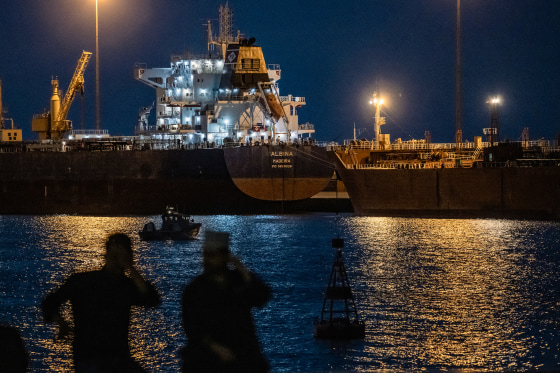
In response to strikes by the U.S. and Israel, Iran has effectively blocked shipping through the Strait of Hormuz, a critical channel off its southern coast. Tehran has also attacked its Gulf Arab neighbors, who are major oil producers.

Typically, more than 20% of the world’s oil supply moves through the waterway. But Iran has repeatedly threatened to attack ships if they move through the strait without permission or if they’re associated with the U.S. or Israel. Several tankers have been hit.

As a result, many tankers are stranded in the Persian Gulf, unable to deliver their products to markets.

Some tankers have been allowed to pass through the strait, including one associated with India and three associated with China. But overall traffic through the waterway is down more than 90% in March.

During the first 28 days of the war, a total of only 55 to 60 tankers have cleared the Strait of Hormuz, according to the ship tracking website TankerTrackers.

Before the war, more than 100 ships per day made the passage, it said.

“This rise in gasoline spending could potentially dampen consumers’ ability to spend on ‘nice-to-have’ or discretionary categories,” Bank of America economists recently wrote.

This year, the average U.S. household will spend an additional $740 on gas because of the jump in oil prices, according to economists from the Stanford Institute for Economic Policy Research.

“The consumer has already seen the sticker shock from rising gasoline prices and increased airline ticket prices from the rising cost of jet fuel,” longtime industry analyst Andy Lipow said. “However, the full effects of the higher diesel prices has yet to be felt and that will flow through the economy over the next few months.”

As American consumers adjust to higher gas prices, oil dependent nations in Europe and Asia are already facing much more severe energy shocks. Inflation, oil and gas rationing and sharp pullbacks in economic growth estimates are impacting billions of people worldwide.

American flyers still smarting from interminable airport security lines are about to get another shock.

A looming global jet fuel shortage is expected to hike the cost of air travel and reduce flight schedules, as airlines look to offset rising prices.

On Monday, JetBlue announced it was raising baggage fees, citing “rising operating costs.”

“While we recognize that fee increases are never ideal, we take careful consideration to ensure these changes are implemented only when necessary,” the carrier said.

United Airlines CEO Scott Kirby said costs to passengers have already been increasing. Data from flight information group OAG shows average airfares in the past week reached $465, the highest price point for the same period since at least 2019.

“We have to raise prices to deal with higher fuel prices,” Kirby acknowledged at a company event last week in Los Angeles. In a subsequent memo, he added: “It may be a challenge to continue passing through much of the increased fuel price if oil stays higher for longer.”

The rising prices are the latest example of the economic fallout from the war with Iran. Analysts have started warning that the full toll has only begun to be accounted for as the global economy absorbs the loss of critical energy exports out of the region due to the closure of the Strait of Hormuz and damage to other key energy infrastructure sites in the region. On Tuesday, U.S. gasoline prices hit $4 a gallon for the first time since 2022 amid surging oil prices. Major stock indexes, meanwhile, have fallen by nearly 10% since the start of the war.

In the case of air travel, the industry is facing jet fuel prices that have surged 85% in the U.S. since the day before the war began in February, according to data from Argus published by the industry group Airlines for America. On Monday, they hit a record $4.62 a gallon.

Most U.S. carriers no longer hedge fuel costs, said Henry Harteveldt, president of Atmosphere Research Group. So they are forced to pass on some costs to passengers.

While U.S. carriers largely source jet fuel domestically, countries in Asia and Europe that are more reliant on Middle East stocks have begun signaling they are taking unprecedented measures to conserve jet fuel. In South Korea, carriers have requested that the government help redirect fuel stocks bound for export back to local markets.

The Financial Times reported Monday that the U.K. was also facing an acute shortage, with no Britain-bound cargoes visible on the water as transit through the Strait of Hormuz remains blocked. Some foreign carriers have begun charging fuel surcharges of as much as $150.

As overseas carriers begin looking to alternative supply bases, the cost for a global commodity like jet fuel rises across the board.

“It shocks the entire mechanism,” said Jaime Brito, an executive director at Oil Price Information Service consultancy.

President Donald Trump commented on the jet fuel shortages Tuesday morning, though he did not mention their impact on U.S. travelers.

“All of those countries that can’t get jet fuel because of the Strait of Hormuz, like the United Kingdom, which refused to get involved in the decapitation of Iran, I have a suggestion for you: Number 1, buy from the U.S., we have plenty, and Number 2, build up some delayed courage, go to the Strait, and just TAKE IT,” he wrote on Truth Social.

Airlines are also signaling capacity cuts to cope with rising costs. United will drop about 5% of planned flights in mostly “off-peak periods” — like red-eye and midweek routes — during the second and third quarters of 2026 to further mitigate the cost increases.

“We’re certainly going to be nimble in terms of capacity to make sure that supply and demand stay in balance,” American Airlines CEO Robert Isom said at a JPMorgan conference earlier this month.

Kyle Potter, executive editor of the Thrifty Traveler, said most carriers have quietly been raising airfares since the Iran war began. He said airlines typically move in droves when making pricing decisions, so it is likely that other carriers may also soon begin raising baggage fees or seek other forms of ancillary revenue. Potter noted that unlike airfares, revenues from these fees are not subject to federal excise taxes.

As a result, the fees — unlike airfares — are unlikely to come back down assuming jet fuel prices recover.

Representatives for five other major U.S. carriers did not respond to a request for comment.

The acute fuel price increase comes as air travel demand has remained steady, with January and February ticket sales at or near records. While investors have taken airline stocks down some 25% since the start of the Iran war, Kirby said that customers appear willing to keep booking thanks to healthy demand even if airfare rises.

“The number of wealthy Americans who are traveling is bigger and wealthier than ever, and that is what much of the airline industry is relying on right now,” Potter said. “And that means they’re more immune to higher fees, higher fares and just getting turned off by negative news about travel.”