Metals Australia (MLS:AU) has announced High Grade Assays Verify the Emerging Manindi VTM Project
Download the PDF here.
This post appeared first on investingnews.com


Metals Australia (MLS:AU) has announced High Grade Assays Verify the Emerging Manindi VTM Project
Download the PDF here.
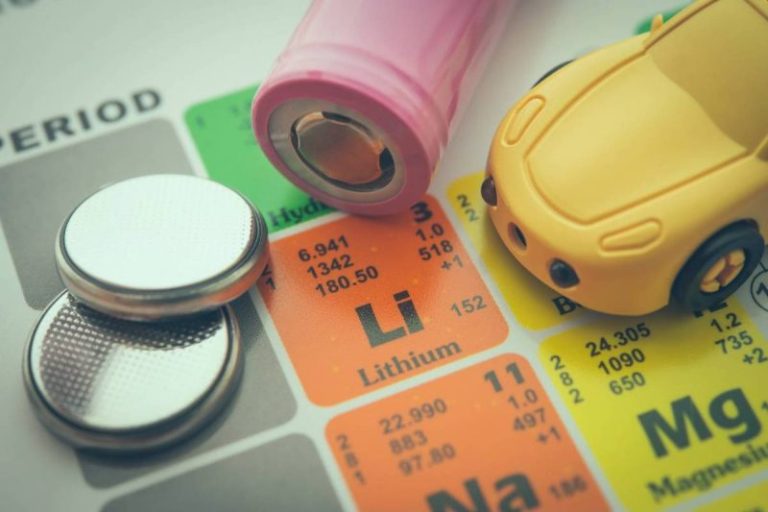
Sigma Lithium (TSXV:SGML,NASDAQ:SGML) has secured another large-scale sale of high-purity lithium fines and activated a production-backed revolving credit facility as it ramps up operations in Brazil.
The lithium producer announced it has agreed to sell 150,000 metric tons (MT) of high-purity lithium fines containing 1 percent lithium oxide at a net final price of US$140 per MT upon warehouse delivery at the port of Vitória.
The buyer has the option to purchase a further 350,000 MT at market prices.
Sigma, which refers to the high-purity fines as a low-grade product, said the optional volumes provide flexibility to respond to market conditions and customer requirements.
According to the company, the sale of its low-grade product could generate proceeds equivalent to the sale of 70,000 MT of its high-grade lithium oxide concentrate. Sigma attributes the marketability of the fines to the processing technology at its Greentech plant, which uses dense media separation and dry stacking.
According to the São Paulo-based company, clients have achieved up to 60 percent recovery when reprocessing the material, producing lithium concentrate with over 4 percent lithium oxide content.
That higher-grade concentrate is currently priced at about US$1,370 per MT on average by Shanghai Metals Market.
“Our sequential sales of the Low Grade Product show how this material can generate recurring value, demonstrating its marketability,” said Marina Bernardini, Sigma vice president of business development. “Continuous demand for the Low Grade Product has supported the creation of an additional revenue stream for the Company.”
The February 13 agreement follows Sigma’s January sale of 100,000 MT of high-purity lithium fines.
At the time, the company reiterated that mining remobilization was proceeding as planned and pushed back against what it described as inaccurate media reports regarding an administrative process related to waste piles.
Alongside the new sale, Sigma confirmed that the resumption of production of its high-grade lithium oxide concentrate has triggered the start of pre-payments under a US$96 million revolving facility.
The unsecured binding agreement, signed with what the company describes as a leading company in the battery materials supply chain, calls for the delivery of 70,500 MT of high-grade concentrate in 2026.
Under the terms, fixed pre-payments of US$8 million are made 30 days prior to production and delivery to the port of Vitória. The first pre-payment was disbursed on January 13.
Each pre-payment carries interest at SOFR plus 1 percent for 30 days until final sale upon delivery. Pricing for each shipment is tied to prevailing spot market prices for high-grade lithium concentrate, as reflected in major industry indexes.
Securities Disclosure: I, Giann Liguid, hold no direct investment interest in any company mentioned in this article.
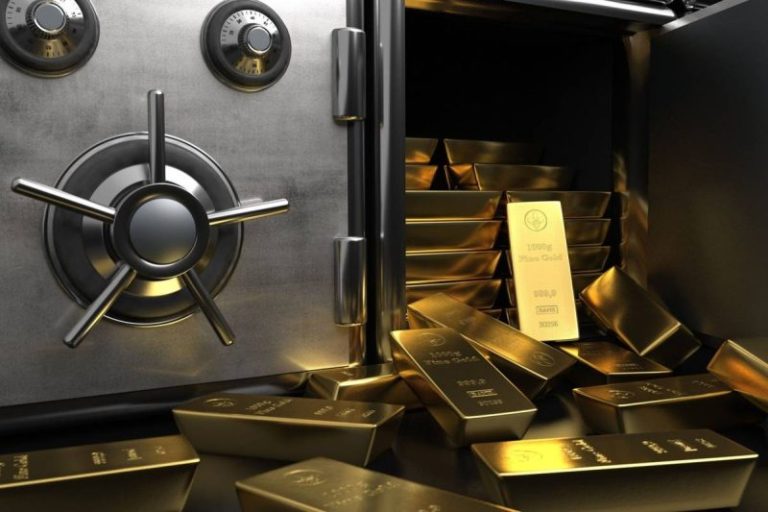
Global central banks own about 17 percent of all the gold ever mined, with reserves topping 36,520.7 metric tons (MT) at the end of November 2025. They acquired the vast majority after becoming net buyers of the metal in 2010.
Central banks purchase gold for a number of reasons: to mitigate risk, to hedge against inflation and to promote economic stability. Increased concerns over another global financial crisis have as expected led central banks once again to build up their gold reserves.
In a mid-2025 survey, the World Gold Council (WGC) said that 95 percent of the central bankers it polled expect global gold reserves to increase over the next 12 months. The precious metal’s ‘performance during times of crisis’ was cited by 85 percent of respondents as highly or somewhat relevant to their decision, while 80 percent cited its long-term store of value.
Central banks added 863.3 metric tons of gold to their vaults in 2025. While this was lower than the previous three years, which all topped 1,000 MT each, the reserve gains were still well above the 2010 to 2021 annual average of 473 MT.
Yearly central bank gold purchases since 2019.
Chart via the WGC.
A record 95 percent of respondents to the WGC survey stated their belief that central banks will continue to grow their holdings, with 5 percent suggesting they would hold at current levels. For the second year in a row, no respondents expected reserves to decrease.
The Council found that sentiment was consistent across advanced and emerging economies and reflected the strategic role of gold amid dynamic economic and geopolitical uncertainty.
Read on to find out the 10 top countries by central bank gold holdings, as per data from the WGC, including recent Q4 2024 and full-year 2024 reports.
Gold reserves: 8,133.46 metric tons
When it comes to the largest gold depository in the world, the American central bank is number one with 8,133.46 metric tons of gold.
A large percentage of US gold is held in “deep storage” in Denver, Fort Knox and West Point. As the US Treasury explains, deep storage is “that portion of the US Government-owned gold bullion reserve which the Mint secures in sealed vaults that are examined annually by the Treasury Department’s Office of the Inspector General and consists primarily of gold bars.”
The rest of US-owned reserves are held as working stock, which the country’s mint uses as raw material to mint congressionally authorized coins.
Gold reserves: 3,350.3 metric tons
The Bundesbank, Germany’s central bank, currently owns 3,351.53 metric tons of gold. Like many of the central banks on this list, the German national bank stores a significant portion of its gold in foreign central banks.
Today, just over half of Germany’s gold holdings are stored within Frankfurt, while internationally 1,236 MT of gold is stored in the vaults of the New York Federal Reserve, and 12 percent of its holdings are in London.
The Bundesbank’s foreign gold reserves came into question in 2012, when the German Federal Court of Auditors, the Bundesrechnungshof, was openly critical of the Bundesbank’s gold auditing. The German bank issued a public statement defending the security of foreign banks. Privately, the Bundesbank then began the arduous process of repatriating some of its gold stock back to German soil. By 2016, more than 583 MT of gold had been transferred back to Germany.
The economic upheaval and geopolitical volatility brought about by US President Donald Trump’s tariff wars and adversarial posturing toward Europe has led to calls for Germany to consider further repatriating its gold, reported The Guardian in January 2026.
Gold reserves: 2,451.9 metric tons
Banca d’Italia, the national bank of Italy, holds 2,451.84 metric tons of gold. The central bank began amassing its gold in 1893, when three separate financial institutions merged into one. From there, its 78 MT of holdings slowly grew into the large gold reserves it holds today.
Like Germany, Italy stores parts of its reserves offshore. In total, 141.2 MT are located in the UK, 149.3 MT are in Switzerland and 1,061 MT are kept in the US Federal Reserve. Italy houses 1,100 MT of gold domestically.
Gold reserves: 2,437 metric tons
The Banque de France has 2,437 metric tons of gold reserves, all of which it keeps on hand. The precious metal is stored in the bank’s secure underground vault, dubbed La Souterraine, which is located 27 meters below street level.
La Souterraine’s gold vaults are one of the four designated gold depositories of the International Monetary Fund.
According to Investopedia, the collapse of the Bretton Woods gold standard system was in part due to former French President Charles de Gaulle, who “called the U.S. bluff and began actually trading dollars in for gold from the Fort Knox reserves.” At the time, US President Richard Nixon “was forced to take the U.S. off the gold standard, ending the dollar’s automatic convertibility into gold.”
Gold reserves: 2,326.5 metric tons
The Bank of Russia is the official central bank of the Russian Federation and owns 2,332.74 metric tons of gold. Like France, Russia’s central bank has opted to store all its physical gold domestically. The Bank of Russia stores two-thirds of its gold reserves in a bank building in Moscow, and the remaining one-third in Saint Petersburg.
The majority of the yellow metal is in the form of large, variable-weight standard gold bars weighing between 10 and 14 kilograms. There are also smaller bars on site weighing as much as 1 kilogram each.
Russia, which is the second largest gold producer by country, has been a steady purchaser of the precious metal since roughly 2007, with sales ramping up significantly between 2015 and 2020. However, Russia’s refineries were banned from selling gold bullion into the London market following the country’s invasion of Ukraine. Sanctions by the west also include a freeze on about half of Russia’s gold reserves.
In early 2022, Russia tied its currency, the ruble, to the yellow metal. ‘The plan was to shift the currency away from a pegged value and into the gold standard itself so the ruble would become a credible gold substitute at a fixed rate,’ according to Robert Huish, an Associate Professor in International Development Studies at Dalhousie University.
Gold reserves: 2,306.3 metric tons
The central bank for Mainland China is the People’s Bank of China (PBoC), located in Beijing. According to the WGC, the national financial institute stores 2,279.56 metric tons of gold, most which has been purchased since 2000. In 2001, the PBoC had 400 MT of gold in reserve, but in just a little more than two decades that total has climbed by 459 percent.
The PBoC issues the Panda gold coin, which was first created in 1982. The Panda coin is now one of the top five bullion coins issued by a central bank. It is among the ranks of the American Eagle, Canadian Maple Leaf, South African Krugerrand and Australian Gold Nugget.
The PBoC was one of the top gold buyers of the world’s central banks for 2024 and 2025, purchasing 44 MT and 27 MT of gold during the years respectively. April 2024 marked the 18th consecutive month of gold buying for China’s central bank, which paused its purchases afterward until picking them up again in November. As of January 2026, it has purchased gold for a further 15 consecutive months.
Gold reserves: 1,039.9 metric tons
The Swiss National Bank (SNB) holds the seventh largest central bank gold reserves. Its 1,039.94 metric tons of gold are owned by the state of Switzerland, but the central bank manages and maintains the reserve. The Swiss constitution allows the SNB to buy and sell gold with market trends, but it is not required to report the sales.
After years of opaqueness regarding the country’s golden treasure trove and increased selling in 2011 as prices rose, the Swiss Gold Initiative was launched in 2011.
The initiative called for an amendment to the constitution to add three new points to it. The first was a mandate for all reserve gold to be held physically in Switzerland. The other two dealt with the central bank’s ability to sell its gold reserves, along with a decree that 20 percent of the Swiss bank’s assets be held in gold.
This culminated in a national referendum in 2014 that failed to reach a majority of votes. However, the public conversation did prompt the bank to be more transparent.
According to a 2013 release, the central bank reported that 70 percent of its gold reserve was held domestically, 20 percent was located at the Bank of England and 10 percent was stored with the Bank of Canada.
Gold reserves: 880.2 metric tons
The Reserve Bank of India is another central bank that has fervently acted to increase its holdings in recent years. It began adding to its gold assets in 2017; however, the majority of its purchases have taken place in the past four years.
Strikingly, after India’s central bank purchased 16 MT of gold in 2023, the institution scooped up another 72 MT of the precious metal in 2024. However, its 2025 purchases totaled just 4 MT, its lowest in eight years.
While more than half of its gold is held overseas in safe custody with the Bank of England and the Bank of International Settlements, about a third of its gold is held domestically. In June 2024, India repatriated 100 MT of gold from the United Kingdom. This was the first time since 1991 that the Reserve Bank of India moved its overseas gold holdings back home.
Gold reserves: 846 metric tons
The Bank of Japan currently holds 846 metric tons of gold. Public information about the Bank of Japan’s gold reserves is hard to come by.
In 2000, the island nation was holding approximately 753 MT of the yellow metal, and by 2004, the Bank of Japan’s gold store had grown to 765.2 MT. Its gold reserves remained at that level until March 2021, when the country purchased 80.76 MT of gold, bringing it to its current total.
Gold reserves: 613.7 metric tons
The Central Bank of Turkey holds 613.7 metric tons of gold. Turkey has been a consistent gold buyer over the past several years, with its central bank adding 75 MT to its holdings in 2024. While the pace of the country’s buying slowed in 2025, the country accumulated another 27 metric tons through the end of November, making it the year’s fifth-largest gold buyer.
Gold reserves: 2,814 metric tons
The gold reserve held by the International Monetary Fund is the third largest in terms of size at 2,814 metric tons. The large gold reserve was amassed primarily during the founding of the international organization in 1944.
In that inaugural year, it was decided that “25 percent of initial quota subscriptions and subsequent quota increases were to be paid in gold.”
Since 1944, the International Monetary Fund has added gold through the repayment of debts owed by member countries. Nations can also exchange gold for another member country’s currency.
Securities Disclosure: I, Melissa Pistilli, hold no direct investment interest in any company mentioned in this article.
Securities Disclosure: I, Dean Belder, hold no direct investment interest in any company mentioned in this article.

Silverco Mining (TSXV:SICO) is a production-stage silver company targeting opportunities in Mexico’s Sierra Madre Occidental belt. Its primary technical focus is optimizing the wholly owned Cusi Mining Complex in Chihuahua, an 11,665-hectare district-scale property. The site benefits from established, institutional-quality infrastructure—such as direct access to the national power grid and paved roads—significantly lowering the capital requirements for restarting operations.
The company is undertaking a definitive transition toward mid-tier producer status through a binding agreement to acquire Nuevo Silver. This deal gives Silverco control of the La Negra mine in Querétaro, a currently producing asset that delivers immediate top-line revenue. By pairing the near-term restart of the Cusi 1,200 tpd mill with ongoing production at La Negra, Silverco is effectively bypassing the multi-year development cycle typically faced by junior miners.
This “buy-and-build” strategy is driven by a technical team with specialized expertise in Mexican epithermal vein systems and complex underground mine engineering, positioning the company to accelerate growth while maintaining operational discipline.
This Silverco Mining profile is part of a paid investor education campaign.*
Click here to connect with Silverco Mining (TSXV:SICO) to receive an Investor Presentation

Canada One Mining Corp. (TSXV: CONE,OTC:COMCF) (OTC Pink: COMCF) (FSE: AU31) (‘Canada One’ or the ‘Company’) is pleased to report high-grade gold results, accompanied by copper and silver values, from the Reco target at the Copper Dome Project, (‘Copper Dome’, ‘Project’ or ‘Property’) located adjacent to the Hudbay Minerals Inc. producing Copper Mountain Mine, Princeton, B.C.
ROCK SAMPLING HIGHLIGHTS
| SAMPLE ID | GOLD (G/T) | SILVER (G/T) | COPPER (%) |
| C0066671 | 8.17 | 6.83 | 1.75 |
| C0066670 | 9.96 | 9.62 | 0.78 |
Table 1: Notable Rock Grab Sample Results from the 2025 Exploration Program at the Reco target.
Reco Target Sampling
In the fall of 2025, the geological team visited the Reco target, a previously known showing, and established seven new geological stations and collected four fresh rock samples (C0066668-C0066671). The two highest-grade samples collected from Reco were C0066670 (9.96 g/t Au, 9.62 g/t Ag, 0.78% Cu) and C0066671 (8.17 g/t Au, 6.83 g/t Ag, 1.75% Cu). Both samples returned elevated iron values, with sample C0066670 recording the highest iron content of the 2025 program at 12.75% Fe, reflecting intense iron oxide alteration and the potential weathering of significant sulphide mineralization at the target.
Reco is located approximately 1.8 km SSE of the Friday Creek potassic zone. Assay results from Friday Creek, also collected during the fall 2025 program, are pending release.
Peter Berdusco, President and CEO of Canada One, commented: ‘The presence of high-grade gold at Reco, part of the Copper Dome Project, significantly strengthens Canada One’s exploration thesis. The gold target sits strategically between our primary porphyry targets at Copper Dome, and the presence of near-surface gold is particularly promising given how porphyry systems often generate economically meaningful flanking gold zones—enhancing both the district-scale potential and the strategic value of our project portfolio.’
Significance of Results
Results from the Reco target meaningfully expands the Copper Dome opportunity from a ‘copper-porphyry only’ story into a broader multi-commodity mineral system that also includes a compelling high-grade, potentially near-surface, gold-silver-copper target. The standout grab samples are particularly encouraging, as such grades can signal a robust hydrothermal event capable of generating economically meaningful high-grade shoots on the margins of, or structurally linked to, porphyry centers.
Strategically, Reco’s location between key porphyry targets raises the possibility that this gold-bearing structure could represent a flanking zone or structurally focused expression of the same district-scale system, improving drill targeting and increasing the project’s potential value by adding higher-grade upside and development optionality beyond bulk-tonnage porphyry copper alone.
While rock samples are inherently selective and not necessarily representative of average grade, results of this tenor strongly justify systematic follow-up to define continuity, true width, and controls on mineralization.
Reco Planned Follow-up
Building on these promising results, the company plans to advance exploration at the target in 2026 through a larger-scale prospecting and mapping program. Additional rock sampling will help better define the extent of known mineralization, while detailed structural mapping will support interpretation of potential gold sources as they relate to the surrounding porphyry targets.
Geological Discussion
Reco was investigated in 2025 to locate and accurately geo reference historical workings and mineral showings. According to the MINFILE record, the target was explored as early as 1907, when a 167-metre-long adit was driven beneath vein outcrops between 1907 and 1909.
Reco is hosted within fine-grained volcanic and volcano sedimentary rocks of the Nicola Group, including andesite and cherty tuffs. Intense silicification was documented, along with strong iron oxidation and sericitization of the host rocks. Pyrite and copper oxide minerals are common, with localized development of chalcopyrite stringers. The observed alteration assemblage and sulphide mineralogy are consistent with a phyllic alteration domain.
Reco consists of a caved historical adit, with extensive exposure of a volcanic wall rock resulting from historical manual scree removal. Mineralization occurs as intensely oxidized, sulphidic calcite vein material hosted within a shear zone approximately 2-3 m wide. The vein and shear zone are steeply dipping and strike NE-SW. Structural measurements collected in 2025 indicate an orientation of 210°/71°, while historical measurements report orientations of 005°/78° and 038°/80°. The vein has been traced on surface for approximately 120 m and ranges from 0.1 to 1.8 m in width.
The vein is interpreted to have infilled a brittle fault zone, as evidenced by shattered host rock and the presence of gouge material adjacent to the vein. Intense supergene alteration of the wall rock is expressed as pervasive goethite and jarosite development at the target.
Figure 1: (A) Rock sample C0066671 from the RECO target, showing mineralized sedimentary wall rock adjacent to a mineralized shear zone. The sample returned assays of 8.17 g/t Au, 6.83 g/t Ag, and 1.75% Cu.
(B) Mineralized vein fill and gouge hosted within the shear zone at the target.
To view an enhanced version of this graphic, please visit:
https://images.newsfilecorp.com/files/10074/284307_canadaoneimg1.jpg
Figure 2: 2025 rock sample locations with historical sampling at the RECO target area.
To view an enhanced version of this graphic, please visit:
https://images.newsfilecorp.com/files/10074/284307_cac78b5044a75aac_006full.jpg
Quality Assurance / Quality Control (QAQC)
All rock samples were collected from the fall 2025 fieldwork program and were submitted to ALS Geochemistry – Kamloops to be analyzed for gold and platinum group elements (PGM-ICP24 50 g fire assay), and multi-element geochemistry, including elements Cu, Pb, Zn, Co, and Ag (method ME-MS61).
Figure 3: Overview map of the Copper Dome project sowing sample and data stations from the 2025 exploration program as well as project infrastructure.
To view an enhanced version of this graphic, please visit:
https://images.newsfilecorp.com/files/10074/284307_cac78b5044a75aac_007full.jpg
About The Copper Dome Project
Copper Dome is located in the lower Quesnel Trough porphyry belt, one of British Columbia’s most prolific mining districts. The Project directly adjoins Hudbay Minerals Inc.’s producing Copper Mountain Mine to the north, which the company reports as having Proven and Probable Reserves of ~367 Mt at 0.25 % Cu, 0.12 g/t Au, and 0.69 g/t Ag (Hudbay Minerals Inc., 2023)*. Multiple mineralized zones have been identified across the Property, with historical drilling confirming high-grade copper associated with northeast-trending structures similar to those hosting mineralization at Copper Mountain.
The technical and scientific information regarding the adjacent Copper Mountain Mine is sourced from Hudbay Minerals Inc.’s published reports. Mineralization at Copper Mountain should not be considered indicative of the mineralization on the Copper Dome Project.
Copper Dome benefits from excellent infrastructure, enabling year-round access, cost-efficient exploration, and a stable, low-risk jurisdiction.
Historical Work Completed
With a five-year drill permit in place, the Company is focused on advancing the Copper Dome toward drill-ready target definition.
* Reference: Hudbay Minerals Inc. (2023). NI 43-101 Technical Report – Updated Mineral Resources & Mineral Reserves Estimate, Copper Mountain Mine, Princeton, British Columbia. Effective date: December 1, 2023. Qualified Person: Olivier Tavchandjian, Ph.D., P.Geo.
About Canada One
Canada One Mining Corp. is a Canadian junior exploration company focused on copper-the critical metal powering the global energy transition. The Company advances projects from discovery through resource definition with disciplined, data-driven exploration and responsible practices. Its flagship Copper Dome Project, near Princeton, British Columbia, targets a porphyry copper-gold system in a Tier-1 jurisdiction. Canada One aims to deliver sustainable growth and long-term value for shareholders and local communities.
Acknowledgement
Canada One acknowledges that the Copper Dome Project is located within the traditional, ancestral and unceded territory of the Smelqmix People. We recognize and respect their cultural heritage and relationship to the land, honoring their past, present and future.
Qualified Person
The scientific and technical information in this news release has been reviewed and approved by Ali Wasiliew, P.Geo., an independent Qualified Person as defined by NI 43-101 – Standards of Disclosure for Mineral Projects.
Contact Us
For further information, interested parties are encouraged to visit the Company’s website at www.canadaonemining.com, or contact the Company by email at info@canadaonemining.com, or by phone at 1.877.844.4661.
On behalf of the Board of Directors of
Canada One Mining Corp.
Peter Berdusco
President
Chief Executive Officer
Interim Chief Financial Officer
Forward-Looking Statements
This press release includes certain ‘forward-looking information’ and ‘forward-looking statements’ (collectively ‘forward-looking statements’) within the meaning of applicable Canadian securities legislation. All statements, other than statements of historical fact, included herein, without limitation, statements relating to the future operating or financial performance of the Company, are forward looking statements. Forward-looking statements are frequently, but not always, identified by words such as ‘expects’, ‘anticipates’, ‘believes’, ‘intends’, ‘estimates’, ‘potential’, ‘possible’, and similar expressions, or statements that events, conditions, or results ‘will’, ‘may’, ‘could’, or ‘should’ occur or be achieved. Forward-looking statements in this press release relate to, among other things: statements relating to the anticipated timing thereof and the intended use of proceeds. Actual future results may differ materially. There can be no assurance that such statements will prove to be accurate, and actual results and future events could differ materially from those anticipated in such statements. Forward-looking statements reflect the beliefs, opinions and projections on the date the statements are made and are based upon a number of assumptions and estimates that, while considered reasonable by the respective parties, are inherently subject to significant business, technical, economic, and competitive uncertainties and contingencies. Many factors, both known and unknown, could cause actual results, performance or achievements to be materially different from the results, performance or achievements that are or may be expressed or implied by such forward-looking statements and the parties have made assumptions and estimates based on or related to many of these factors. Such factors include, without limitation: the timing, completion and delivery of the referenced assessments and analysis. Readers should not place undue reliance on the forward-looking statements and information contained in this news release concerning these times. Except as required by law, the Company does not assume any obligation to update the forward-looking statements of beliefs, opinions, projections, or other factors, should they change, except as required by law.
TSX Venture Exchange Disclaimer
Neither the TSX Venture Exchange nor its Regulation Services Provider (as that term is defined in the policies of the TSX Venture Exchange) accepts responsibility for the adequacy or accuracy of this release.
To view the source version of this press release, please visit https://www.newsfilecorp.com/release/284307
News Provided by TMX Newsfile via QuoteMedia
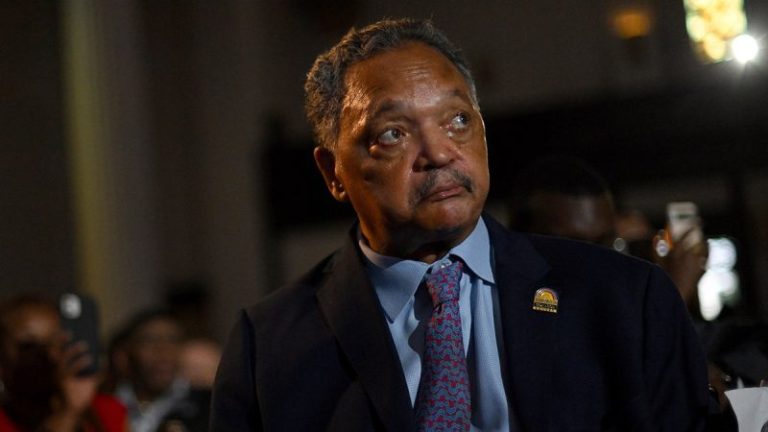
Vice President JD Vance, former Vice President Kamala Harris and former President Barack Obama were among the prominent political figures who issued statements following the death of Rev. Jesse Jackson Sr. The civil rights leader and two-time Democratic presidential primary candidate was 84.
Vance indicated that one of his family members voted for Jackson in the 1988 Democratic presidential primary and for Trump in the 2016 Republican presidential primary.
‘I have a close family member who voted in two presidential primaries in her entire life. Donald Trump in 2016 and Jesse Jackson in 1988,’ Vance wrote in a post on X. ‘RIP Jesse Jackson.’
Former Vice President Kamala Harris recalled getting positive reactions from others when she had a ‘Jesse Jackson for President’ bumper sticker on her car when she was a law student.
‘As a young law student, I would drive back and forth from Oakland, where I lived, to San Francisco, where I went to school. I had a bumper sticker in the back window of my car that read: ‘Jesse Jackson for President.’ As I would drive across the Bay Bridge, you would not believe how people from every walk of life would give me a thumbs up or honk of support. They were small interactions, but they exemplified Reverend Jackson’s life work — lifting up the dignity of working people, building community and coalitions, and strengthening our democracy and nation,’ she noted in a post on X.
‘I was proud to partner with and learn from him on this work throughout my career, and I am so grateful for the time we spent together this January. Reverend Jackson was a selfless leader, mentor, and friend to me and so many others,’ she wrote.
Former President Barack Obama noted in a statement that he and former first lady Michelle Obama ‘were deeply saddened to hear about the passing of a true giant, the Reverend Jesse Jackson.’
‘Michelle got her first glimpse of political organizing at the Jacksons’ kitchen table when she was a teenager. And in his two historic runs for president, he laid the foundation for my own campaign to the highest office of the land,’ Obama noted. ‘Michelle and I will always be grateful for Jesse’s lifetime of service, and the friendship our families share.’

Arguing that noncitizens could be on state voter rolls — something that is illegal under federal law — the Trump administration is escalating its campaign to obtain registration data ahead of the 2026 midterms, despite a string of federal court setbacks.
The strategy has unfolded on three fronts: cooperation from Republican-led states willing to share voter data, lawsuits against roughly two dozen blue and purple states that have refused, and a legislative push in Congress to tighten national voting requirements. Federal judges have so far rebuffed the administration’s legal demands, but the Justice Department is widening its campaign as Election Day draws near.
Hans von Spakovsky, a senior legal fellow at the conservative group Advancing American Freedom, said voter rolls are a central focus ahead of the midterms because of the Trump administration’s concerns that noncitizens are on them and could end up voting. It is illegal for noncitizens to vote in federal elections.
‘The problem is, blue states, like Oregon, they have no interest in that kind of verification, so they’re not actually doing what they ought to be doing, which is running data-based comparisons with the [Department of Homeland Security],’ von Spakovsky told Fox News Digital.
The DOJ has made sweeping demands for not just publicly available voter roll data, but also sensitive information, such as voters’ partial Social Security numbers and dates of birth.
The latest state to successfully fight the DOJ’s request is Michigan, where Secretary of State Jocelyn Benson said the federal government was not entitled to its 7 million voters’ personal information beyond what was already available.
The DOJ cited three federal laws, the Civil Rights Act, the Help America Vote Act and the National Voter Registration Act, that it said gave the Trump administration the right to the confidential information. Judge Hala Jarbou disagreed.
‘The Court concludes that (1) HAVA does not require the disclosure of any records, (2) the NVRA does not require the disclosure of voter registration lists because they are not records concerning the implementation of list maintenance procedures, and (3) the CRA does not require the disclosure of voter registration lists because they are not documents that come into the possession of election officials,’ Jarbou, a Trump appointee wrote.
Federal judges in Oregon and California have also thrown out the DOJ’s lawsuits. The DOJ could appeal the decisions. A department spokesperson declined to comment for this story.
But the DOJ has seen cooperation from red states, such as Texas, Alabama and Mississippi, who were among several to reach a ‘Memorandum of Understanding’ that led the states to hand over the information the department wanted.
In another maneuver, Attorney General Pam Bondi pressured Minnesota Gov. Tim Walz, a Democrat, to provide the Midwest battleground’s voter rolls, saying in a warning letter that such action would help ease unrest in the state that stemmed from a federal immigration crackdown there.
Democrats were enraged by the letter and have argued the Trump administration is infringing on states’ rights to conduct their own elections.
Sen. Chris Murphy, D-Ct., argued the letter was a ‘pretext for Trump to take over elections in swing states,’ while a state lawyer described the letter as a ‘ransom note.’ The DOJ, at the time, told Fox News Digital Democrats were ‘shamelessly lying’ about the letter’s purpose. Bondi said that handing over the voter rolls was among several ‘simple steps’ Minnesota could take to ‘bring back law and order.’ A lawsuit is still pending in Minnesota over the voter rolls.
In Congress, the Safeguard American Voter Eligibility Act would make it a national requirement that people registering to vote provide in-person proof of citizenship, such as birth certificates or passports. The legislation also includes a new national requirement for photo ID at the polls.
The bill has widespread Republican support. The House passed the SAVE Act last week, and even moderate Republican senators like Sen. Susan Collins, R-Me., have said they are on board with it. The bill is still stalled in the Senate, however, because it needs 60 votes to pass, meaning several Democrats would need to support it. Currently, none do.
Von Spakovsky noted that the SAVE Act had a key provision that would allow private citizens to bring lawsuits over it.
‘There’s no question in my mind that if the Save Act gets passed, there are election officials in blue states that will be reluctant to or may refuse to enforce the proof of citizenship requirement,’ von Spakovsky said. ‘The Save Act provides a private right of action, so that means that citizens in Oregon could sue those election officials if they’re refusing to comply with the Save Act.’
He said the private right of action provision would also provide recourse for citizens if Democrats take over the DOJ in the next administration and refuse to enforce the SAVE Act.
Trump has repeatedly argued that noncitizen voting poses a threat to election integrity and has pressed Republican lawmakers to tighten federal requirements. Last week, he floated attempting to impose identification requirements through executive order if Congress does not act.
‘This is an issue that must be fought, and must be fought, NOW!’ Trump wrote on Truth Social. ‘If we can’t get it through Congress, there are Legal reasons why this SCAM is not permitted. I will be presenting them shortly, in the form of an Executive Order.’
A much broader bill called the Make Elections Great Again Act is still moving through the House and faces a steeper uphill climb to passage.
In addition to national documented proof of citizenship requirement, the MEGA Act would end universal mail voting, eliminate ranked-choice voting and ban ballots postmarked by Election Day from being accepted after that day, which would outlaw postmark rules in 14 states and Washington, D.C.

The House Oversight Committee is hearing from a billionaire on Wednesday who was named one of Jeffrey Epstein’s co-conspirators by a 2019 FBI document.
Les Wexner is the latest person to be deposed in the House’s investigation into the federal government’s handling of Epstein’s case.
Unlike most previous depositions, however, committee staff and potentially some lawmakers are traveling to Ohio on Wednesday morning to depose Wexner in his home state.
A spokesperson for Wexner declined to comment on the deposition and on whether he would invoke his Fifth Amendment right to avoid answering questions.
But if he cooperates with the committee’s questioning, Wexner’s insight is likely to be key to unlocking information on just how Epstein obtained his vast wealth before dying by suicide in a Manhattan jail in 2019.
The 88-year-old businessman is the founder of L Brands, formerly called The Limited, through which he acquired well-known companies Victoria’s Secret, Bath & Body Works, Express, and Abercrombie & Fitch, among others.
He was also one of Epstein’s first major clients as a financial advisor, with Epstein being granted power of attorney over Wexner’s vast wealth.
Wexner also sold his Manhattan townhouse to Epstein, which was later discovered to be one of the locations where federal authorities accused Epstein of abusing young women and girls under 18.
But Wexner has never been criminally accused nor charged in relation to the late pedophile’s crimes.
A letter from Wexner to his Wexner Foundation charity dated Aug. 7, 2019, said he ended his relationship with Epstein sometime after the first federal investigation into his crimes emerged nearly 20 years ago.
Wexner also accused Epstein of misusing his vast wealth.
‘As the allegations against Mr. Epstein in Florida were emerging, he vehemently denied them. But by early fall 2007, it was agreed that he should step back from the management of our personal finances. In that process, we discovered that he had misappropriated vast sums of money from me and my family,’ read the letter, obtained by Fox News Digital on Tuesday.
‘This was, frankly, a tremendous shock, even though it clearly pales in comparison to the unthinkable allegations against him now. With his credibility and our trust in him destroyed, we immediately severed ties with him. We were able to recover some of the funds.’
Wexner is the fourth person appearing before the House Oversight Committee in its Epstein probe.
House Oversight Committee Chairman James Comer, R-Ky., previously oversaw the panel through the depositions of former Trump administration Attorney General Bill Barr, ex-Trump Labor Secretary Alex Acosta, who was the U.S. attorney in Florida who signed off on Epstein’s infamous 2008 non-prosecution agreement, and convicted Epstein accomplice Ghislaine Maxwell.
Maxwell’s deposition lasted less than an hour after she invoked the Fifth Amendment, refusing to answer questions unless she was granted clemency by President Donald Trump.

The U.S. is preparing to expand the deployment of advanced missile systems in the northern Philippines, placing additional long-range strike capability within range of key Chinese military assets and reinforcing Washington’s effort to counter Beijing’s growing assertiveness across the Indo-Pacific.
U.S. and Philippine officials announced plans to increase deployments of ‘cutting-edge missile and unmanned systems’ to the treaty ally, as both governments condemned what they described as China’s ‘illegal, coercive, aggressive and deceptive activities’ in the South China Sea.
The move comes as confrontations between Chinese and Philippine vessels have intensified in disputed waters and as Beijing continues to pressure Taiwan, raising the stakes across the region’s most sensitive flashpoints.
It builds on the deployment of the U.S. Army’s Typhon missile system in northern Luzon, Philippines, a ground-based launcher capable of firing Tomahawk cruise missiles that can travel more than 1,000 miles.
Tomahawks can travel more than 1,000 miles — a range that, from northern Luzon, Philippines, places portions of southern China and major People’s Liberation Army (PLA) facilities within reach. The positioning also allows the U.S. and Philippine militaries to cover large swaths of the South China Sea and key maritime corridors connecting it to the broader Pacific.
The U.S. first deployed the Typhon system to Luzon, Philippines, in April 2024. An anti-ship missile launcher known as the Navy Marine Expeditionary Ship Interdiction System was deployed in 2025 to Batan Island in the northernmost Philippine province of Batanes.
That island faces the Bashi Channel, a strategic waterway just south of Taiwan that serves as a critical transit route for commercial shipping and military vessels moving between the South China Sea and the Western Pacific. Control of that channel would be vital in any potential Taiwan contingency.
Beijing has urged Manila to withdraw the U.S. systems from its territory, but officials under President Ferdinand Marcos Jr. have rejected those demands.
‘China has consistently stated its firm opposition to the United States’ deployment of advanced weapons systems in the Philippines. The introduction of strategic and offensive weapons that heighten regional tensions, fuel geopolitical confrontation, and risk triggering an arms race is extremely dangerous. Such actions are irresponsible to the people of the Philippines, to Southeast Asian nations, and to regional security as a whole,’ Chinese embassy spokesperson Liu Pengyu told Fox News Digital. ‘The United States is not a party to disputes in the South China Sea and has no standing to intervene in maritime issues between China and the Philippines.’
‘The Taiwan question lies at the very heart of China’s core interests. China’s determination to defend its national sovereignty, security, and territorial integrity is unwavering. Any provocation that crosses red lines on Taiwan will be met with resolute countermeasures, and any attempt to obstruct China’s reunification is doomed to fail,’ Liu continued.
Neither side detailed how many additional systems would be sent or whether the deployments would be permanent, but Philippine Ambassador to Washington Jose Manuel Romualdez said U.S. and Filipino defense officials discussed deploying upgraded missile launchers that Manila may eventually seek to purchase.
‘It’s a kind of system that’s really very sophisticated and will be deployed here in the hope that, down the road, we will be able to get our own,’ Romualdez told The Associated Press.
Romualdez stressed that the deployments are intended as a deterrent.
‘It’s purely for deterrence,’ he said. ‘Every time the Chinese show any kind of aggression, it only strengthens our resolve to have these types.’
China repeatedly has objected to the missile deployments, warning they threaten regional stability and accusing Washington of trying to contain its rise.
In a joint statement following annual bilateral talks in Manila, the U.S. and the Philippines underscored their support for freedom of navigation and unimpeded commerce in the South China Sea — a vital global trade artery through which trillions of dollars in goods pass each year.
‘Both sides condemned China’s illegal, coercive, aggressive and deceptive activities in the South China Sea, recognizing their adverse effects on regional peace and stability and the economies of the Indo-Pacific and beyond,’ the statement said.
China claims virtually the entire South China Sea despite an international tribunal ruling in 2016 that invalidated many of its sweeping claims. In recent years, Chinese coast guard and maritime militia vessels have clashed repeatedly with Philippine ships near disputed shoals, including Second Thomas Shoal.
The expanded missile deployments also come as the Pentagon balances rising tensions in multiple theaters. In recent weeks, the USS Abraham Lincoln carrier strike group — which had been operating in the Indo-Pacific — was redirected toward the Middle East as the U.S. moved to bolster its posture amid escalating tensions with Iran.
The deployments also reflect a broader U.S. effort to strengthen its military posture along the so-called ‘first island chain’ — a string of territories stretching from Japan through Taiwan and the Philippines that forms a natural barrier to Chinese naval expansion into the Pacific.
Washington has deepened defense cooperation with Manila under the Enhanced Defense Cooperation Agreement, expanding U.S. access to Philippine bases, including sites in northern Luzon close to Taiwan.
China in May released a national security white paper criticizing the deployment of an ‘intermediate-range missile system’ in the region — widely viewed as a reference to the U.S. Typhon launcher in the Philippines. The document accused unnamed countries of reviving a ‘Cold War mentality’ and forming military ‘small groups’ that aggravate regional tensions.
For U.S. planners, dispersing mobile, land-based missile systems across allied territory complicates Beijing’s military calculus. Instead of relying solely on ships and aircraft, the U.S. can field ground-based systems that are harder to track and capable of holding Chinese naval and air assets at risk.
For Beijing, however, such deployments reinforce its long-standing claim that the United States is encircling China militarily.
As tensions simmer in both the South China Sea and around Taiwan, the positioning of long-range U.S. missile systems on Philippine soil underscores how the strategic competition between Washington and Beijing is increasingly being defined by geography — and by which side can project credible deterrent power across it.
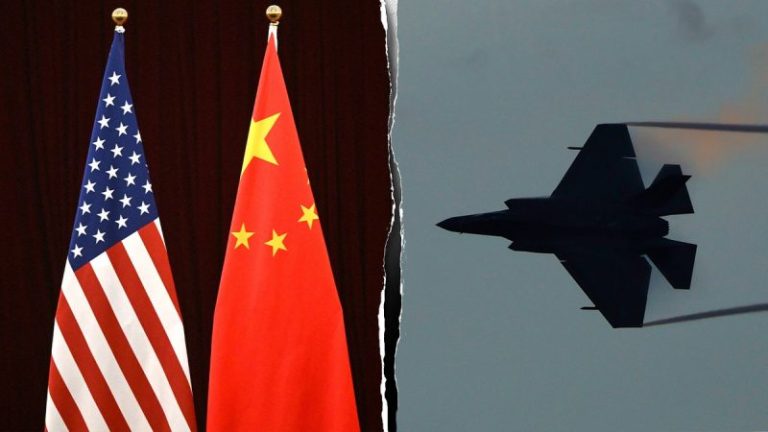
A senior U.S. official offered new details Tuesday night about an alleged nuclear bomb test conducted by China in June 2020.
Assistant Secretary of State Christopher Yeaw spoke at a Hudson Institute event in Washington, D.C. on Tuesday, and said evidence of the explosion came from a seismic station in Kazakhstan. The station detected a magnitude 2.75 explosion located at China’s Lop Nur test grounds on June 22, 2020.
‘I’ve looked at additional data since then. There is very little possibility I would say that it is anything but an explosion, a singular explosion,’ Yeaw said, adding that data was not consistent with mining detonations.
‘It’s also entirely not consistent with an earthquake,’ he added. ‘It is … what you would expect with a nuclear explosive test.’
China’s embassy in Washington has rejected the Trump administration’s claim, telling NBC News that the report is ‘political manipulation,’ and the U.S. is ‘evading its own nuclear disarmament responsibilities.’
‘China urges the U.S. to reaffirm the five nuclear-weapon states’ commitment on refraining from nuclear tests, uphold the global consensus against nuclear tests, and take concrete steps to safeguard the international nuclear disarmament and non-proliferation regime,’ spokesperson Liu Pengyu told the outlet.
U.S. officials warned that Beijing may be preparing tests in the ‘hundreds of tons’ range — a scale that underscores China’s accelerating nuclear modernization and complicates efforts to draw Beijing into arms control talks.
Thomas DiNanno, undersecretary of state for arms control and international security, said recently that the United States has evidence China conducted an explosive nuclear test at its Lop Nur site.
‘I can reveal that the U.S. government is aware that China has conducted nuclear explosive tests, including preparing for tests with designated yields in the hundreds of tons,’ DiNanno said during remarks at the United Nations Conference on Disarmament.
He added, ‘China conducted one such yield-producing nuclear test on June 22 of 2020.’
DiNanno also accused Beijing of using ‘decoupling’ — detonating devices in ways that dampen seismic signals — to ‘hide its activities from the world.’
China’s foreign ministry has denied the allegations, accusing Washington of politicizing nuclear issues and reiterating that Beijing maintains a voluntary moratorium on nuclear testing.
The accusation has sharpened questions about verification, deterrence and whether the U.S. stockpile stewardship program — which relies on advanced simulations rather than live detonations — remains sufficient in an era of renewed great-power nuclear competition.