Archive

December 2025

Browsing

It was an off-year when it comes to elections, but 2025 was on fire on the campaign trail, as next year’s looming midterm showdowns took shape.

While it was never expected to match the intensity of the tumultuous 2024 battles for the White House and Congress, this year’s off-year elections grabbed outsized national attention and served as a key barometer leading up to the 2026 midterm contests for the House and Senate majorities.

Here are five of the biggest moments that shaped the campaign trail.

5. Trump pushes mid-decade congressional redistricting

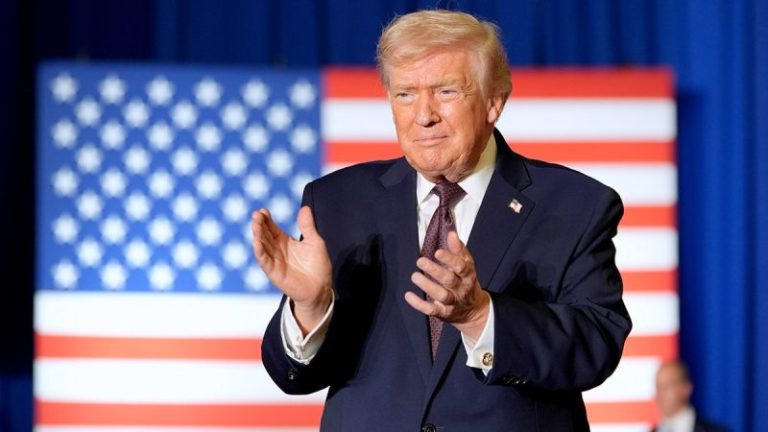
Aiming to prevent what happened during his first term in the White House when Democrats reclaimed the House majority in the 2018 midterms, President Donald Trump in June first floated the idea of rare but not unheard of mid-decade congressional redistricting.

The mission was simple: redraw congressional district maps in red states to pad the GOP’s razor-thin House majority to keep control of the chamber in the 2026 midterms, when the party in power traditionally faces political headwinds and loses seats.

Trump’s first target: Texas.

A month later, when asked by reporters about his plan to add Republican-leaning House seats across the country, the president said, ‘Texas will be the biggest one. And that’ll be five.’

The push by Trump and his political team triggered a high-stakes redistricting showdown with Democrats to shape the 2026 midterm landscape in the fight for the House majority.

Republican Gov. Greg Abbott of Texas called a special session of the GOP-dominated state legislature to pass the new map.

But Democratic state lawmakers, who broke quorum for two weeks as they fled Texas in a bid to delay the passage of the redistricting bill, energized Democrats across the country.

Among those leading the fight against Trump’s redistricting was Democratic Gov. Gavin Newsom of California.

California voters earlier this month overwhelmingly passed Proposition 50, a ballot initiative which will temporarily sidetrack the left-leaning state’s nonpartisan redistricting commission and return the power to draw the congressional maps to the Democratic-dominated legislature.

That is expected to result in five more Democratic-leaning congressional districts in California, which aimed to counter the move by Texas to redraw their maps.

The fight quickly spread beyond Texas and California.

Right-tilting Missouri, North Carolina and Ohio have drawn new maps as part of the president’s push.

Republicans are looking to GOP-controlled Florida, where early redistricting moves are underway in Tallahassee. A new map could possibly produce up to five more right-leaning seats. But conservative Gov. Ron DeSantis and GOP legislative leaders don’t see eye-to-eye on how to move forward.

‘We must keep the Majority at all costs,’ Trump wrote on social media this month.

In blows to Republicans, a Utah district judge this month rejected a congressional district map drawn up by the state’s GOP-dominated legislature and instead approved an alternate that will create a Democratic-leaning district ahead of the 2026 midterm elections.

And Republicans in Indiana’s Senate defied Trump, shooting down a redistricting bill that had passed the state House.

But Trump scored a big victory when the conservative majority on the Supreme Court greenlighted Texas’ new map.

Other states that might step into the redistricting wars — Democratic-dominated Illinois and Maryland, and two red states with Democratic governors, Kentucky and Kansas.

4. Jay Jones text messages revealed, rocking Virginia’s elections

Virginia Democrats were cruising toward convincing victories in the commonwealth’s statewide elections when a scandal sent shockwaves up and down the ballot.

Democratic attorney general nominee Jay Jones instantly went into crisis mode after controversial texts were first reported earlier by the National Review in early October.

Jones acknowledged and apologized for texts he sent in 2022, when he compared then-Virginia House Speaker Todd Gilbert to mass murderers Adolf Hitler and Pol Pot, adding that if he was given two bullets, he would use both against the GOP lawmaker to shoot him in the head.

But Jones faced a chorus of calls from Republicans to drop out of the race.

And the GOP leveraged the explosive revelations up the ballot, forcing Democratic Party nominee, former Rep. Abigail Spanberger, back on defense in a campaign where she was seen as the frontrunner against Republican rival Lt. Gov. Winsome Earle-Sears.

Earle-Sears didn’t waste an opportunity to link Spanberger to Jones. And during October’s chaotic and only gubernatorial debate, where Earle-Sears repeatedly interrupted Spanberger, the GOP gubernatorial nominee called on her Democratic rival to tell Jones to end his attorney general bid.

‘The comments that Jay Jones made are absolutely abhorrent,’ Spanberger said at the debate. But she neither affirmed nor pulled back her support of Jones.

While the scandal grabbed national headlines, in the end it didn’t slow down the Democrats, as Spanberger crushed Earle-Sears by 15 points. Democrats won the separate election for lieutenant governor by 11 points and Jones even pulled off a 6-point victory over Republican incumbent Jason Miyares.

3. Democrats overperform at the ballot box

Just eight days into Trump’s second term in the White House, demoralized Democrats had something to cheer about.

Democrat Mike Zimmer defeated Republican Katie Whittington in a special state Senate election in Iowa, flipping a Republican-controlled vacant seat in a district that Trump had carried by 21 points less than three months earlier.

Zimmer’s victory triggered a wave of Democrats overperforming in special elections and regularly scheduled off-year ballot box contests.

Among the most high profile was the victory by the Democratic candidate in Wisconsin’s high-stakes and expensive state Supreme Court showdown.

With inflation, the issue that severely wounded them in the 2024 elections, persisting, Democrats were laser focused on affordability, and the wins kept coming.

In November’s regularly scheduled elections, they won the nation’s only two gubernatorial showdowns — in New Jersey and Virginia — by double digits. And they scored major victories in less high-profile contests from coast to coast.

The year ended with Democrats winning a mayoral election in Miami, Florida for the first time in a quarter-century, and flipping a state House seat in Georgia.

The Democratic National Committee, in a year-end memo, touted, ‘In 2025 alone, Democrats won or overperformed in 227 out of 255 key elections — nearly 90% of races.’

But Democrats are still staring down a brand that remains in the gutter, with historically low approval and favorable numbers.

Among the most recent to grab headlines: Only 18% of voters questioned in a Quinnipiac University survey this month said they approved of the way congressional Democrats were handling their job, while 73% percent disapproved.

That’s the lowest job approval rating for the Democrats in Congress since the Quinnipiac University Poll began asking this question 16 years ago.

2. Democrats’ primary problem

The Democrats overperformed in this month’s special congressional election in a GOP-dominated seat in Tennessee — losing by nine points in a district that Trump carried by 22 points just a year ago,

But there were plenty of centrist Democrats who argued that state Rep. Aftyn Behn, the Democratic nominee in the race, was too far to the left for the district.

Republicans repeatedly attacked Behn over her paper trail of past comments on defunding the police.

And the U.S. Senate campaign launch this month in red-leaning Texas by Rep. Jasmine Crockett, a progressive champion and vocal Trump critic and foil, compounded the argument by centrists.

‘The Democratic Party’s aspirations to win statewide in a red state like Texas simply don’t exist without a centrist Democrat who can build a winning coalition of ideologically diverse voters,’ Liam Kerr, co-founder of the Welcome PAC, a group which advocates for moderate Democratic candidates, argued in a statement to Fox News Digital.

And the center-left Third Way, in a memo following the Tennessee special election, argued that ‘there are two projects going on in the Democratic Party right now. One is winning political power so we can stop Trump’s calamity. The other is turning blue places bluer.’

‘If far-left groups want to help save American democracy, they should stop pushing their candidates in swing districts and costing us flippable seats,’ the memo emphasized.

1. Mamdani wins NYC mayoral primary

It was the story that has dominated campaign politics for the past six months.

Zohran Mamdani‘s convincing June 24 victory in New York City’s Democratic Party mayoral primary was the political earthquake that rocked the nation’s most populous city and sent powerful shockwaves across the country.

The capturing of the Democratic nomination by the now-34-year-old socialist state lawmaker over frontrunner former Gov. Andrew Cuomo and nine other candidates propelled Mamdani to a general election victory.

Mamdani’s primary shocker, and later, his general election victory, energized the left.

But it also handed Republicans instant ammunition as they worked to link the first Muslim New York City mayor with a far-left agenda to Democrats across the country, as the party aimed to paint Democrats as extremists.

But Trump, who had repeatedly called Mamdani a ‘communist,’ appeared to undercut that narrative with a chummy Oval Office meeting with the mayor-elect last month.
This post appeared first on FOX NEWS

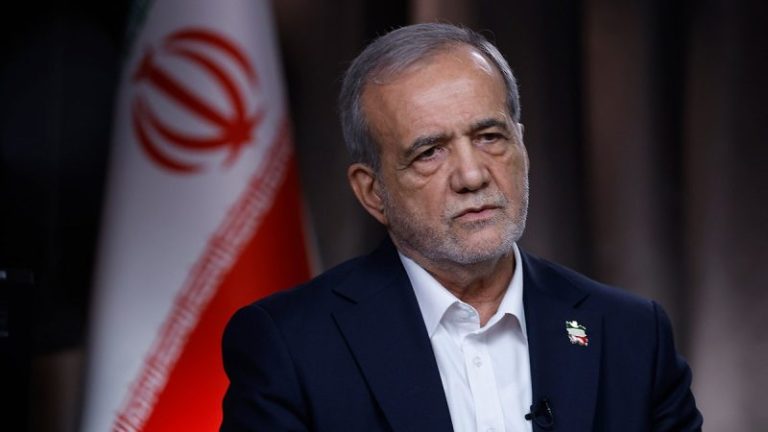
Iranian President Masoud Pezeshkian said his country is engaged in what he described as a ‘total war’ with the U.S., Israel and Europe.

In an interview published Saturday by Iranian state media, Pezeshkian said that he believes the Western powers want to bring Iran ‘to its knees,’ The Times of Israel reported.

‘In my opinion, we are at total war with the United States, Israel and Europe,’ Pezeshkian said. ‘They want to bring our country to its knees.’

Pezeshkian argued that the current conflict is more complex than the Iran-Iraq war of the 1980s, saying his country is now under pressure ‘from every angle,’ according to The Times of Israel.

‘If one understands it well, this war is far more complex and difficult than that war. In the war with Iraq, the situation was clear, they fired missiles, and we knew where to hit,’ Pezeshkian said, according to The Jerusalem Post. 

‘Here, they are besieging us from every aspect, they are creating problems for us in terms of livelihood, culturally, politically, and security-wise.’

Despite the strain, Pezeshkian claimed Iran’s military emerged stronger following its June conflict with Israel, according to The Times of Israel.

‘Our beloved military forces are doing their jobs with strength and now, in terms of equipment and manpower, despite all the problems we have, they are stronger than when they attacked. So if they want to attack, they will naturally face a more decisive response,’ he said.

The interview with Pezeshkian was released ahead of a planned meeting this coming week at Mar-a-Lago between Israeli Prime Minister Benjamin Netanyahu and President Donald Trump, according to The Jerusalem Post.

Tensions remain high following a brief but intense air conflict in June that was kicked off by Israel. 

The fighting resulted in roughly 1,100 deaths in Iran, including senior military commanders and nuclear scientists, while Iranian missile attacks killed 28 people in the Jewish State.

On June 22, President Donald Trump announced U.S. forces had launched attacks on Iranian nuclear sites, including Fordow, Natanz and Isfahan.

‘Our objective was the destruction of Iran’s nuclear enrichment capacity and a stop to the nuclear threat posed by the world’s number one state sponsor of terror,’ the president said. ‘Tonight, I can report to the world that the strikes were a spectacular military success. Iran’s key nuclear enrichment facilities have been completely and totally obliterated.’

A US-brokered ceasefire between Iran and Israel took effect on June 24.

Fox News Digital’s Landon Mion contributed to this report.

This post appeared first on FOX NEWS

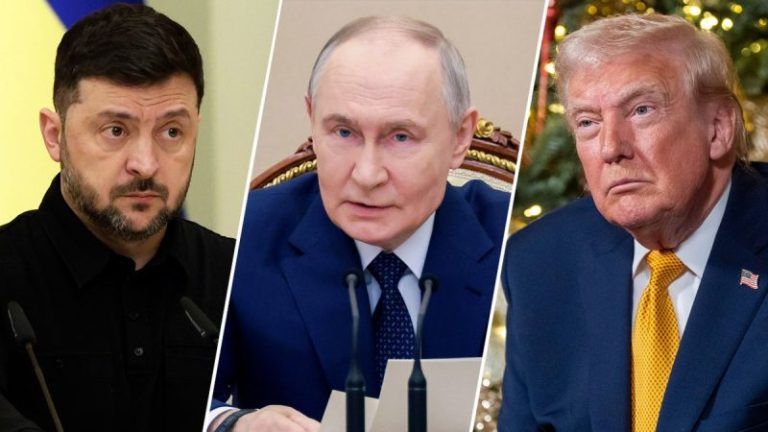
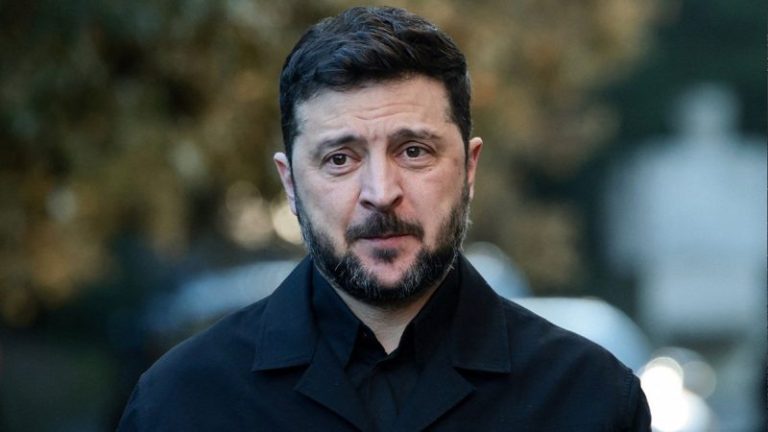
President Donald Trump said he will call the final shots on a peace deal to end the conflict between Russia and Ukraine, with Ukrainian President Volodymyr Zelenskyy preparing to unveil a new peace plan when the two meet Sunday. 

‘He doesn’t have anything until I approve it,’ Trump told Politico Friday. ‘So we’ll see what he’s got.’

Zelenskyy told reporters Friday he will meet with Trump Sunday in Florida and will share a 20-point peace proposal for the president to review. 

Additionally, Zelenskyy said the meeting will likely focus on security guarantees for Ukraine, adding it was unclear if ‘territorial issues will be discussed.’

‘The 20-point plan that we worked on is 90% ready. Our task (is) to make sure that everything is 100% ready. It is not easy, and no one says that it will be 100% right away, but nevertheless we must bring the desired result closer with each such meeting, each such conversation,’ Zelenskyy told reporters Friday.

The White House did not respond to a request for comment from Fox News Digital to confirm the meeting. 

Trump voiced optimism about the meeting with Zelenskyy and future conversations with Putin. 

‘I think it’s going to go good with him. I think it’s going to go good with [Vladimir] Putin,’ Trump told Politico. Trump also said that he expects to speak with Putin ‘soon.’

Trump said in November he would not meet with Zelenskyy again — or Putin — unless a deal to end the war was in its final stages. 

Zelenskyy has indicated progress is being made and touted that he had a ‘a very good conversation’ with Jared Kushner and U.S. special envoy Steve Witkoff Thursday. Specifically, Zelenskyy said, talks focused on ending the war and efforts to ensure lasting peace in the region.

Trump has met with Zelenskyy multiple times since taking office in January, including in February when Zelenskyy sparred openly with Trump and Vance in the Oval Office over engaging in diplomacy with Russia to end the conflict. Additionally, Trump met with Putin in Alaska in August. 

Fox News’ Rachel Wolf contributed to this report. 

This post appeared first on FOX NEWS

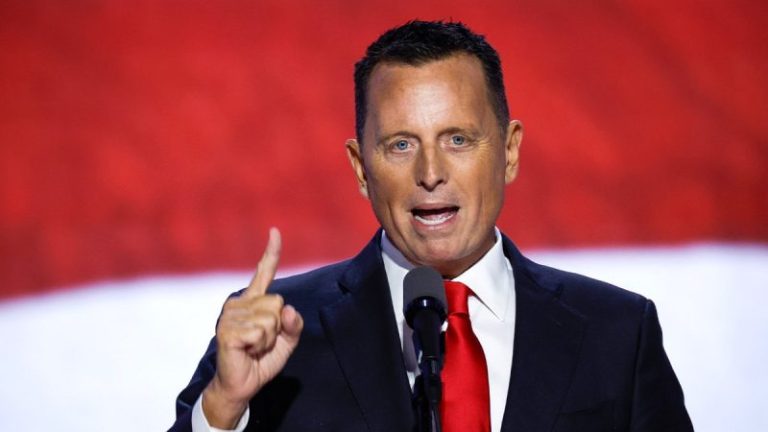
The president of the Kennedy Center on Friday sharply criticized longtime jazz musician Chuck Redd for canceling his Christmas Eve performance days after the White House announced that President Donald Trump’s name would be added to the iconic performing arts institution in Washington, D.C.

Kennedy Center president Richard Grenell said Redd’s decision financially harmed the nonprofit institution, and he would seek $1 million in damages, accusing him of carrying out a ‘political stunt.’

‘Your decision to withdraw at the last moment — explicitly in response to the Center’s recent renaming, which honors President Trump’s extraordinary efforts to save this national treasure — is classic intolerance and very costly to a non-profit Arts institution,’ Grenell wrote in a letter to Redd, obtained by Fox News Digital.

Fox News Digital could not immediately reach Redd for comment.

Redd, who has hosted holiday Jazz Jams at the venue since 2006, abruptly canceled his Christmas Eve performance after Trump’s name was added to the facility.

‘When I saw the name change on the Kennedy Center website and then hours later on the building, I chose to cancel our concert,’ Redd told The Associated Press on Wednesday.

On Dec. 18, the Kennedy Center’s board voted unanimously to rename the institution the ‘Trump-Kennedy Center.’

The update was immediately criticized by members of the Kennedy family who argued it undermined the legacy of President John F. Kennedy.

Maria Shriver, Kennedy’s niece, reacted harshly to the decision, saying it was ‘beyond comprehension.’

Several artists have canceled performances at the Kennedy Center since Trump’s return to office, including Lin-Manuel Miranda, who called off a production of ‘Hamilton.’

Kennedy Center vice president of public relations Roma Daravi told Fox News Digital Friday that Redd was politicizing art by calling off his performance.

‘Any artist canceling their show at the Trump Kennedy Center over political differences isn’t courageous or principled—they are selfish, intolerant, and have failed to meet the basic duty of a public artist: to perform for all people,’ she said in a statement.

Daravi stated that art is ‘a shared cultural experience meant to unite, not exclude,’ calling the venue ‘a true bipartisan institution that welcomes artists and patrons from all backgrounds.’

She added that ‘great art transcends politics,’ and that ‘America’s cultural center remains committed to presenting popular programming that inspires and resonates with all audiences.’

Last week, workers added President Trump’s name to the building’s exterior, and the website header was updated to read, ‘The Trump Kennedy Center.’

The Associated Press contributed to this report.

This post appeared first on FOX NEWS

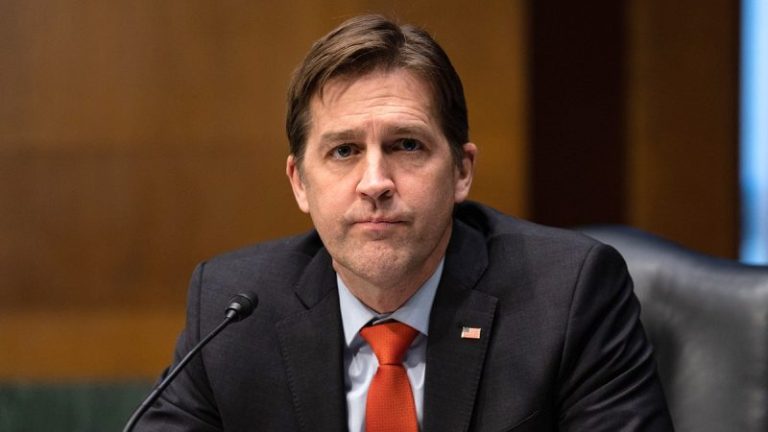
As a writer, there are times when I read something and think, ‘Wow, that’s good, this cat has chops.’ Very rarely do I read something that’s new, that I didn’t know was possible. Ben Sasse, he just wrote one of those.

The former Republican senator from Nebraska was informing the nation that he has stage four cancer and is going to die soon.

‘Advanced pancreatic is nasty stuff; it’s a death sentence,’ he write. ‘But I already had a death sentence before last week too — we all do.’

It may seem trivial, or even cruel to ponder Sasse’s written words when we know the pain he and his family must feel, but it is not trivial to me, and never has been in the history of man.

Shakespeare called death the undiscovered country, but Sasse preferred to focus on what we know, writing, ‘To be clear, optimism is great, and it’s absolutely necessary, but it’s insufficient. It’s not the kinda thing that holds up when you tell your daughters you’re not going to walk them down the aisle. Nor telling your mom and pops they’re gonna bury their son.’

‘Kinda,’ as a writer, this casual usage that my editors often change when I employ it is the embodiment of what Sasse has wrought here. His words make me think that beauty always portends tragedy, but that’s okay. To invoke a New Yorkism, it is what it is.

Sasse, who went from the Senate to serve as president of University of Florida until last year, goes on to say, ‘A well-lived life demands more reality — stiffer stuff. That’s why, during Advent, even while still walking in darkness, we shout our hope — often properly with a gravelly voice soldiering through tears’

Aside from a few modern references, Sasse’s letter to our nation would have been understood perfectly 2,500 years ago in Athens, where such writing of the examination of the human condition was born.

Sasse tells us that, ‘Remembering Isaiah’s prophecies of what’s to come doesn’t dull the pain of current sufferings. But it does put it in eternity’s perspective: 

‘When we’ve been there 10,000 years…We’ve no less days to sing God’s praise.’

Maybe what stands out the most in this incredible piece of writing is that it is not performative at all, in an age in which everything is. In the law, a dying declaration holds special weight. In Sasse’s pen, it holds our hearts.

Much of our languages’ great work involves death, Dylan Thomas imploring his father in poetry: ‘Do not go gentle into that good night.

Rage, rage against the dying of the light.

As I read his profound letter to us, I couldn’t help but see the image of Sasse in his running clothes, stooped on a stone wall at the capitol, chopping it up with Schumer and McCain. Just a regular guy, one of us.

Reading his words about his own mortality, I see now he is much more than that. I spend almost the whole time I’m awake reading, when I’m not writing. At 50, little surprises me. This did.

My mother died of damnable cancer when I was 24, her final request of me was to write and deliver her eulogy, and I’ll be honest the request felt too hard. But when she died, I had a job to do, and for two days I did nothing but write, it was her last gift, she knew me, and she got me through it.

I’m so grateful for Sasse’s words, and that at a time when everything is so ugly, he took the occasion of personal horror to buck us up. His great-great-grandchildren will know of it and feel rightful pride.

God bless Ben Sasse and his family, and may his profound and beautiful words echo down the centuries as the epitome of grace in a falling world.

As a writer, I want to say, thank you senator, I know right now it must seem completely insignificant, but there is a scribe in West Virginia today who will be forever changed by those words, and I’m grateful for it.

This post appeared first on FOX NEWS

A fresh Russian attack against Kyiv involving hundreds of drones and dozens of missiles is putting the ‘true attitude of Putin and his inner circle’ on display, Ukrainian President Volodymyr Zelenskyy said Saturday, as he prepared to meet with President Donald Trump. 

The overnight blitz in Ukraine’s capital left at least one person dead and 27 injured, local authorities told the Associated Press. It unfolded as Zelenskyy is set to meet with Trump in Florida on Sunday, where he said he will share a 20-point peace proposal to end the conflict with Russia. 

‘Another Russian attack is still ongoing: since last night, there have been almost 500 drones – a large number of ‘shaheds’ – as well as 40 missiles, including Kinzhals. The primary target is Kyiv – energy facilities and civilian infrastructure,’ Zelenskyy wrote on X on Saturday morning. ‘Regrettably, there have been hits, and ordinary residential buildings have been damaged. Rescuers are searching for a person trapped under the rubble of one of them.’ 

‘There have been many questions over the past few days – so where is Russia’s response to the proposals to end the war offered by the United States and the world? Russian representatives engage in lengthy talks, but in reality, Kinzhals and ‘shaheds’ speak for them. This is the true attitude of Putin and his inner circle,’ Zelenskyy added. ‘They do not want to end the war and seek to use every opportunity to cause Ukraine even greater suffering and increase their pressure on others around the world.’

Zelenskyy also said Saturday that, ‘If Russia turns even the Christmas and New Year period into a time of destroyed homes and burned apartments, of ruined power plants, then this sick activity can only be responded to with truly strong steps.’ 

‘The United States has this capability. Europe has this capability. Many of our partners have this capability. The key is to use it,’ he declared. 

Trump, ahead of the meeting with Zelenskyy, has said he will call the final shots on a peace deal to end the conflict.

‘He doesn’t have anything until I approve it,’ Trump told Politico Friday. ‘So we’ll see what he’s got.’ 

The Russian Defense Ministry said Saturday that it carried out a ‘massive strike’ overnight, using ‘long-range precision-guided weapons from land, air, and sea, including Kinzhal hypersonic aeroballistic missiles’ and drones, on energy infrastructure facilities ‘used by the Ukrainian Armed Forces,’ as well as ‘Ukrainian military-industrial complex enterprises.’ 

The ministry said the strike came in response to Ukraine’s attacks on ‘civilian objects’ in Russia.

Earlier on Saturday, the ministry said its air defenses shot down seven Ukrainian drones over the Russian regions of Krasnodar and Adygeya overnight. 

Fox News Digital’s Diana Stancey and The Associated Press contributed to this report. 

This post appeared first on FOX NEWS

Donald Trump entered 2025 pledging to end wars and reorient U.S. foreign policy around what he repeatedly described as ‘peace through strength.’

Throughout the year, Trump has cast his diplomacy as peace-focused, telling reporters, ‘We think we have a way of getting peace,’ and publicly arguing that his record merited a Nobel Peace Prize. The U.S. State Department echoed that framing in its year-end summary of diplomatic efforts, highlighting initiatives it said aimed to ‘secure peace around the world.’

By the close of 2025, several conflicts saw impressive diplomatic progress, while others were still experiencing issues after years of hatred and violence.

Gaza (Israel–Hamas)

The most consequential diplomatic development of the year came in early October, when the Trump administration helped broker a ceasefire framework between Israel and Hamas. The agreement halted large-scale fighting after months of intense combat and enabled the release of all remaining hostages from Hamas’ Oct. 7 attack on Israel, except for the body of Ron Gvili that remains held captive by Hamas terrorists. 

The administration later cited the ceasefire as a central element of its 2025 diplomatic record. While the truce largely held through the end of the year, core issues including Gaza’s long-term governance, demilitarization and enforcement mechanisms remained unresolved, as well as rebuilding the enclave after the massive destruction and displacement. U.S. officials continued working with regional partners on next steps as fighting paused, as Israel’s Netanyahu is expected to meet with President Trump next week for talks on Gaza and other issues. 

Armenia–Azerbaijan

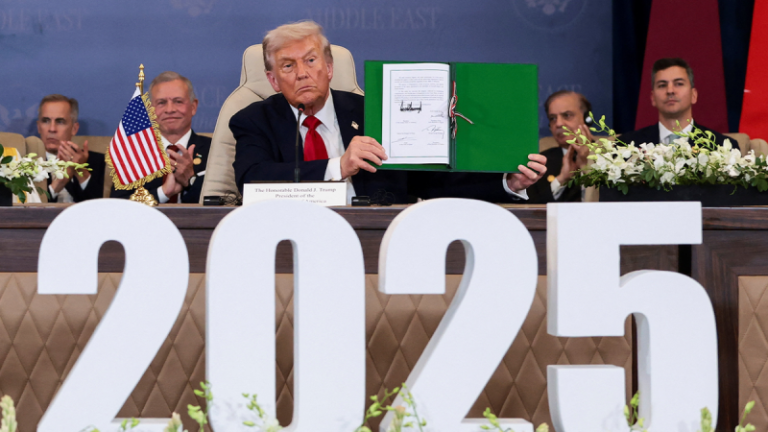
In August, Trump hosted the leaders of Armenia and Azerbaijan at the White House for a U.S.-brokered peace declaration aimed at addressing decades of conflict tied to Nagorno-Karabakh. The agreement focused on transit routes, economic cooperation and regional connectivity and was promoted by the administration as a historic step.

While the historic declaration was signed, implementation and deeper reconciliation is still ongoing.

Ukraine–Russia war

Ukraine remained the most ambitious and elusive peace target of Trump’s 2025 agenda. The year opened with Trump insisting the war could be ended through direct U.S. engagement and leverage over both Kyiv and Moscow. Diplomacy intensified in August, when Trump hosted Russian President Vladimir Putin in Alaska, a summit framed by the White House as a test of whether personal diplomacy could unlock a settlement.

In parallel, Ukrainian President Volodymyr Zelenskyy was received at the White House, where Trump reiterated U.S. support for Ukraine while signaling that any peace would require difficult compromises. U.S. officials explored security guarantees and economic incentives, while avoiding public commitments on borders or NATO membership.

By December, talks accelerated. Ukraine entered new rounds of U.S.-led negotiations, and Trump told reporters the sides were ‘getting close to something.’ On Christmas Zelenskyy said talks with U.S. officials had produced a 20-point plan and accompanying documents that include security guarantees involving Ukraine, the United States and European partners. He acknowledged the framework was not flawless but described it as a tangible step forward. Zelenskyy is reportedly readying a visit to meet with President Trump, possibly as soon as Sunday.

Bloomberg reported that Russia views the 20-point plan agreed to between Ukraine and the U.S. as only a starting point. According to a person close to the Kremlin, Moscow intends to seek key changes, including additional restrictions on Ukraine’s military, arguing that the proposal lacks provisions important to Russia and leaves many questions unanswered.

Democratic Republic of Congo–Rwanda

In early December, Trump hosted the signing of the Washington Accords for Peace and Prosperity between the Democratic Republic of Congo and Rwanda. The agreement reaffirmed commitments to end decades of conflict and expand economic cooperation through a regional integration framework.

By the end of the year, Reuters and the Associated Press reported that armed groups remained active in eastern Congo, underscoring the fragility of the accord, though both sides seemed to be invested in a long-term peace.

India–Pakistan

After a terrorist attack in Kashmir and retaliatory strikes raised fears of escalation, U.S. officials engaged in emergency diplomacy. Trump announced a ceasefire between the two nuclear-armed rivals, with a potentially catastrophic escalation between the two nuclear powers avoided.

Cambodia–Thailand border dispute

On the sidelines of an ASEAN summit, Trump helped mediate a ceasefire between Cambodia and Thailand following months of border clashes. 

Diplomatic efforts led by ASEAN and supported by external parties are ongoing, but fresh clashes and mutual recriminations between Thailand and Cambodia continue to challenge peace prospects and have led to large-scale displacement and civilian harm. Following the recent flare-ups, and with offers for mediation from Secretary of State Marco Rubio, a new ceasefire was agreed upon on Saturday to end weeks of fighting on the border.

Iran–Israel confrontation

Following U.S. and Israeli strikes on Iranian nuclear facilities, the Trump administration focused on containing escalation and reinforcing deterrence. No diplomatic agreement followed, but the confrontation did not expand into a broader regional war by year’s end.

Recently Israel warned that Iran might use its ballistic missile drills as a cover for a surprise attack. 

Sudan

Sudan remained one of the world’s deadliest conflicts. U.S. diplomacy has focused primarily on efforts to halt fighting and expand humanitarian access rather than brokering a comprehensive peace.

In December, Saudi Arabia and the United States presented Sudanese army chief Abdel Fattah al-Burhan with a three-point proposal aimed at ending the war, facilitating aid delivery and transferring power to civilians, according to Sudan Tribune.

Venezuela

As the year closed, Venezuela emerged as the United States’ clearest point of direct confrontation. The administration framed its posture as an extension of its broader ‘peace through strength’ doctrine, even as the risk of escalation lingered.

While the White House pursued de-escalation and negotiated arrangements elsewhere, its approach toward Nicolás Maduro relied almost entirely on pressure, not talks. Trump continued to cast Maduro as a criminal threat tied to drug trafficking, accusing him of rejecting the results of Venezuela’s last election and stealing the presidency.

With no diplomatic channel open, the U.S. maintained sweeping sanctions and stepped up efforts against cartel networks linked to the regime. There was no peace process in sight — but some opposition figures and U.S. allies argued that sustained pressure could still force political change in 2026, and ultimately hasten the end of Maduro’s rule.


This post appeared first on FOX NEWS

North Korea showed off its apparent progress in the development of a nuclear-powered submarine. State media released photos of North Korean dictator Kim Jong Un and his daughter, a potential heir, as they inspected what appears to be a largely completed hull.

The Korean Central News Agency (KCNA), North Korea’s official state media, said Kim and his daughter visited the shipyard to examine the construction of what it describes as an 8,700-ton-class nuclear-propelled submarine, The Associated Press reported. Pyongyang has signaled that it plans to arm the submarine with nuclear weapons, the AP noted. Kim has said the development of the submarine is a crucial step toward the modernization and nuclear armament of his country’s navy.

The Christmas Day release of the photos marks the first time North Korean state media has shown an update on the nuclear-powered submarine since March. Earlier images mostly showed the lower sections of the vessel, the AP noted. The KCNA did not say when the photos released on Thursday were taken.

Moon Keun-sik, a submarine expert at Seoul’s Hanyang University, told the AP that the photos of a largely completed hull indicate that many of the core components are already in place, as submarines are typically built from the inside out. However, it was not immediately clear exactly how much progress Pyongyang had made.

‘Showing the entire vessel now seems to indicate that most of the equipment has already been installed and it is just about ready to be launched into the water,’ Moon, who also served as a submarine officer in the South Korean navy, told the AP. Moon added that North Korea’s submarine could be ready for testing at sea within months.

While at the shipyard, Kim condemned South Korea’s efforts to develop its own nuclear-powered submarine as an ‘offensive act,’ despite the fact that President Donald Trump has backed Seoul’s push toward the technology. Kim said South Korea’s efforts violate North Korea’s security and maritime sovereignty, according to the AP.

In October, during his tour of Asia aimed at securing investments, Trump said that the U.S. would share technology with South Korea that would allow it to build a nuclear-powered submarine. The president posted on Truth Social that the vessel would be built in Philadelphia.

‘South Korea will be building its nuclear-powered submarine in the Philadelphia shipyards, right here in the good ol’ U.S.A. Shipbuilding in our country will soon be making a BIG COMEBACK,’ the president wrote.

The White House underscored the point when it released a fact sheet in November which directly referenced Washington and Seoul’s efforts to ‘further our maritime and nuclear partnership.’

The Associated Press contributed to this report.

This post appeared first on FOX NEWS

The biotech sector is entering 2026 with a positive outlook, characterized by reasonable valuations, robust oncology momentum and supportive policy tailwinds. This combination is setting the stage for a continued recovery, driven in part by the integration of artificial intelligence (AI).

However, this sectoral resurgence must navigate a tug-of-war between supportive stimulus and structural risks, which have the potential to challenge the pace of recovery.

Biotech sector rebounding after US uncertainty

According to Song, biotech has rebounded since its lows in April of this year.

Company valuations are trading at a 15 percent discount to broader markets on forward price-to-earnings, with secular demand intact for oncology, obesity and chronic diseases. In Song’s view, the biotech industry’s rebound stems from reduced uncertainty under the administration of US President Donald Trump.

Song added that valuations across healthcare are reasonable, noting rotational flows from cooling AI hype.

“I can’t deny that there have been some rotational effects that not just biotech has benefited (from), but healthcare in general,’ he commented. “While AI is an important driver in healthcare, to our view, it certainly is not priced in to the largest extent in many pockets of healthcare.”

Key biotech sector catalysts in 2026

Song sees healthcare’s recovery extending into 2026, with oncology remaining the primary growth engine.

He characterized the current sector resurgence as a durable structural shift being fueled by key developments that present tangible investment opportunities, including anticipated positive clinical trial outcomes, such as those for Revolution Medicines’ (NASDAQ:RVMD) pancreatic cancer drug.

“They have a lead drug that blocks an important pathway called RAS … and they could have a potential breakthrough in pancreatic cancer. They’re running a Phase III trial to demonstrate a potential survival benefit. There could be meaningful progress there,” Song noted. A data readout is expected next year.

Outside oncology, Song flagged high-profile biotech catalysts that could broaden the sector’s 2026 rally.

“Non-peptide oral GLP-1s … are clearly going to be an important data set readout and launch that could occur next year,” he explained, citing Eli Lilly’s (NYSE:LLY) orforglipron, a daily pill that hit Phase III success for type 2 diabetes and obesity in 2025. Approval is expected in 2026, and he believes it could be a potential game changer in obesity and chronic disease treatments, an area dominated by biotech innovators.

Song also sees validation ahead for platform technologies.

A dual-track recovery for biotech

While macro analysts see a broad cyclical recovery in 2026, Song predicts that the market will be defined by a dual-track recovery: a diagnostics-led initial public offering (IPO) surge, and a biopharma M&A environment focused on companies with the clinical validation required to alter the current standard of care.

Renaissance Capital predicts a faster pace for biotech IPOs, with a strong pipeline of companies such as Aktis Oncology, a radiopharma diagnostics firm targeting solid tumors, ready to list for US$100 million.

Additionally, AlphaSense forecasts steady M&A flow as companies rebuild their pipelines in the new year, a trend that Song sees as a structural necessity rather than a simple trend. “It’s an important pillar where Big Pharma needs to replenish their pipelines, and they can’t all do it internally,” he explained.

Consequently, he believes the primary “hunting ground” for these deals is mid-cap territory, where acquiring one or two proven drugs can effectively move the needle for a large pharmaceutical giant.

AI in the biotech sector

Song maintained that AI has not reached full valuation in the sector, and its role is expected to grow, with significant future productivity gains predicted in biopharma, drug discovery, clinical development and healthcare delivery.

“We’ve done some preliminary work that that that suggests there could be … productivity gains in areas like biopharmaceuticals and drug discovery and clinical development,” Song explained, adding that these are long-term projections. He sees a more immediate economic impact in how care is managed.

“Since healthcare is a large part of the US and global economy, and growing quickly in terms of healthcare costs, there are also opportunities for efficiency gains, which could lead to margin and consumer gains,” he noted. This revolution in delivery is already a key focus for his firm’s Tema Oncology ETF (NASDAQ:CANC).

However, life science market analyst Anastasia Bystritskaya warned that valuation and productivity are not synonymous, as high-performing models do not automatically become revenue-producing products. For investors, the real inflection point is operational integration rather than operating as a standalone prototype.

Drive for efficiency is expected to take a practical form in 2026 through what Sergey Jakimov, managing partner at longevity and biotech venture capital firm LongeVC, described as the “doctor in your hand.”

This AI companion manages routine, low-complexity tasks between clinic visits.

LongeVC anticipates that this shift to a regulated digital workflow will allow AI to identify meaningful clinical signals continuously without overburdening primary care teams.

This democratization of discovery creates a new competitive landscape for the hunting ground Song described; if AI-enabled teams can dissect complex pathways without a billion-dollar balance sheet, the traditional R&D model of Big Pharma faces a permanent disruption. In this new era, the innovation gap could be filled by agile players who use technology to act with the scale of a giant, but the speed of a startup.

Investor takeaway

Despite sector momentum, headwinds remain, particularly regarding the stability of clinical research funding.

A November report in JAMA Internal Medicine reveals that 383 clinical trials recently had their grants terminated, disrupting progress for over 74,000 participants. Dr. Gary K. Zammit, founder of Clinilabs, warned these reductions in National Institutes of Health funding risk slowing future commercial development of innovative therapies.

Macroeconomic headwinds, including rising tariffs and early labor market weakness, also present a material challenge.

Ultimately, the 2026 biotech outlook balances promising catalysts with the need for strategic capital deployment and a focus on clinically validated platform technologies, ensuring a durable expansion for the sector.

Securities Disclosure: I, Meagen Seatter, hold no direct investment interest in any company mentioned in this article.

This post appeared first on investingnews.com

The holiday season brings more than festive cheer, as for investors, it may signal the start of the so-called Santa Claus rally.

The Santa Claus rally is a period between the final trading days of December and the first days of January when stocks tend to climb. While this seasonal uptick isn’t guaranteed, historical data shows that markets rise more often than not during this window, driven by investor optimism, low trading volumes and year-end portfolio adjustments.

Historically, the last five trading days of December and the first two of January have been a period of above-average stock gains, offering a short, sharp rally for markets heading into the new year.

According to the Stock Trader’s Almanac, the Santa Claus rally has delivered an average gain of 1.3 percent for the S&P 500 (INDEXSP:.INX) since 1950. The phenomenon was first documented in 1972 by Yale Hirsch, founder of the Almanac, and continues to shape investor expectations today.

As for whether 2025 will deliver a Santa Claus rally to close out the year, after a choppy first half for December, markets have shown signs that a late-year recovery is possible.

When does the Santa Claus rally start?

The Santa Claus rally typically occurs over the final five trading days of December and the first two trading days of January. For 2025, the rally window begins on Wednesday, December 24, and runs through Monday, January 5, if historical patterns hold.

This narrow window often yields modest, yet consistent, returns for investors who time the market correctly.

While the rally’s timeframe is traditionally short, its effects can ripple through the market into early January. Essentially, a strong performance during this period can set the tone for January.

However, the exact timing of the Santa Claus rally can vary. Some analysts suggest that the rally has started earlier in recent years as investors attempt to front run the effect by increasing their positions in mid-December. This shift may blur the lines between the Santa Claus rally and broader December market upswings.

Will 2025 deliver a Santa Claus Rally?

This year, the S&P 500 fell during the middle of the month following a cooler-than-expected, albeit controversial, inflation report, which raised hopes for additional interest-rate cuts next year.

Despite this downturn, analysts note that a weak start to December has often failed to derail Santa’s run. Since 1950, the S&P 500 finished the Santa Claus rally period higher in 77 percent of years, even after early-month declines. By the end of the week, the index had already regained some ground, and it continued higher in the days leading up to Christmas.

“Barring any major shocks, it will be hard to fight the overwhelmingly positive seasonal period we are entering and the cleaner positioning set-up,” Goldman Sachs’ (NYSE:GS) trading desk team wrote in a note to clients, as reported by Bloomberg. ‘While we don’t necessarily see a dramatic rally, we do think there is room to go up from here into year end.”

Jeffrey Hirsch, editor-in-chief of the Stock Trader’s Almanac and Yale Hirsch’s son, also weighed in on the markets.

“It looks like (the Santa Claus rally) is set up and we can make another high by the end of the year,” he told MarketWatch. Hirsch cited cooler inflation readings and slower job growth in November, which may give the Federal Reserve room to cut interest rates in 2026.

It remains to be seen whether these predictions will come true, or if the market will be weighed down by factors including recent volatility in technology and artificial-intelligence-linked stocks.

Is the Santa Claus rally reliable?

Despite skepticism in some quarters, historical data supports the existence of the Santa Claus rally, and it is well documented.

Historically, the Santa Claus rally has been a relatively consistent period of gains. That said, historical patterns do not guarantee results, and not every year delivers the expected results. The S&P 500 lost about half a percentage point during the Santa rally period in 2024, and consecutive losses are rare but possible.

Columnist Mark Hulbert has expressed skepticism about the event in the past, noting that there is no definitive evidence that the market consistently outperforms during this period.

“An analysis of the past century reveals that the stock market in the weeks prior to Christmas is no more likely to rally than at other times of the year. (I suggest investors) ignore any arguments based on an alleged Santa Claus Rally,” Hulbert warned in an opinion piece posted on MarketWatch in 2018.

In 2019, for example, the market experienced volatility in December, defying the usual pattern.

In a December 2025 interview with CNBC, Jeffrey Hirsch cautioned that failure to rally is not an immediate bear-market signal, but rather “a flag to start looking at the other data — whether it’s seasonal indicators or other fundamental or technical measures.”

Despite the varying takes, many investors view the rally as a psychological phenomenon — one that influences market sentiment even if the returns are marginal.

Strategies for the Santa Claus rally

Now that the Santa Claus rally seems to be underway, investors interested in joining in have a variety of options, including domestic markets, international diversification or targeted sector plays such as mega-cap tech stocks.

As always, consulting with a financial advisor and conducting thorough research remains essential. While the Santa Claus rally offers potential rewards, market conditions can shift quickly, making flexibility and prudence key to success.

Securities Disclosure: I, Giann Liguid, hold no direct investment interest in any company mentioned in this article.

This post appeared first on investingnews.com