
Archive

November 2025

Browsing

(TheNewswire)

Vancouver, British Columbia TheNewswire – November 17, 2025 Juggernaut Exploration Ltd (JUGR.V) (OTCPK: JUGRF) (FSE: 4JE) ( the ‘Company’ or ‘Juggernaut’) is pleased to report that it has received a 5 year drill permit for the 100 % controlled Big One property (the ‘Property’), Golden Triangle, British Columbia. The permit is in good standing until March 31, 2031.

The Company is planning a drill program targeting several extensive gold-rich shear-hosted veins confirmed on surface in the newly discovered district-scale Eldorado System and Gold Swarm discoveries. These strong drill targets are planned to be tested in the third dimension during the fully-funded inaugural drill program in 2026.

The Eldorado System consists of a 22 Km 2 area that remains open where grab samples assayed up to 263.70 g/t AuEq or 8.48 oz/t AuEq (256.60 g/t Au, 546.00 g/t Ag, 0.43 % Cu, 0.41 % Pb and 0.01 % Zn) from >400 mineralized veins that are up to 10 m wide hosted in shear zones up to 50 m wide, and are exposed on surface for >1 km with >1 km of vertical relief. The Eldorado System hosts the Gold Dome Zone where grab samples assayed up to 263.70 g/t AuEq or 8.48 oz/t AuEq (256.60 g/t Au, 546.00 g/t Ag, 0.43 % Cu, 0.41 % Pb and 0.01 % Zn), the Big Mac Zone where grab samples assayed up to 113.92 g/t AuEq or 3.66 oz/t AuEq (111.35 g/t Au, 159.00 g/t Ag, 0.02 % Cu, 3.88 % Pb and 0.01 % Zn), and the Whopper Zone where grab samples assayed up to 43.94 g/t AuEq or 1.41 oz/t AuEq (39.84 g/t Au, 333.00 g/t Ag, 0.02 % Cu, 0.07 % Pb and 0.06 % Zn). See news release from September 8, 2025 and November 10, 2025.

The Gold Swarm discovery is a 3 km 2 area of strong gold potential with >100 gold-rich polymetallic veins exposed on surface for >200 m and up to 4.5 m wide with up to 700 m of vertical relief, where grab samples assayed up to 231.81 g/t AuEq or 7.45 oz/t AuEq (226.94 g/t Au, 335.00 g/t Ag, 0.00 % Cu, 4.99 % Pb and 0.01 % Zn) that remains open. See news release from September 8, 2025 and November 10, 2025.

Link to map with samples > 1 g/t AuEq

Dan Stuart, President and CEO of Juggernaut Exploration, states: ‘Now that we have received the drill permit and all regulatory requirements have been met, we are looking forward to testing this amazing district-scale discovery with the drill bit. We are committed to maintaining respectful and collaborative relationships with the Tahltan First Nation and all stakeholders. As we advance exploration on our project, we will continue working closely with the Tahltan First Nation and all the local stakeholders and regulatory agencies to ensure our activities create long-term value and reflect community priorities.’

Big One Gold-Rich District-Scale System Highlights:

  • The district-scale Eldorado System covers an area of 22 km that remains wide open where grab samples assayed up to 263.70 g/t AuEq or 8.48 oz/t AuEq (256.60 g/t Au, 546.00 g/t Ag, 0.43 % Cu, 0.41 % Pb and 0.01 % Zn)  from 400 mineralized veins that remain open and are up to 10 m wide, hosted in shear zones up to 50 m wide, and are exposed on surface for 500 m with 1 km of vertical relief.

Link to Gold Dome Figure

Link to Whopper Zone Figure

  • The Gold Swarm Discovery is a 3 km area of strong gold potential with 100 gold-rich polymetallic veins exposed on surface for 200 m and up to 4.5 m wide with up to 700 m of vertical relief, where grab samples assayed up to 231.81 g/t AuEq or 7.45 oz/t AuEq (226.94 g/t Au, 335.00 g/t Ag, 0.00 % Cu, 4.99 % Pb and 0.01 % Zn) that remains open.

Link to Goldswarm Figure

  • 41% (219 samples out of 527) collected within the Eldorado System in 2024 and 2025 assayed 1 g/t AuEq; 65% (28 samples out of 43) collected within the Gold Swarm Zone in 2024 and 2025 assayed 1 g/t AuEq.

  • Gold samples up to 256.60 g/t or 8.25 oz/t, silver samples up 2810 g/t or 90.34 oz/t, and copper samples up to 14.40 % were collected on Big One.

  • Detailed mapping has confirmed common orientations as well as similar geochemical signatures and textures of the gold-mineralized veins along the 15 km Highway of Gold corridor surrounding the snowcap of Deeker Glacier strongly indicating that the gold-rich mineralization found throughout is all part of one district-scale gold system that remains open.

  • The polymetallic veins, alteration signature, geochemical path finder element signature, and geophysical anomalies strongly indicate the presence of a large common buried gold-silver-copper rich porphyry feeder source or similar magmatic source or sources at depth responsible for the extensive high-grade veining confirmed on surface.

  • Detailed geological and structural mapping has been completed on the reported drill targets in order to define the full geometry of these high-grade gold-bearing large shears and veins and will be instrumental in designing the drill plan for the upcoming maiden drill program.

  • A high-resolution UAV photogrammetry survey was completed over an area of 52 km on the Eldorado System and Gold Swarm Zone encompassing all of the maiden drill targets. The data will be used to support modelling and define targeting the high-grade gold mineralization recently discovered.

  • A property wide LiDAR survey covering an area of 385 km has been conducted and will be used to augment information obtained from the mapping as well as plan the upcoming inaugural drill campaign.

The Big One property is situated in a region that is well known for hosting globally recognized precious metal and porphyry deposits, several of which occur near the property including the multiple porphyry systems at Galore Creek, the world’s largest known gold reserve at KSM and the polymetallic copper project at Shaft Creek, as well as the Brucejack high-grade epithermal gold deposit, and the structurally controlled high-grade hydrothermal gold-silver zones at Trophy and Sphal Creek. The property geology is favorable to host these types of deposits, as confirmed by the presence of extensive areas of propylitic alteration, untested geophysical anomalies, strong silt, soil, and rock geochemistry, including path finder elements directly related to porphyry systems, key structures and textures, porphyry-style mineralization, and high-grade polymetallic veins, that have been discovered on the Big One property.

The Big One property can be accessed year-round via helicopter from the Glenora/Telegraph Creek Road at the Barrington Mine (33 km to the north-northeast) as well as the Galore Creek Road (15 km to the southeast). The Canadian government committed $20 M to extend/improve the Galore Creek Road to within 15 km of the Big One property. The property is 2 km west of the Scud River airstrip used in the early days of Galore Creek.

The Big One property exploration qualifies for the Critical Mineral Exploration Tax Credit (CMETC).

About Juggernaut Exploration Ltd.

Juggernaut Exploration Ltd. is an explorer and generator of precious metals projects in the prolific Golden Triangle of northwestern British Columbia. Its projects are located in globally recognized geological settings and in geopolitically stable jurisdictions, making them amenable to mining in Canada. Juggernaut is a member and active supporter of CASERM, an organization representing a collaborative venture between the Colorado School of Mines and Virginia Tech. Juggernaut’s key strategic cornerstone shareholder is Crescat Capital.

For more information, please contact:

Juggernaut Exploration Ltd.

Dan Stuart

President, Director, and Chief Executive Officer

Tel: (604)-559-8028

www.juggernautexploration.com

Follow us on LinkedIn: Click Here
Follow us on Facebook:
Click Here
Follow us on X / Twitter:
Click Here
Follow us on YouTube:
Click Here

Qualified Person

Rein Turna, P. Geo is the qualified person as defined by National Instrument 43-101, for Juggernaut Exploration projects, and supervised the preparation of, and has reviewed and approved, the technical information in this release.

QA/QC Protocol

Grab, channels, chip and talus samples were collected by foot with helicopter assistance. Prospective areas included, but were not limited to, proximity to MINFile locations, placer creek occurrences, regional soil anomalies, and potential gossans based on high-resolution satellite imagery. The rock grab and chip samples were extracted using a rock hammer, or hammer and chisel to expose fresh surfaces and to liberate a sample of anywhere between 0.5 to 5.0 kilograms. All sample sites were flagged with biodegradable flagging tape and marked with the sample number. All sample sites were recorded using hand-held GPS units (accuracy 3-10 meters) and sample ID, easting, northing, elevation, type of sample (outcrop, subcrop, float, talus, chip, grab, etc.) and a description of the rock were recorded on all-weather paper. Samples are then inserted in a clean plastic bag with a sample tag for transport and shipping to the geochemistry lab. QA/QC samples including blanks, certified reference materials, and duplicate samples are inserted regularly into the sample sequence at a rate of 10%.

All samples are transported in rice bags sealed with numbered security tags. The rice bags are transported from the core shacks to the MSALABS facilities in Terrace, BC. MSALABS is certified with both AC89-IAS and ISO/IEC Standard 17025:2017. The core samples undergo preparation via drying, crushing to ~70% of the material passing a 2 mm sieve and riffle splitting. The sample splits are weighed and transferred into three plastic jars, each containing between 300 g and 500 g of crushed sample material. A 250 g split is pulverized to ensure at least 85% of the material passes through a 75 µm sieve. The crushed samples are transported to the MSALABS PhotonAssayTM facility in Prince George, where gold concentrations are quantified via photon assay analysis (method CPA-Au1). Samples that result in gold concentrations ≥5 ppm are analyzed to extinction. Photon assay uses high-energy X-rays (photons) to excite atomic nuclei within the jarred samples, inducing the emission of secondary gamma rays, which are measured to quantify gold concentrations. The assays from all jars are combined on a weight-averaged basis. Multielement analyses are carried at the MSALABS facilities in Surrey, BC, where 250 g of pulverized splits are analyzed via ICF6xx and IMS-230 methods. The IMS-230 method uses 4-acid digestion (a combination of hydrochloric, nitric, perchloric and hydrofluoric acids) followed by inductively coupled plasma emission spectrometry to quantify concentrations of 48 elements. Samples with over-limit results for Ag, Cu, Pb and Zn undergo ore-grade analysis via the ICF-6xx method (where ‘xx’ denotes the target metal). This method employs 4-acid digestion followed by inductively coupled plasma emission spectrometry.

Gold Equivalent (AuEq) metal values are calculated using: Au 4004.43 USD/oz, Ag 48.80 USD/oz, Cu 5.09 USD/lbs, Pb 2026.43 USD/ton and Zn 3054.88 USD/ton on October 31, 2025. There is potential for economic recovery of gold, silver, copper, lead, and zinc from these occurrences based on other mining and exploration projects in the same Golden Triangle Mining Camp with similar style of high-grade gold mineralization where Juggernaut’s project is located such as the Brucejack Mine and the Homestake Ridge Gold Project. Here, AuEq values were calculated using multi-year running averages for metal price, and included provisions for metallurgical recoveries, treatment charges, refining costs, and transportation. Recoveries for Au, Ag, Cu, Pb and Zn on Big One are not known but are assumed to be similar with 85 % gold recovery, 75 % silver recovery, 75 % copper recovery, 75 % zinc recovery and 50 % Pb recovery. The quoted reference of metallurgical recoveries is not from Juggernaut’s Big One project and there is no guarantee that such recoveries will ever be achieved, unless detailed metallurgical work such as in a Feasibility Study will be completed on the Big One project.

NEITHER THE TSX VENTURE EXCHANGE NOR ITS REGULATION SERVICES PROVIDER (AS THAT TERM IS DEFINED IN THE POLICIES OF THE TSX VENTURE EXCHANGE) ACCEPTS RESPONSIBILITY FOR THE ADEQUACY OR ACCURACY OF THIS RELEASE.

FORWARD LOOKING STATEMENT

Certain disclosure in this release may constitute forward-looking statements that are subject to numerous risks and uncertainties relating to Juggernaut’s operations that may cause future results to differ materially from those expressed or implied by those forward-looking statements, including its ability to complete the contemplated private placement. Readers are cautioned not to place undue reliance on these statements.

Disclaimer

The reader is cautioned that grab samples are spot samples which are typically, but not exclusively, constrained to mineralization. Grab samples are selective in nature and collected to determine the presence or absence of mineralization and are not intended to be representative of the material sampled.

NOT FOR DISSEMINATION IN THE UNITED STATES OR TO U.S. PERSONS OR FOR DISTRIBUTION TO U.S. NEWSWIRE SERVICES. THIS PRESS RELEASE DOES NOT CONSTITUTE AN OFFER TO SELL OR AN INVITATION TO PURCHASE ANY SECURITIES DESCRIBED IN IT.

Copyright (c) 2025 TheNewswire – All rights reserved.

News Provided by TheNewsWire via QuoteMedia

This post appeared first on investingnews.com

Critical Mineral Resources plc (“CMR”, “Company”) is delighted to announce extremely encouraging results from its maiden core drilling programme at Agadir Melloul, confirming a significant new, shallow copper discovery and establishing the foundations for a potential district scale sediment hosted, copper-silver play.

Highlights

  • Exceptional near surface copper intercepts including:
    • 5.8m at 1.12% Cu / 19g/t Ag,
    • 6.5m at 1.03% Cu,
    • 4.7m at 1.48% Cu, in addition to
    • 6.0m at 1.4% Cu / 31g/t Ag from the newly identified Rhyolite Target, all exceeding our expectations.
  • These results allow for a significant growth runway with less than 1% of the project area drilled. Ongoing mapping confirms a district wide mineralised envelope, consistent with our 25 million tonne Initial Exploration Target.
  • Shallow, near surface tabular copper deposit supports low capex and rapid development pathway, with a geometry amenable to open-pit operations.
  • The new Rhyolite Target copper-silver discovery adds a second, potentially large scale, mineral system, materially expanding the projects already significant upside potential.
  • On track to break ground on the Initial Mine Development in 2027, with a maiden resource expected as early as H1 2026.

Drill results

Sediment hosted mineralisation:

  • BH01 – 5.8m at 1.12% copper and 19g/t silver from 2.2m
  • BH04 – 2.5m at 0.85% copper and 4g/t silver from 1.5m
  • BH06 – 2.0m at 1.3% copper from 16m
  • BH07 – 1.3m at 0.98% copper from 16.7m
  • BH09 – 3.0m at 0.75% copper from 10m
  • BH12 – 4.0m at 1.04% copper from 2.0m
  • BH 35 – 7.5m at 0.97% copper inc. 6.5m at 1.03% copper
  • BH 36 – 4.7m at 1.48% copper from 17m
  • BH 38 – 4.7m at 1.03% copper from 27m
  • BH 43 – 3.0m at 1.1% copper from 6.0m
  • BH 45 – 1.60m at 1.1% copper from 6.0m, 4.0m at 0.77% copper and 2.0m at 1.05% copper from 16.4m

Also, the new Rhyolite Target copper-silver discovery confirmed in late October, with the first drill hole returning very encouraging results:

  • BHR01 – 6.0m at 1.4% copper and 31g/t silver from surface

Fig.1 Zone 1 North, long section showing shallow undulating mineralisation

Source: Company

Fig.2 Zone 1 North cross section

Source: Company

Charlie Long CEO commented:

“These excellent results have surpassed our expectations. We are seeing broad zones of consistent, high quality copper mineralisation in a very shallow setting, with multiple intercepts over 4m. This is a brilliant outcome, and the Initial Mine and Strategic Resource strategies are both on track.

It is particularly exciting that we have drilled less than 1% of our 50km2 sedimentary target, and geological evidence points to a large, mineralised copper system that extends across the project area. This positions the project as a scalable, district level opportunity, and we expect continued drilling to deliver a steady flow of excellent assay results as we build towards an extensive resource.

Agadir Melloul is different from most copper development stories in the market. It combines true scale potential, shallow geometry with near surface setting, creating economically and operationally favourable mining conditions in an excellent jurisdiction. This gives us a pathway to delivering a fast tracked, near surface operation.

And now we also have the unexpected bonus of a rhyolite hosted mineralisation target. This is an exciting discovery, which our team believes represents a second standalone mineral system with strong copper and silver grades. If our working model holds, this could transform Agadir Melloul into a multi-deposit copper district, dramatically enhancing its long-term strategic value.

Our shareholders have been patient, and we are now entering a period where we believe that patience will be rewarded. We are planning to accelerate our drilling program with an additional rig, to drill multiple targets, and ultimately add equity value from different parts of the project. The momentum is gathering, and we can look forward to much more good news in the future.”

Sedimentary copper – depth, grade and thickness

CMR’s Initial Exploration Target of 150,000 to 200,000 tonnes of contained copper is based on a shallow, semi-continuous tabular resource with a 2.0m average thickness and an average grade of 1.2% copper equivalent. While we are retaining the 2.0m target for now, today’s assay results indicate clear potential for the average thickness to exceed our current assumptions, proving tangible resource growth potential as drilling progresses.

The geometry of our exploration target is comparable to several well-known sediment hosted copper orebodies in the Zechstein Basin, such as KGHM’s Lubin Mine in Poland, which has an average thickness of 2.8m (ranging from 1.5m to 5.0m) and an average reserve grade of 0.95% copper and 48g/t silver. Lubin operates at depths of 368m to more than 1,000m.Its longevity and scale is supported by the exceptional consistency of the Kupferschiefer orebody.

Agadir Melloul has similar geometry to Lubin but benefits enormously from very shallow, near surface mineralisation. Shallow mines typically benefit from lower capital intensity, lower sustaining and reserve development costs, and favourable mining economics, all of which support a fast-track development profile.

Strategic Resource Strategy

Concurrently with the Initial Mine development, CMR is moving aggressively to advance its parallel strategy of delineating a large-scale strategic resource at Agadir-Melloul. With our own, new core drill rig arriving imminently, drilling will accelerate sharply, enabling rapid expansion of the known mineralised footprint.

Our primary target is a laterally semi-continuous 1.5m to 3.5m thick extensive zone of mineralised sediments, comprising limestones, dolomites and microconglomerates. Mineralisation within this sequence demonstrates strong lateral continuity, with higher grade zones developing where host rocks exhibit elevated permeability and porosity, a model that supports the potential for a large-scale discovery.

Summary and rhyolite assessment

CMR remains firmly on track to deliver a shallow, open pittable, maiden resource by late Q2 to early Q3 2026, sufficient in scale to underpin the Initial Mine development.The initial resource’s grade and geometry is expected to be in line with our target of a near surface, 2.0m thick and 1.2% copper equivalent deposit, with potential for thickness to increase based on current intercepts.

The Rhyolite Target discovery has created a major new growth vector. There are various scenarios, all of which are very positive. The base case is that drilling delineates a near surface rhyolite hosted mineralisation through secondary enrichment. Even this would represent a highly valuable addition to the project.

However, our working hypothesis, is that the rhyolite was mineralised with primary copper and silver, which would constitute an entirely new igneous hosted copper system within the project. This scenario would significantly elevate Agadir Melloul’s long term and large-scale potential.

CMR will shortly be selecting representative core samples from both styles of mineralisation for thin-section and associated detailed petrology and mineralogy studies.

Fig.3 Current portfolio map

Source: Company

Fig.4 Drilled area in dark grey represents <1% of project’s 50km2 target limestone

Source: Company

Fig.5 Geological model showing mineralised envelope and targeted higher-grade zones

Source: Company

Fig.6 Rhyolite Target core

Source: Company

Outlook

Following publication of the resource estimate in H1 2026, CMR will immediately commence the Agadir-Melloul feasibility study and Environmental Impact Assessment for the processing plant, as it targets construction of the Initial Mine during 2027. With the Company’s own, new rig arriving imminently to accelerate exploration, we expect drilling density, mineralised footprint, and resource to grow rapidly.

The project is emerging as one of the most compelling new copper discoveries, with size, grade, geometry, and multi system upside rarely seen at this early stage of exploration.

Competent Person Statement

The technical exploration and mining information contained in this announcement has been reviewed and approved by Mr. Robert Nigel Chapman. Mr. Chapman has sufficient experience which is relevant to the style of mineralisation and type of deposit under consideration and to the activity to which he is undertaking to qualify as a Competent Person as defined in the 2004 Edition of the ‘Australasian Code for Reporting of Exploration Results, Mineral Resources and Ore Reserves and as a qualified person under the AIM Note for Mining, Oil and Gas Companies. Mr. Chapman is an employee of Luna Recursos Naturales SAC, an independent geological consultancy established in 2014 and is a Member of the Australasian Institute of Geoscientists (A.I.G.) Mr. Chapman has visited Agadir Melloul and consents to the inclusion in this Announcement of such information in the form and context in which it appears.

The information contained within this announcement is deemed by the Company to constitute inside information as stipulated under the Market Abuse Regulation (EU) No. 596/2014 as it forms part of United Kingdom domestic law by virtue of the European Union (Withdrawal) Act 2018, as amended by virtue of the Market Abuse (Amendment) (EU Exit) Regulations 2019.

Source

This post appeared first on investingnews.com

From new stealth bombers to AI-enabled drones, the U.S. and China are reshaping airpower for a Pacific showdown – each betting its technology can keep the other out of the skies.

The U.S. is charging ahead with its next-generation F-47 fighter, while China scrambles to catch up with jets designed to match the F-35 and F-22.

After a brief program pause in 2024, the Air Force awarded Boeing the contract in March for the F-47, a manned sixth-generation fighter meant to anchor America’s next air superiority fleet. The first flight is expected in 2028.

At the same time, the B-21 Raider, the stealth successor to the B-2, is deep into testing at Edwards Air Force Base. The Air Force plans to buy at least 100 Raiders – each built to survive inside heavily defended Chinese airspace.

The Pentagon is also betting on Collaborative Combat Aircraft, or CCAs – drones designed to fly alongside fighters as ‘loyal wingmen.’ Prototypes from Anduril and General Atomics are already in the air. Officials say CCAs will let one pilot control several drones at once.

China outpaces the rest of the world in the commercial drone market, but that doesn’t necessarily give it the advantage from a military perspective. 

‘I’m not sure that’s really true. In terms of high-end military drones that are really important to this fight, the U.S. still has a pretty significant edge.’ said Eric Heginbotham, a research scientist at MIT’s Center for International Studies. 

He pointed to the Air Force’s stealth reconnaissance platforms – the RQ-170 and RQ-180 – and upcoming ‘loyal wingman’ drones designed to fly with fighters as proof that the U.S. still leads in advanced integration and stealth technology.

China’s leap forward

China’s airpower modernization has accelerated as the U.S. reshapes its force. Beijing has zeroed in on three priorities – stealth, engines and carriers – the areas that long held its military back.

The Chengdu J-20, China’s flagship stealth fighter, is being fitted with the new WS-15 engine, a home-built powerplant meant to rival U.S. engines.

‘It took them a while to get out of the blocks on fifth generation, especially to get performance anywhere near where U.S. fifth gen was,’ Heginbotham said. ‘The J-20 really does not have a lot of the performance features that even the F-22 does, and we’ve had the F-22 for a long time.’

Meanwhile, China’s third aircraft carrier, the Fujian, was commissioned this fall – the first with electromagnetic catapults similar to U.S. Ford-class carriers. The move signals Beijing’s ambition to launch stealth jets from sea and project power well beyond its coast.

Together, the J-20, the carrier-based J-35, and the Fujian give China a layered airpower network – stealth jets on land and at sea backed by growing missile coverage.

Chinese military writings identify airfields as critical vulnerabilities. PLA campaign manuals call for striking runways early in a conflict to paralyze enemy air operations before they can begin. Analysts believe a few days of concentrated missile fire could cripple U.S. bases across Japan, Okinawa and Guam.

‘The U.S. bases that are forward deployed – particularly on Okinawa, but also on the Japanese mainland and on Guam – are exposed to Chinese missile attack,’ said Mark Cancian, a retired Marine colonel and senior advisor at the Center for Strategic and International Studies. ‘In our war games, the Chinese would periodically sweep these air bases with missiles and destroy dozens, in some cases even hundreds, of U.S. aircraft.’

Heginbotham said that missile-heavy strategy grew directly out of China’s early airpower weakness.

‘They didn’t think that they could gain air superiority in a straight-up air-to-air fight,’ he said. ‘So you need another way to get missiles out – and that another way is by building a lot of ground launchers.’

Different strategies, same goal

The two militaries are taking different paths to the same target: air dominance over the Pacific.

The U.S. approach relies on smaller numbers of highly advanced aircraft linked by sensors and artificial intelligence. The goal: strike first, from long range, and survive in contested skies.

China’s model depends on volume – mass-producing fighters, missiles, and carrier sorties to overwhelm U.S. defenses and logistics.

‘U.S. fighter aircraft – F-35s, F-15s, F-22s – are relatively short-legged, so they have to get close to Taiwan if they’re going to be part of the fight,’ Cancian said. ‘They can’t fight from Guam, and they certainly can’t fight from further away. So if they’re going to fight, they have to be inside that Chinese defensive bubble.’

Both sides face the same challenge: surviving inside that bubble. China’s expanding missile range is pushing U.S. aircraft farther from the fight, while American bombers and drones are designed to break back in.

The fight to survive

Heginbotham said survivability – not dogfighting – will define the next decade of air competition.

‘We keep talking about aircraft as if it’s going to be like World War II – they go up, they fight each other. That’s not really our problem,’ he said. ‘Our problem is the air bases themselves and the fact that aircraft can be destroyed on the air base.’

China, he warned, is preparing for that reality while the U.S. is not.

‘They practice runway strikes in exercises, they’re modeling this stuff constantly,’ Heginbotham said. ‘Unlike the United States, China is hardening its air bases. The U.S. is criminally negligent in its refusal to harden its air bases.’

Cancian’s war-game findings echo that vulnerability. He said U.S. surface ships and aircraft would likely have to fall back under missile fire in the opening days of a conflict.

‘At the initial stages of a conflict, China would have a distinct advantage,’ Cancian said. ‘Now, over time, the U.S. would be able to reinforce its forces, and that would change.’

Looking ahead

The Pentagon’s fiscal 2026–27 budget will determine how fast the U.S. can build out its F-47s, B-21s and CCAs – systems that will shape American airpower through the 2030s.

China’s rapid modernization is closing what was once a wide gap, but the U.S. still holds advantages in stealth integration, combat experience and autonomous systems.

‘The ability to protect our aircraft, whatever form those aircraft take, on the ground is going to be central to our ability to fight in the Asia theater,’ Heginbotham said.

‘Survivability is going to be key… The ability to protect and disperse your firepower is going to be central to whether we can really stay in this game.’

For decades, U.S. air dominance was taken for granted. In the Pacific, that advantage is no longer guaranteed. 

This post appeared first on FOX NEWS

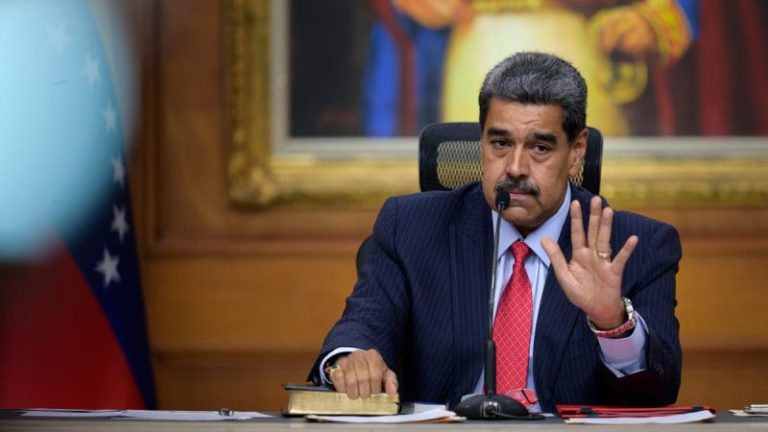
Secretary of State Marco Rubio announced Sunday that the Cartel de los Soles, a powerful criminal network tied to Venezuela’s top leadership, will be labeled as a Foreign Terrorist Organization (FTO). 

The move appears to be an escalation in Washington’s stance toward the Venezuelan government and could lead to military action against the Maduro regime. 

In a statement, Rubio confirmed the U.S. will formally designate the cartel as an FTO later this month.

The designation, which is to take effect Nov. 24, targets the criminal network allegedly led by Venezuelan strongman Nicolás Maduro and senior members of his regime.

According to the State Department, ‘Based in Venezuela, the Cartel de los Soles is headed by Nicolás Maduro and other high-ranking individuals of the illegitimate Maduro regime who have corrupted Venezuela’s military, intelligence, legislature, and judiciary.’

‘Neither Maduro nor his cronies represent Venezuela’s legitimate government,’ the statement read.

‘The Cartel de los Soles, in coordination with other terrorist organizations including Tren de Aragua and the Sinaloa Cartel, is responsible for terrorist violence across our hemisphere and for trafficking drugs into the United States and Europe.’

The announced action is being taken under Section 219 of the Immigration and Nationality Act, which authorizes the State Department to designate foreign entities engaged in terrorist activity. 

The designation will become official once it’s published in the Federal Register.

The Cartel de los Soles had previously been sanctioned by the U.S. Treasury Department under Executive Order 13224, which targets terrorists and those providing support to terrorism.

In an accompanying post on X, Rubio said:

.@StateDept intends to designate Cartel de los Soles as a Foreign Terrorist Organization (FTO). Headed by the illegitimate Nicolás Maduro, the group has corrupted the institutions of government in Venezuela and is responsible for terrorist violence conducted by and with other designated FTOs as well as for trafficking drugs into the United States and Europe.

The statement came as President Trump reiterated that the U.S. was intent on stopping drug dealers and drugs filtering into the country.

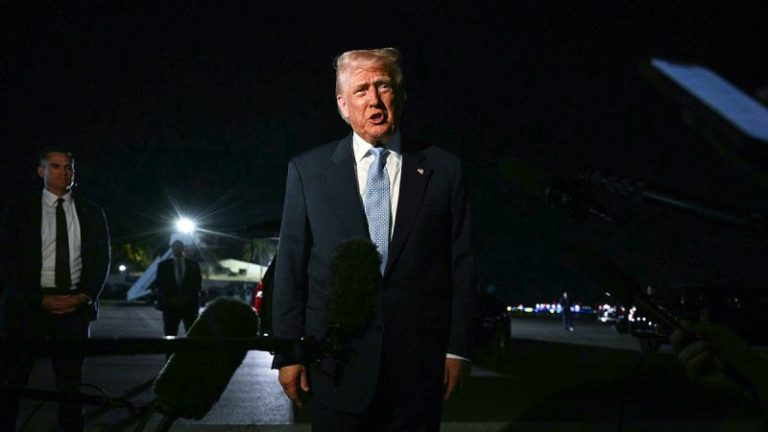
‘We’re stopping drug dealers and drugs from coming into our country,’ Trump told reporters Sunday night.

‘And I actually told Marco and some of the people our secretary of state is doing a great job, by the way. I said, ‘Go to Congress and let them know we’re not letting drugs come through Mexico. We’re not letting them come through Venezuela,” he added.

Trump’s comments came just after he said that the government may be having discussions with Venezuela as well as confirming whether the new cartel designation would mean the U.S. government could now target Maduro’s assets or infrastructure.

It allows us to do that,’ Trump confirmed while mentioning talks with the Venezuelan leader.

‘We may be having some discussions with Maduro, and we’ll see how that turns out. They would like to talk,’ he said before adding, ‘We’ll see what happens.’

Fox News Digital has reached out to the Department of State for comment.

This post appeared first on FOX NEWS

President Trump is calling on House Republicans to vote to release files related to disgraced financier Jeffrey Epstein, insisting he has ‘nothing to hide’ and accusing Democrats of using the case as a distraction from GOP accomplishments.

In a Truth Social post on Sunday, Trump urged House Republicans to vote in favor of releasing the documents, describing the controversy as a ‘Democrat hoax perpetrated by radical left lunatics.’

‘As I said on Friday night aboard Air Force One to the Fake News Media, House Republicans should vote to release the Epstein files, because we have nothing to hide, and it’s time to move on from this Democrat Hoax perpetrated by Radical Left Lunatics in order to deflect from the Great Success of the Republican Party, including our recent Victory on the Democrat ‘Shutdown,” Trump wrote.

Trump pointed to the Department of Justice’s (DOJ) previous release of thousands of pages of Epstein-related documents. 

He also noted that the agency is investigating possible ties between Epstein and ‘Democrat operatives’ including former President Bill Clinton, LinkedIn co-founder Reid Hoffman and former Treasury Secretary Larry Summers.

‘The House Oversight Committee can have whatever they are legally entitled to, I DON’T CARE!’ Trump said.

He added, ‘All I do care about is that Republicans get BACK ON POINT, which is the Economy, ‘Affordability’ (where we are winning BIG!), our Victory on reducing Inflation from the highest level in History to practically nothing, bringing down prices for the American People, delivering Historic Tax Cuts, gaining Trillions of Dollars of Investment into America (A RECORD!), the rebuilding of our Military, securing our Border, deporting Criminal Illegal Aliens, ending Men in Women’s Sports, stopping Transgender for Everyone, and so much more!’

Trump also argued that if the Democrats ‘had anything,’ it would have surfaced prior to last year’s presidential election.

‘Nobody cared about Jeffrey Epstein when he was alive and, if the Democrats had anything, they would have released it before our Landslide Election Victory,’ Trump said. ‘Some ‘members’ of the Republican Party are being ‘used,’ and we can’t let that happen. Let’s start talking about the Republican Party’s Record Setting Achievements, and not fall into the Epstein ‘TRAP,’ which is actually a curse on the Democrats, not us. MAKE AMERICA GREAT AGAIN!’

Attorney General Pam Bondi announced Friday the DOJ would probe prominent Democrats after new emails revealed ties to Epstein.

In an X post Friday afternoon, Bondi said Jay Clayton, U.S. attorney for the Southern District of New York, would take the lead on the investigation.

‘Clayton is one of the most capable and trusted prosecutors in the country,’ Bondi wrote in the post. ‘As with all matters, the Department will pursue this with urgency and integrity to deliver answers to the American people.’

Fox News Digital has reached out to the White House, Bill Clinton, Reid Hoffman and Larry Summers for comment.

Fox News Digital’s Alexandra Koch contributed to this report.

This post appeared first on FOX NEWS

Americans have delivered the same message in the last two elections: make life affordable again. 

They are tired of working harder for less, while the cost of everything — from housing to education to insurance — keeps rising. The affordability crisis touches every household, and its biggest driver is the one Washington refuses to tackle seriously: healthcare. 

Healthcare now consumes nearly one-fifth of our economy. It is the largest single cost for employers, the fastest-growing burden on families, and the quietest drain on national growth. Every dollar businesses spend on bloated health costs is a dollar not available for higher wages, new jobs or investment. Every dollar families spend on premiums or out-of-pocket costs is a dollar they can’t use for savings, housing or opportunity. Until we fix healthcare, we can’t fix affordability. 

It’s not that Washington ignores healthcare — it’s that it thinks about it too narrowly. Politicians obsess over temporary subsidies, tax credits and program expansions that make insurance more expensive to subsidize but never make care itself more affordable. The current fight over extending COVID-era insurance subsidies is a perfect example. Even supporters of Obamacare now admit that the ‘Affordable’ Care Act turned out to be unaffordable. Their answer is to borrow more money to prop up a system that keeps getting worse. That is not reform — it’s surrender.

There are three truths both parties must face. 

First, the system is already too expensive and locked in a pattern that guarantees it will grow more unaffordable every year. 

Second, 60 years of bureaucratic control — public and private — have utterly failed to contain costs.

Third, we must build a new model that relies on patients, doctors and employers — not massive government and insurance-company bureaucracies — to achieve the change Americans want. 

That model is not theoretical — it already works in the rest of our economy. When people have access to clear prices and quality information before making decisions, competition drives innovation, choice and lower costs. Technology has made this possible in every industry, from travel to retail to manufacturing. If the same principles applied to healthcare, we could unleash that same power to lower costs and improve quality. 

Instead, our opaque, bureaucratic system hides prices and multiplies middlemen. The average family of four now spends roughly $27,000 a year on health insurance — about the cost of a new Chevrolet or Toyota every 12 months. Most families don’t see the full bill because their employer or the government pays much of it, but that just means their wages are smaller. Paying the equivalent of a new car every year just for coverage is why Americans list affordability as their top economic concern.

Worse, nobody knows what anything costs — not patients, not families, not even the self-funded employers who pay the claims for their plan members. Bills arrive months after care, after passing through a maze of third-party administrators, repricers and billing vendors. That secrecy fuels waste, fraud and frustration. It’s estimated that 30% to 50% of all healthcare spending is administrative rather than medical. In short, America’s healthcare system has more middlemen than medicine. 

And who benefits? Powerful interest groups, insurers, consultants and bureaucracies that profit from complexity and confusion. As Tom Cruise shouted in ‘Jerry Maguire’: ‘Show me the money.’ Behind the speeches and lobbyists defending this broken system are people determined to protect their share of a bankrupting status quo. 

Second, 60 years of bureaucratic control — public and private — have utterly failed to contain costs.

Politicians can’t fight every entrenched interest group — but millions of patients and doctors armed with real price and quality information can. Transparency gives power back to those who actually deliver and receive care. When they can see what things cost, they can make smarter choices, reward efficiency and hold wasteful players accountable. Transparency doesn’t just lower prices — it changes who holds the power.

That’s why President Donald Trump’s price-transparency executive order in his first administration was a genuine breakthrough. It required hospitals and insurers to publish negotiated prices and, through the No Surprises Act, directed officials to create Advance Explanations of Benefits (AEOBs) so Americans could know their costs before receiving care. Trump started the transparency revolution. Under the Biden administration, enforcement stalled, and patients never saw the full benefit. 

Now Trump has the chance to finish what he began — and make transparency permanent. 

The administration has the authority to act right now under his ‘radical transparency’ executive order issued earlier this year, the No Surprises Act, and existing Employee Retirement Income Security Act authority. The Centers for Medicare & Medicaid Services should immediately issue and enforce AEOB rules. The Department of Labor should guarantee employers access to complete claims and pricing data while protecting patient privacy. If the administration moves quickly, Americans could begin receiving AEOBs in 2026 — and Trump could rightfully claim a historic victory for transparency, competition and higher wages before the midterms. 

Congress should reinforce this effort by passing the bipartisan Patients Deserve Price Tags Act, led by Kansas Republican Sen. Roger Marshall and Colorado Democrat Sen. John Hickenlooper. The bill secures employer access to data and ensures no third-party administrator can hide prices from the people who pay the bills. The executive branch can act today; Congress should make it permanent.

When every patient and employer can see prices, markets will clean out waste on their own. Transparency gives employers the power to negotiate directly with providers and patients the ability to choose wisely. Prices in the open create competition that middlemen can’t survive and costs they can’t hide. The ripple effect — lower costs, higher wages, more investment — will strengthen every part of the economy. 

If America truly wants to make life affordable again, healthcare transparency is where we start.

It’s bold. It’s achievable. And it’s the single biggest step we can take to restore prosperity for working families.   

Disclaimer: Gingrich 360 has consulting clients in the healthcare industry which may be impacted by changes to healthcare laws. 

This post appeared first on FOX NEWS

President Donald Trump is set to host Saudi Arabia’s ambitious and influential Crown Prince Mohammed bin Salman at the White House this week for high-level talks aimed at deepening economic and defense ties.

‘We’re more than meeting,’ Trump said on Friday en route to Florida for the weekend. ‘We’re honoring Saudi Arabia, the crown prince.’

While not formally a state visit, the plans include a welcome ceremony with military bands, a bilateral meeting in the Oval Office and a black-tie dinner in the evening.

Prince Mohammed bin Salman serves as the kingdom’s powerful understudy to his 89-year-old father, King Salman. Widely regarded as Saudi Arabia’s de facto ruler, he manages nearly all daily affairs of state and frequently represents the kingdom in international summits and diplomatic meetings.

Tuesday’s meetings will mark Prince Mohammed bin Salman’s first visit to the White House in more than seven years. Trump said last week that he plans to discuss strengthening ties with the Saudi leader and hopes the kingdom will move toward formally recognizing Israel.

‘The Abraham Accords will be a part we’re going to be discussing,’ Trump told reporters Friday. ‘I hope that Saudi Arabia will be joining the Abraham Accords fairly soon.’

Such a move would build on Trump’s signature foreign-policy initiative, the Abraham Accords, which normalized relations between Israel and several Arab nations during his presidency.

The crown prince last visited the White House in 2018, just months before Jamal Khashoggi, a dissident journalist and critic of the kingdom, was murdered at a Saudi consulate in Turkey. 

A subsequent CIA assessment concluded the prince had likely ordered the killing, though he has consistently denied involvement. Even so, Trump’s relationship with the crown prince appeared largely undeterred during his first term.

Trump last met the crown prince during his first state visit of his second term to Riyadh in May, where he was welcomed with a fighter jet escort, an honor guard wielding golden swords and a parade of Arabian horses flanking his limousine.

The Trump administration is also expected to finalize an agreement with bin Salman to allow Riyadh to purchase F-35 stealth fighter jets, Bloomberg reported Friday, citing a White House official.

The two leaders are expected to sign several other economic and defense agreements during the crown prince’s visit to the White House on Tuesday, the report added.

This post appeared first on FOX NEWS

Attorney General Pam Bondi announced Saturday that the suspect wanted in connection to the attack on U.S. Attorney Alina Habba’s office in New Jersey this week has been taken into custody.

The FBI had identified the suspect Friday night as Keith Michael Lisa. 

Bondi said in an X post on Saturday morning that thanks to the FBI, the U.S. Marshals Service and Homeland Security Investigations, the suspect wanted in the attack on Habba’s office ‘is now in custody.’

‘No one will get away with threatening or intimidating our great U.S. Attorneys or the destruction of their offices,’ Bondi wrote.

The FBI said Lisa was wanted for allegedly entering the Peter W. Rodino Federal Building in Newark, New Jersey, on Nov. 12, 2025, while in possession of a bat.

‘After being denied entry, he discarded the bat and returned,’ the FBI said. ‘Once inside the building, he proceeded to the U.S. Attorney’s Office where he damaged government property.’

A federal arrest warrant was issued for Lisa on Thursday in the United States District Court for the District of New Jersey in Newark after he was charged with possession of a dangerous weapon in a federal facility and depredation of federal property, the FBI added.

Bondi had announced Thursday that an individual attempted to confront Habba on Wednesday night, ‘destroyed property in her office’ and then ‘fled the scene.’

‘Thankfully, Alina is ok,’ Bondi added. ‘Any violence or threats of violence against any federal officer will not be tolerated. Period. This is unfortunately becoming a trend as radicals continue to attack law enforcement agents around the country.’

Habba said following the incident that, ‘I will not be intimidated by radical lunatics for doing my job.’

Lisa, 51, was described by authorities as being around 6 feet 3 inches tall and weighing between 200 and 230 pounds.

The FBI said Lisa has ties to New York City and Mahwah, N.J., and ‘should be considered dangerous.’

On its website, the Justice Department said that as Acting U.S. Attorney and Special Attorney to the United States Attorney General, Habba ‘is responsible for overseeing all federal criminal prosecutions and the litigation of all civil matters in New Jersey in which the federal government has an interest.’

‘Including the offices in Newark, Camden, and Trenton, Ms. Habba supervises a staff of approximately 155 federal prosecutors and approximately 130 support personnel,’ the Justice Department said.

This post appeared first on FOX NEWS

Attorney General Pam Bondi announced Saturday that the suspect wanted in connection to the attack on U.S. Attorney Alina Habba’s office in New Jersey this week has been taken into custody.

The FBI had identified the suspect Friday night as Keith Michael Lisa. 

Bondi said in an X post on Saturday morning that thanks to the FBI, the U.S. Marshals Service and Homeland Security Investigations, the suspect wanted in the attack on Habba’s office ‘is now in custody.’

‘No one will get away with threatening or intimidating our great U.S. Attorneys or the destruction of their offices,’ Bondi wrote.

‘We got him. This Justice Department under Attorney General Pam Bondi and our federal partners will not tolerate any acts of intimidation or violence toward law enforcement,’ Habba wrote on X on Saturday in reaction to the arrest. ‘Now justice will handle him.’

The FBI said Lisa was wanted for allegedly entering the Peter W. Rodino Federal Building in Newark, New Jersey, on Nov. 12, 2025, while in possession of a bat.

‘After being denied entry, he discarded the bat and returned,’ the FBI said. ‘Once inside the building, he proceeded to the U.S. Attorney’s Office where he damaged government property.’

A federal arrest warrant was issued for Lisa on Thursday in the United States District Court for the District of New Jersey in Newark after he was charged with possession of a dangerous weapon in a federal facility and depredation of federal property, the FBI added.

Bondi had announced Thursday that an individual attempted to confront Habba on Wednesday night, ‘destroyed property in her office’ and then ‘fled the scene.’

‘Thankfully, Alina is ok,’ Bondi added. ‘Any violence or threats of violence against any federal officer will not be tolerated. Period. This is unfortunately becoming a trend as radicals continue to attack law enforcement agents around the country.’

Habba said following the incident that, ‘I will not be intimidated by radical lunatics for doing my job.’

Lisa, 51, was described by authorities as being around 6 feet 3 inches tall and weighing between 200 and 230 pounds.

The FBI said Lisa has ties to New York City and Mahwah, N.J., and ‘should be considered dangerous.’

On its website, the Justice Department said that as Acting U.S. Attorney and Special Attorney to the United States Attorney General, Habba ‘is responsible for overseeing all federal criminal prosecutions and the litigation of all civil matters in New Jersey in which the federal government has an interest.’

‘Including the offices in Newark, Camden, and Trenton, Ms. Habba supervises a staff of approximately 155 federal prosecutors and approximately 130 support personnel,’ the Justice Department said.

This post appeared first on FOX NEWS

In his iconic dissent in Morrison v. Olson (1988), the late, great Supreme Court Justice Antonin Scalia brilliantly articulated why the Independent Counsel Statute unconstitutionally intruded upon the Executive Branch. This dissent laid the groundwork for the Supreme Court’s current constitutionalist majority to restore sanity to separation-of-powers jurisprudence by returning power to its rightful place: the Executive Branch, all of whose power is vested in the President of the United States who is elected by all Americans.

Leftists and other anti-democratic big-government types call this view the ‘unitary executive theory.’ In reality, it is just Article II of the United States Constitution. We The People loan executive power to our duly-elected President; we do not divvy it up among unelected, leftist federal bureaucrats. Scalia’s most famous line in the Morrison dissent was his characterization of the statute as ‘a wolf in wolf’s clothing,’ a play on the idiom of ‘a wolf in sheep’s clothing.’ Scalia was illustrating how the violation of the separation of powers was unambiguous.

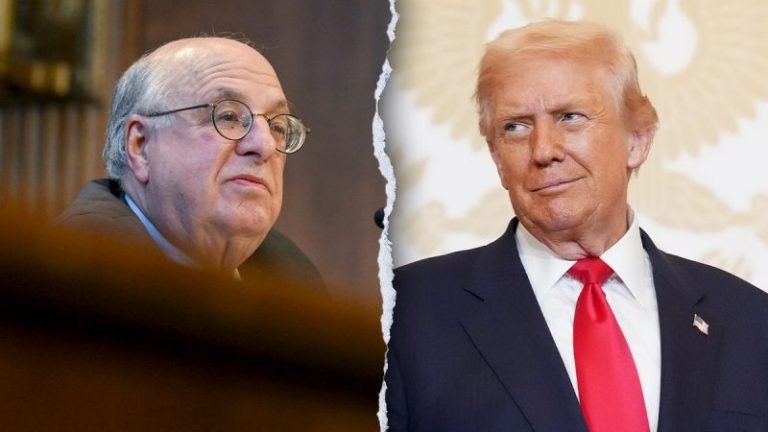
Former U.S. District Judge Mark Wolf of Massachusetts is another wolf in wolf’s clothing, despite his effort–aided by the leftist media–to package himself otherwise. Wolf was appointed to the bench by President Reagan in 1985, but he is no judicial conservative. Wolf received the stamp of approval from the most leftist home-state duo in Senate history: Ted Kennedy and John Kerry. The reason the approval of these radical senators was necessary lies in a century-old Senate tradition called the blue slip. Home-state senators can veto nominations of U.S. district judges, U.S. attorneys, and U.S. marshals. Nominees will not move forward without the return of blue slips from both home-state senators. Senators will not relinquish this extraordinary power because they are power-hungry and self-serving. They want to hand-select the federal prosecutor who could indict them, the federal judge who could try them, and the federal marshal who could escort them to prison.

Recently, Wolf resigned from his lifetime appointment. He had assumed senior status (a form of semi-retirement) during the Obama administration, allowing Obama—instead of the next Republican president–to appoint a leftist to replace Wolf in full-time judicial service. According to Wolf, President Trump has disregarded the rule of law in innumerable ways. Wolf wants to speak out about it and serve as a self-appointed spokesman for sitting judges who cannot. Wolf also has blasted the Supreme Court, claiming that the constitutionalist majority has enabled President Trump. Wolf has whined the Court has ruled 17 out of 20 times in the Trump administration’s favor on its emergency docket. Wolf has compared this success rate to that of players like Barry Bonds, Mark McGuire, and Sammy Sosa during Major League Baseball’s steroid era.

Wolf’s claim is absurd. The administration has succeeded so much at the Supreme Court thanks to its stellar team of legal all-stars, headed by Attorney General Pam Bondi and Solicitor General John Sauer. Many other brilliant attorneys also deserve credit for the administration’s sterling Supreme Court performance.

Moreover, the rulings by Wolf’s fellow activist judges are clearly partisan and lawless. How many cases does Wolf think the administration should have won before the Court? Eight out of 20? Ten? Twelve? His statistical conspiracy gibberish is devoid of even a scintilla of legal analysis. Wolf is only interested in peddling nonsense to bash justices he plainly detests. Wolf also conveniently ignores the other side of the statistical coin. According to analysis from former top Senate counsel Michael Fragoso, district judges in Massachusetts ruled against the Trump administration on 27 out of 29 temporary restraining orders and preliminary injunctions. Wolf apparently has no issue with this disparity; rather, he seems to view these rulings as coming from beacons of judicial integrity.

Wolf has a history of conspiracy hogwash. For over a decade, he pursued a baseless case against Supreme Court Justice Clarence Thomas, history’s greatest justice. According to Wolf, Thomas had wilfully failed to make required disclosures. The Judicial Conference categorically rejected Wolf’s theory. Yet, over a decade after the case had been closed, Wolf testified before a Senate Judiciary Committee subcommittee chaired by U.S. Senator Sheldon Whitehouse of Rhode Island, another partisan and deranged conspiracy theorist. During one exchange, Wolf told a U.S. senator that former Reagan Solicitor General Rex Lee would have been disturbed by, as Wolf saw it, unethical behavior of Thomas. That senator was Mike Lee of Utah, and Solicitor General Lee was his deceased father. Sen. Lee rightfully erupted at Wolf’s despicable statement.

Sitting judges cannot speak out against President Trump according to the Code of Conduct for United States Judges. They cannot use Wolf as their mouthpiece, either. The House and Senate Judiciary Committees need to subpoena Wolf to determine which judges are trashing President Trump through Wolf. If Wolf refuses to divulge the information, he should face contempt of Congress charges just like Trump allies Steve Bannon and Peter Navarro did.

If the identities of judges who speak through Wolf to bash President Trump become public, every one of those judges must face impeachment proceedings. No matter how difficult conviction by a two-thirds Senate supermajority will be, these rogue judges must suffer through the impeachment process to deter them and other judicial embarrassments from engaging in blatantly unethical behavior. These radical judges are illegally and dangerously subverting the will of American voters.

Wolf is a Sheldon Whitehouse, not a Ronald Reagan. Wolf plans to serve as the vehicle by which sitting judges can attempt to circumvent ethical constraints. He has spouted risible conspiracy tripe to denigrate the Supreme Court in general and Thomas in particular. He even has stooped to the all-time low of bringing up a senator’s deceased father in a pathetic attempt to score a few cheap political points. In short, Wolf is a disgrace to the federal judiciary, and his resignation is welcome news. Good riddance to this wolf in wolf’s clothing.

This post appeared first on FOX NEWS