Archive

October 2025

Browsing

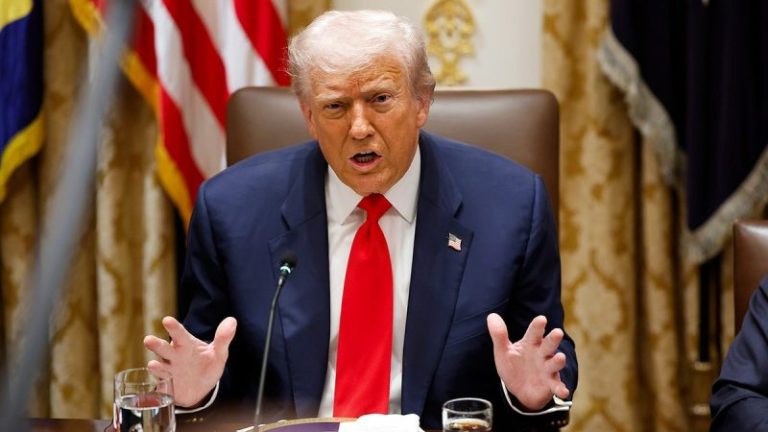
The American cattle ranching industry is blasting President Donald Trump’s proposal to purchase beef from Argentina in an effort to lower supermarket beef prices.

“This plan only creates chaos at a critical time of the year for American cattle producers, while doing nothing to lower grocery store prices,” Colin Woodall, CEO of the National Cattlemen’s Beef Association, said in a statement Monday.

Wyoming-based cattle operation Meriwether Farms addressed Trump directly in a social media post Monday.

“We love you and support you — but your suggestion to buy beef from Argentina to stabilize beef prices would be an absolute betrayal to the American cattle rancher,” the farm wrote on X.

By midday Tuesday, the post had already received 4 million views. A representative for Meriwether Farms did not immediately respond to a request for comment.

Trump floated purchasing beef from the South American nation Sunday aboard Air Force One to push down U.S. beef prices by increasing the overall supply.

‘We would buy some beef from Argentina,’ he told reporters, ‘If we do that, that will bring our beef prices down.’

Beef prices have hit record highs this year, according to data from the Bureau of Labor Statistics, fueled in part by depleted herd counts and steady demand from U.S. consumers.

This post appeared first on NBC NEWS

A group that includes activist investor Jana Partners and NFL player Travis Kelce says it has accumulated one of the largest ownership stakes in Six Flags Entertainment and intends to press the company’s leadership on ways to improve the struggling amusement park operator’s business.

Jana said Tuesday that the investor group now owns an economic interest of approximately 9% in Six Flags. The group plans to ‘engage’ with Six Flags’ management and board of directors to discuss ways to enhance shareholder value and improve visitors’ experience.

Shares in the Charlotte, North Carolina-based Six Flags surged 17.7% on the news. The shares added another 5.1% gain in after-hours trading. Even with Tuesday’s rally, the company’s shares are down about 47% so far this year.

Six Flags reported a loss of $319.4 million for the first half of the year. The company said attendance fell 9% in the three months that ended June 29, due partly to bad weather and a ‘challenged consumer’ in most of the markets it operates in.

The investor group also includes consumer executive Glenn Murphy and technology executive Dave Habiger.

Kelce, tight end for the Kansas City Chiefs, said in a statement that he grew up going to Six Flags amusement parks.

‘The chance to help make Six Flags special for the next generation is one I couldn’t pass up,’ he said.

This post appeared first on NBC NEWS

IAMGOLD (TSX:IMG,NYSE:IAG) is tightening its grip on one of Québec’s most promising gold districts with back-to-back acquisitions aimed at consolidating control over a vast stretch of the Chibougamau region.

In the span of two days, the mid-tier gold producer announced definitive agreements to acquire Northern Superior Resources (TSXV:SUP,OTCQB:NSUPF) and Mines d’Or Orbec (TSXV:BLUE).

Collectively the deals will expand its landholding to more than 100,000 hectares.

The larger of the two transactions will see IAMGOLD acquire all issued and outstanding shares of Northern Superior Resources in a cash-and-stock deal valued at approximately C$267.4 million.

The acquisition will fold Northern Superior’s Philibert, Chevrier and Croteau projects into IAMGOLD’s existing Nelligan and Monster Lake holdings, creating what the company has branded the Nelligan Mining Complex.

Together, these properties host estimated measured and indicated mineral resources of 3.75 million ounces of gold and inferred resources of 8.65 million ounces, positioning the district as Canada’s fourth largest pre-production gold camp.

“The addition of Northern Superior’s assets to IAMGOLD’s Nelligan Mining Complex in the Chibougamau region of Québec is extremely exciting for IAMGOLD, the region and our mutual shareholders,” said Renaud Adams, IAMGOLD’s president and CEO. “This acquisition aligns with our strategy to become a leading Canadian-focused mid-tier gold producer, bolstering our organic pipeline in Québec where we have maintained a longstanding presence.”

A day earlier, IAMGOLD struck a deal to acquire Mines d’Or Orbec, a junior explorer advancing the Muus project southwest of Chibougamau. IAMGOLD already holds a 6.7 percent equity interest in Orbec and expects to issue roughly 369,000 new shares to complete the purchase. The transaction will bring Muus under IAMGOLD’s control.

Located at the intersection of the Fancamp and Guercheville deformation zones, which are two major mineralized corridors that also host IAMGOLD’s Monster Lake and Nelligan deposits, the 24,979 hectare Muus project has been viewed as a geological link between the company’s existing holdings.

“Over the past several years, we have advanced the Muus project into one of Québec’s most promising gold exploration plays,” Orbec CEO John Tait said.

With the addition of both Northern Superior and Orbec, IAMGOLD is set to more than double its regional footprint.

The company has signaled its intent to pursue a “hub-and-spoke” development strategy in the region, envisioning a central processing facility fed by multiple ore sources within a 17 kilometre radius.

Pending regulatory and shareholder approvals, both acquisitions are expected to close in late 2025 or early 2026.

The price of gold has surged to unprecedented levels this month, reaching an all-time high of around US$4,370 per ounce amid heightened safe-haven demand and expectations of US interest-rate cuts.

However, on Tuesday (October 21), a correction began to set in as the yellow metal pulled back sharply. It fell as much as 5.5 percent to about US$4,115 as profit taking kicked in and the US dollar strengthened.

Securities Disclosure: I, Giann Liguid, hold no direct investment interest in any company mentioned in this article.

This post appeared first on investingnews.com

Astron (ASX:ATR) said on Monday (October 20) that Australia has granted major project status to the Donald rare earths and mineral sands project, its joint venture with Energy Fuels (TSX:EFR,NYSEAMERICAN:UUUU).

Donald is located approximately 300 kilometers northwest of Melbourne in Minyip, Victoria, Australia, and is regarded as “one of the world’s most significant rare earths resources outside China.”

It currently holds a total mineral resource of 1.81 billion tonnes grading 4.6 percent.

“This (designation) will streamline our engagement with federal agencies and accelerate our pathway to development,” commented Astron Managing Director Tiger Brown in a press release. “The Donald project will create significant employment opportunities and deliver long-term economic benefits to the Wimmera region of Victoria as well as strengthen Australia’s sovereign capability in critical minerals and advanced technology supply chains.”

Donald has a planned mine life of 58 years, with expected annual output of 9,000 tonnes of rare earths in Phase 1.

In a separate announcement, Energy Fuels said Export Finance Australia (EFA) has expressed support for the project and will provide AU$80 million via senior debt financing. The total amount needed to develop Donald is AU$520 million.

Energy Fuels CEO Mark Chalmers said that the support is a “key additional step” in the project’s financing pathway and a “strong vote of confidence” in the project’s capacity and potential.

“(It) reflects our on-going progress toward delivering one of Australia’s most important rare earth projects, including valuable NdPr, and exceptional concentrations of Dy, Tb and other ‘heavy’ rare earth oxides, which upon project development will be processed and separated into high-purity products at our White Mesa Mill in Utah,” he added.

According to a work plan for Donald published in June, the progression towards a final investment decision for the project is expected within 2025. Commencement of production at Donald is scheduled for 2027.

Rare earths have been heavily spotlighted this month after China dramatically expanded its control over rare earth exports, a sector crucial to global tech and defense industries.

The October 10 announcement from the Ministry of Commerce adds five new elements — holmium, erbium, thulium, europium and ytterbium — along with key refining technologies to its export control list.

The new rules carry a global reach: any foreign company producing rare earth materials or magnets using Chinese-origin equipment or technology must now obtain an export license from Beijing.

Crucially, applications for defense-related or advanced semiconductor projects, including cutting-edge AI with military potential, will face intense scrutiny and are likely to be denied.

Securities Disclosure: I, Gabrielle de la Cruz, hold no direct investment interest in any company mentioned in this article.

This post appeared first on investingnews.com

Chris Vermeulen, chief market strategist at TheTechnicalTraders.com, weighs in on gold’s record-setting price run and what could be next for the metal.

Vermeulen also discusses the outlook for silver, platinum and palladium.

Securities Disclosure: I, Charlotte McLeod, hold no direct investment interest in any company mentioned in this article.

This post appeared first on investingnews.com

Investor Insight

Spartan Metals offers a compelling investment opportunity in the US critical minerals sector through its high-grade, 100-percent-owned Eagle tungsten-silver-rubidium project in Nevada. With strong grades, multi-metal exposure, and alignment with US defense and supply chain initiatives, Spartan provides investors with exceptional leverage to the growing demand for domestically sourced strategic critical minerals.

Overview

Spartan Metals (TSXV:W) is a US-focused critical minerals explorer advancing its high-grade tungsten and rubidium asset in Nevada. Through its flagship Eagle project, the company is unlocking American critical mineral resources essential to defense, technology and energy independence. Spartan’s projects are strategically positioned to contribute directly to the United States’ onshoring objectives under the Defense Production Act and related supply-chain initiatives.

Eagle project site in Nevada

The Eagle tungsten-silver-rubidium project in eastern Nevada anchors a district-scale opportunity covering 4,936 acres across three historic mine areas – Tungstonia, Rees and Antelope. With historic production of 8,379 units of tungsten trioxide (WO₃) at grades between 0.6 to 0.9 percent, the project hosts one of the highest-grade past-producing tungsten systems in the United States, enriched by rubidium and other US defense-critical metals such as antimony, bismuth, indium and arsenic. Spartan is now executing an exploration program to validate and expand this potential through modern geochemistry, geophysics and tailings drilling.

Led by a team with deep Nevada exploration experience and direct US Department of Defense (DOD) engagement, Spartan is pursuing a partnership-driven approach to project advancement. It combines early-stage exploration and reprocessing opportunities and joint ventures to accelerate development. With a strong insider ownership base (42 percent) and exposure to multiple critical metals, Spartan Metals is an emerging US leader in strategic mineral discovery and domestic supply security.

Company Highlights

  • Flagship Eagle Project: One of the highest-grade, past-producing tungsten mines in the US.
  • Multi-metal Exposure: Targets tungsten, rubidium, antimony, bismuth, and silver – all listed as US critical minerals.
  • Tier-1 Mining Jurisdiction: Located in eastern Nevada, a world-class mining state with established infrastructure and regulatory clarity.
  • Strong Management and Technical Team: Led by a CEO and VP of exploration with proven discovery track
  • Alignment with US Critical Minerals Strategy: Positioned to benefit from Department of Defense and US government initiatives supporting domestic critical mineral supply chains.
  • Attractive Capital Structure: Tight share strucuture with management and board holding ~42 percent of shares outstanding, ensuring strong alignment with investors.

Key Asset: Eagle Project

Spartan’s 100-percent-owned Eagle project in White Pine County, Nevada, is a nationally significant critical mineral asset which includes the past-producing Tungstonia, Rees and Antelope mines. The Eagle project historically produced over 8,000 units of WO₃ between 1915 and 1956, and now presents a rare opportunity to redefine one of the highest-grade tungsten and rubidium systems in the United States.

With multiple mineralized zones, district-scale potential and strong alignment with US strategic metal initiatives, the Eagle project is the cornerstone of Spartan’s growth strategy.

Project Highlights

  • District-scale Footprint with High-grade Legacy Production: 4,936 acres (20 sq km) across 244 BLM claims in eastern Nevada; Past-producing Tungstonia and Rees mines averaged 0.6 to 0.9 percent WO₃, with channel samples up to 5.32 percent WO₃
  • Rubidium Discovery: Rock chip assays up to 2,264 parts per million (ppm) rubidium, positioning Eagle as a potentially significant US rubidium source
  • Polymetallic Opportunity: System hosting tungsten-rubidium-silver with antimony, bismuth and arsenic, all metals critical for US defense sector
  • Three Deposit Types: Features porphyry, skarn and carbonate replacement deposit (CRD) styles, a rare combination that indicates a large, long-lived hydrothermal system capable of hosting multiple mineralization centers, supporting district-scale exploration potential
  • Active 2025 Exploration Program: Fieldwork commenced in October 2025, executing Phase 1 of its NI 43-101-recommended program and part of Phase 2. Activities include drilling of historic Tungstonia tailings, detailed soil and rock sampling, geologic mapping and CSAMT/MT geophysics to define high-priority tungsten-rubidium drill targets and support future resource modeling.
  • Tailings Reprocessing Opportunity: ~9,000 tonnes of tailings averaging 0.14 percent WO₃ and 460 ppm rubidium offer near-term reclamation value-add
  • Tier-1 Mining Jurisdiction: Excellent access to infrastructure near Ely, Nevada
  • Strategic Positioning: Fully aligned with US DOD and Department of Energy initiatives to secure domestic tungsten and rubidium supply chains

Management Team

Brett R. Marsh – President, CEO and Director

Brett Marsh is a professional geologist with more than 25 years of experience in mineral exploration and project development across North America and internationally. Marsh previously led major exploration initiatives for both junior and mid-tier mining companies and has extensive experience in tungsten and critical mineral systems. He oversees Spartan’s technical and strategic direction and is the company’s “qualified person under NI 43-101..

Rebecca Ball – Vice-president, Exploration

Rebecca Ball brings over a decade of exploration and operational experience across base, precious and critical minerals. She specializes in greenfield targeting and geological modeling, most recently leading the McDermitt Lithium stratigraphy initiative that expanded its resource significantly. Her expertise is instrumental in defining the next phase of resource development at the Eagle project.

Michael Harp – Director

Currently VP Exploration at Ridgeline Minerals, Michael Harp has over 15 years of exploration experience in Nevada, including the discovery of over 5 million ounces of gold in the Carlin Trend’s Railroad-Pinion district. His extensive field and project management experience supports Spartan’s Nevada-focused exploration programs.

Terese Gieselman – Chief Financial Officer and Corporate Secretary

Terese Gieselman is a seasoned financial executive with over 30 years of experience in public company management and corporate finance in the mining sector. She brings expertise in governance, financial reporting, and capital markets strategy that will support Spartan’s growth.

This post appeared first on investingnews.com

Spartan Metals (TSXV:W) is a US-focused explorer advancing its high-grade tungsten and rubidium Eagle Project in Nevada. The company is unlocking critical minerals essential to US defense, technology, and energy independence, supporting onshoring goals under the Defense Production Act.

The Eagle tungsten-silver-rubidium project in eastern Nevada spans 4,936 acres across three historic mine areas — Tungstonia, Rees, and Antelope. With historic production of 8,379 units of WO₃ grading 0.6–0.9 percent, Eagle ranks among the highest-grade past-producing tungsten systems in the US, enriched with rubidium and other defense-critical metals including antimony, bismuth, indium, and arsenic. Spartan is advancing an exploration program to validate and expand this potential using modern geochemistry, geophysics, and tailings drilling.

With multiple mineralized zones, district-scale potential and strong alignment with US strategic metal initiatives, the Eagle project is the cornerstone of Spartan’s growth strategy.

Company Highlights

  • Flagship Eagle Project: One of the highest-grade, past-producing tungsten mines in the US.
  • Multi-metal Exposure: Targets tungsten, rubidium, antimony, bismuth, and silver – all listed as US critical minerals.
  • Tier-1 Mining Jurisdiction: Located in eastern Nevada, a world-class mining state with established infrastructure and regulatory clarity.
  • Strong Management and Technical Team: Led by a CEO and VP of exploration with proven discovery track
  • Alignment with US Critical Minerals Strategy: Positioned to benefit from Department of Defense and US government initiatives supporting domestic critical mineral supply chains.
  • Attractive Capital Structure: Tight share strucuture with management and board holding ~42 percent of shares outstanding, ensuring strong alignment with investors.

This Spartan Metals profile is part of a paid investor education campaign.*

Click here to connect with Spartan Metals (TSXV:W) to receive an Investor Presentation

This post appeared first on investingnews.com

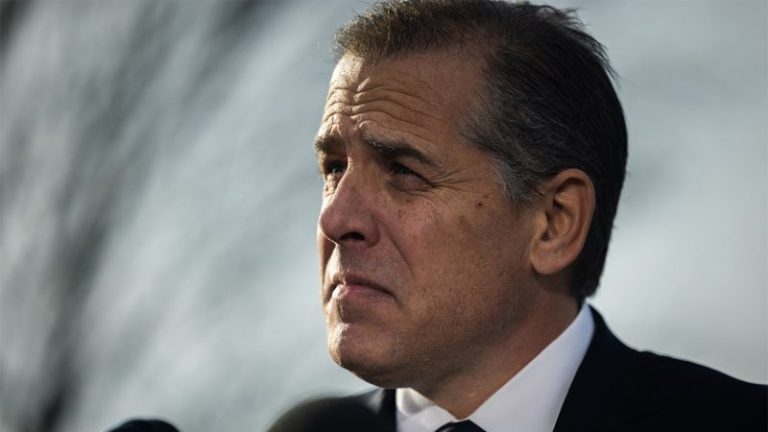
Former first son Hunter Biden is claiming that his father only pardoned him because Donald Trump reclaimed the presidency in November 2024 — and ‘would not have’ done so under ‘normal circumstances’ while the appeals process played out.

‘Donald Trump went and changed everything,’ Hunter said in an interview released Monday on journalist Tommy Christopher’s Substack platform.

‘And I don’t think that I need to make much of an argument about why it changed everything.’

The 55-year-old — who pleaded guilty last year to evading $1.4 million in back taxes to the IRS and was convicted on felony gun charges — declined to mention that he had apparently been present for discussions on pardons during Joe Biden’s final months in the White House.

‘I’ve said this before,’ Hunter went on.

‘My dad would not have pardoned me if President Trump had not won, and the reason that he would not have pardoned me is because I was certain that in a normal circumstance of the appeals [I would have won].’

The Biden scion added that Trump was planning a ‘revenge tour’ against his father, which would have made himself the ‘easiest target to just to intimidate and to not just impact me, but impact my entire family into, into silence in a way that at least he is not — it’s not as easy for him to do [with] me being pardoned.’

‘I realize how privileged I am,’ Hunter went on.

‘I realize how lucky I am; I realize that I got something that almost no one would have gotten.

‘But I’m incredibly grateful for it and I have to say that I don’t think that it requires me to make much of a detailed argument for why it was the right thing to do, at least from my dad, from his perspective.’

Ex-White House chief of staff Jeff Zients spilled last month that Hunter ‘was involved’ in clemency talks and even ‘attended a few meetings,’ a source with knowledge of the Biden official’s testimony to the House Oversight Committee told The Post.

This post appeared first on FOX NEWS
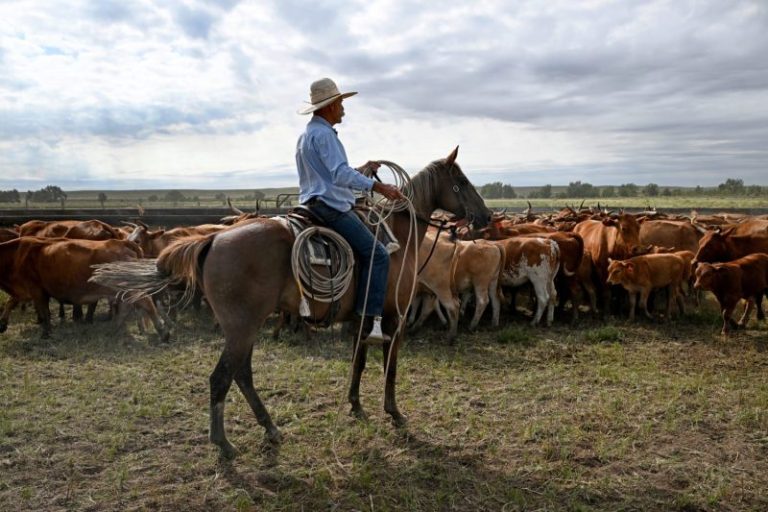
A group of House Republicans is raising concerns about the potential effects of the U.S. importing Argentinian beef after President Donald Trump floated the idea earlier this week.

Rep. Julie Fedorchak, R-N.D., is leading seven other House GOP lawmakers in a letter to the president on Tuesday evening, warning the potential plan has rattled the multibillion-dollar American ranching industry.

‘America’s cattle producers are among the most resilient and hardworking in the nation,’ the Republicans wrote. ‘Collectively, the cattle industry supports thousands of jobs across our districts and contributes $112 billion to rural economies nationwide.’

‘In recent days, we have heard strong concerns from producers regarding reports that the U.S. may import beef from Argentina.’

The House Republicans acknowledged the ‘importance of strong trade relationships and diverse markets’ but added that beef producers in their districts ‘are seeking clarity on how this decision will be made, what safety and inspection standards will apply, and how this policy aligns with your administration’s commitment to strengthening American agriculture.’

Trump suggested Sunday that buying beef from Argentina could help lower prices for Americans at home, amid a wider promise to lower costs for U.S. citizens.

‘One of the things we’re thinking about doing is beef from Argentina,’ Trump told reporters aboard Air Force One.

He later elaborated in his conversation with reporters, ‘We would buy some beef from Argentina. If we do that, that will bring our beef prices down.’

‘Our groceries are down, our energy prices are down. I think we’re going to have $2 gasoline pretty soon. We’re getting close and everything’s down. The one thing that’s kept up is beef,’ Trump said.

He added that it would not be ‘that much’ but argued it would help Argentina, a U.S. ally, as well.

But the House Republicans questioned whether imported beef would be held to the same food safety and animal health requirements as that of the U.S., which they called ‘the gold standard.’

‘Any import policy must hold foreign suppliers to those same rigorous standards. Introducing beef from countries with inconsistent safety or inspection records could undermine the confidence that U.S. ranchers have worked decades to earn,’ the lawmakers warned.

‘We respectfully request additional information on this matter and urge your administration to ensure that any future decisions are made with full transparency, sound science, and a firm commitment to the U.S. cattle industry. America’s producers can compete with anyone in the world. If given an opportunity, they will continue to respond quickly to the market demand for more quality American beef in our grocery stores.’

In addition to Fedorchak, the letter is also signed by Reps. Michelle Fischbach, R-Minn., Troy Downing, R-Mont., Gabe Evans, R-Colo., Dusty Johnson, R-S.D., Derek Schmidt, R-Kan., Jeff Hurd, R-Colo., and Republican Study Committee Chair August Pfluger, R-Texas.

White House spokesman Kush Desai told Fox News Digital in response, ‘The Trump administration remains committed to addressing the needs and concerns of American cattle producers and safeguarding their interests at home and abroad. That’s why the administration has secured billions in new export opportunities for American agricultural products in our historic trade deals with the UK, Japan, the EU, and others.’

‘It’s also why the administration is focused on reversing a prolonged decrease in the supply of live cattle by growing American cattle herds with robust action to deliver disaster relief to cattle country, support new ranchers, and reduce risk for cattle producers,’ Desai said.

Trump’s proposal has stirred some anxiety among some Republicans whose constituencies depend on cattle ranching.

Sen. Deb Fischer, R-Neb., posted on X Tuesday, ‘If the goal is addressing beef prices at the grocery store, this isn’t the way.’

‘The U.S. has safe, reliable beef, and it is the one bright spot in our struggling ag economy. Nebraska’s ranchers cannot afford to have the rug pulled out from under them when they’re just getting ahead or simply breaking even,’ Fischer wrote.

Meanwhile, Fox News Digital was told that Rep. Harriet Hageman, R-Wyo., also raised significant concerns about what importing beef from Argentina could do to the U.S. cattle ranching industry during a call with fellow House Republicans on Tuesday.

But some Republican responses were more muted. Sen. Markwayne Mullin, R-Okla., told reporters that Trump ‘definitely identified a problem’ regarding a shortage of cattle in the U.S. He added, ‘I understand what he’s trying to get done. I think there’s more ways to implement it.’

Fedorchak herself told Fox News Digital, ‘We’ve all received a number of questions and calls from our constituents over the last few days, so we are asking for clarity on the administration’s long-term plans. Our farmers and ranchers stand ready to deliver on the president’s America-First agenda. North Dakotans take great pride in producing the safest, highest-quality beef in the world — and we should be building on that success.’

This post appeared first on FOX NEWS

Colombia’s former defense minister Juan Carlos Pinzón warned that the once-close U.S.–Colombia alliance has ‘collapsed’ under President Gustavo Petro, accusing the leftist leader of aligning with Venezuela’s Nicolás Maduro and turning Colombia into a ‘narco-state.’

Pinzón, who is weighing a presidential run, told Fox News Digital he could ‘repair U.S.-Colombian relations in a week’ and urged international oversight of Colombia’s May elections amid what he called growing cartel influence and political corruption.

‘Petro has made himself an ally to [Venezuelan dictator Nicolás] Maduro’s regime, a narco-state, and a regime that is held mainly by the Cartel de los Soles,’ Pinzón said. ‘He has justified the existence of drug trafficking in Colombia … he has aligned himself with the idea of something that he calls ‘Total Peace,’ which implies that he’s providing benefits to drug traffickers and terrorist organizations and in general terms to organized crime.’

Relations between Washington and Bogotá — historically one of the closest U.S. security partnerships in Latin America — have deteriorated sharply under Petro, who has sought warmer ties with Caracas while distancing Colombia from the U.S. and Western allies.

During his tenure as defense minister from 2011 to 2015 under President Juan Manuel Santos, Pinzón oversaw some of Colombia’s most aggressive operations against the FARC and other armed groups, helping drive coca production and kidnappings to historic lows. As ambassador to Washington from 2015 to 2017, he helped secure Colombia’s designation as a major non-NATO ally, expanding intelligence sharing and military training programs with the U.S. — partnerships he now says have been ‘dismantled’ under Petro.

Under Petro’s ‘Total Peace’ policy, the Colombian government negotiates directly with armed criminal groups in an effort to end decades of internal conflict and integrate fighters into civilian life. Critics, including Pinzón, say the initiative has legitimized cartels and weakened the country’s security forces.

‘Homicide has gone up, terrorist actions have gone up, kidnappings have gone up, and the killing of police officers and military is increasing,’ he said. ‘All this is very bad for my country. And this is why I’m so committed to fight this, to confront this.’

Pinzón, who previously served as both defense minister and ambassador to Washington, is positioning himself as a pro-U.S. alternative ahead of Colombia’s 2026 presidential race. ‘I might announce a decision in the coming weeks,’ he said. ‘That’s something that I’m really considering.’

He also called for international election monitoring, warning that criminal networks could interfere in the vote. ‘If I were to ask something to the world today and to the international community — to the U.S., to the European Union, and even to countries in Asia — it’s that they make sure Colombian elections are not tainted by drug trafficking, illegal mining or terrorist hands,’ Pinzón said.

After a recent spat where Petro accused the U.S. of killing a Colombian fisherman in one of its seven Caribbean strikes targeting drug traffickers, Trump announced he would cut off all counter-narcotics aid to Colombia and hike tariffs on the nation. 

Pinzón urged Washington not to punish ordinary Colombians for Petro’s policies.

‘It’s not regular Colombians who are doing this,’ he said. ‘Most of us completely disagree with what is going on under Petro. We don’t want to see tariffs that can affect jobs and businesses in Colombia.’

While he praised Trump’s stance against narco-trafficking and corruption, Pinzón said he hopes the U.S. will avoid cutting counternarcotics aid, which he described as vital to Colombia’s military and police forces on the front lines of the drug war. ‘Our military and police are the real fighters against drugs,’ he said. ‘They continue to sacrifice, they continue to confront terrorism and drug trafficking. If that support disappears, it’s the criminals who are going to benefit.’

Instead, Pinzón said Washington should focus on targeted financial sanctions—such as those imposed by the Treasury Department’s Office of Foreign Assets Control (OFAC)—to hit specific traffickers, corrupt officials and their enablers rather than imposing measures that ‘hurt regular Colombians.’ ‘We would prefer OFAC-style sanctions on the people committing crimes,’ he said, ‘not policies that punish those who oppose Petro’s agenda.’

Looking ahead to potential ties with Washington, Pinzón said he could quickly rebuild the partnership through renewed security and intelligence cooperation, technology exchange, and educational programs.

‘I will just come to the U.S., speak openly and clearly with President Trump and the U.S. leadership, and speak on the need of creating a security agreement again on intelligence, on air mobility, on technology, on combating drug trade, but also on critical minerals and education,’ he said. ‘We want more Colombians to come to U.S. schools and enhance their capabilities and come back to Colombia to create knowledge, wealth and prosperity. We’re going to be again the closest ally of the United States strategically in the region.’

If Colombia continues on its current course, Pinzón warned, it could destabilize the entire hemisphere. ‘Colombia is a stabilizer at the end,’ he said. ‘If Colombia fails, the whole region will fail.’

Asked if he would seek U.S. backing, Pinzón said he values bipartisan support. ‘Everybody knows that I will have a very good relationship with the United States, certainly with the current administration, with President Trump,’ he said.

Pinzón also accused Petro of ‘abandoning’ Colombian citizens during a diplomatic spat with Washington after refusing deportation flights from the U.S. because the migrants were shackled. He said he would cooperate on deportations and be open to broader agreements if asked.

‘When Afghanistan fell, we offered the U.S. even to take care of some of the Afghanis if necessary,’ Pinzón said. ‘When you have a strong relationship as the one we used to have between Colombia and the U.S., and we will have if I can get to the presidency, what we’re going to see is a lot of good coordination and a lot of good things for both the people of Colombia and the people of the United States.’

Fox News Digital reached out to the Colombian Embassy for comment but did not receive a response before publication.

This post appeared first on FOX NEWS