Archive

October 2025

Browsing

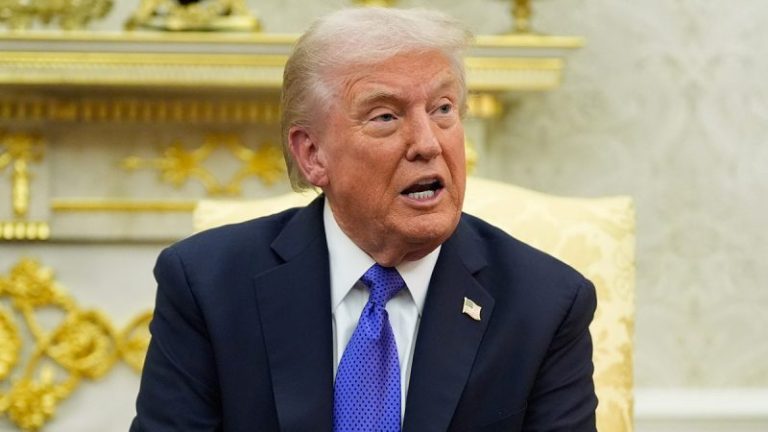
President Donald Trump said he’d be willing to extend his trip abroad to Asia if North Korea’s Kim Jong Un wants to meet with him.

‘But I’d love to meet with him if he’d like to meet. I got along great with Kim Jong Un. I liked him, he liked me,’ Trump said during a gaggle on Air Force One.

When asked if he’d extend his trip in order to meet with the North Korean figure, Trump indicated that he would be willing to do so.

The president had previously noted during a prior gaggle aboard Air Force One that he would be open to meeting with Kim Jong Un.

‘I got along very well with him,’ he said of the foreign leader.

North Korea is one of the few nations around the globe armed with nuclear weapons.

During his first term, Trump met with Kim Jong Un several times.

He even made history as the first sitting U.S. president to step into North Korea.

This post appeared first on FOX NEWS

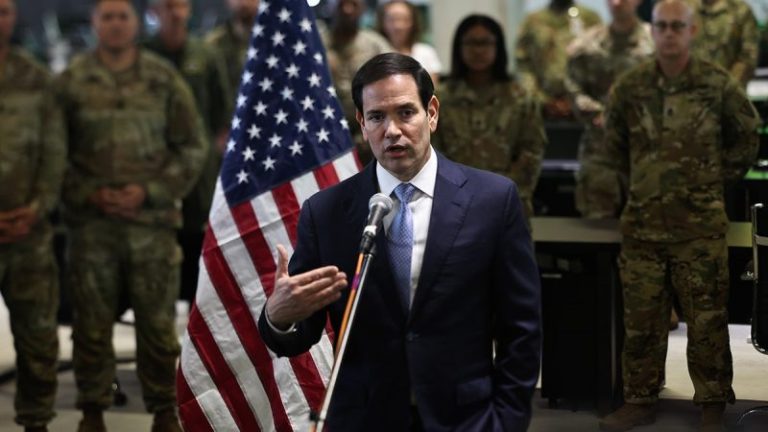
U.S. Secretary of State Marco Rubio on Saturday said that the U.S., Israel and other mediators of the Gaza peace deal had shared intelligence to avoid a possible attack last weekend and would do so going forward. 

‘We put out a message through State Department, sent it to our mediators as well, about an impending attack, and it didn’t happen,’ he told reporters while flying from Israel to Qatar. ‘So that’s the goal here, is ultimately to identify a threat before it happens.’

This comes a week after the State Department said it had ‘credible reports’ that Hamas was planning an attack on Palestinian civilians in violation of the agreement.

Rubio said Saturday the U.S. has talked with countries like Qatar, Egypt and Turkey who are interested in contributing to an international stabilization force in the region. He added that Indonesia and Azerbaijan are also interested.

But, he said, ‘Many of the countries who want to be a part of it can’t do it without’ a United Nations resolution supporting the force.

Rubio also met with President Donald Trump in Qatar ahead of the president’s Asian tour.

Vice President JD Vance was also in Israel earlier this week along with special envoy Steve Witkoff and Trump adviser and son-in-law Jared Kushner in an attempt to solidify the ceasefire deal, which took effect earlier this month.

Next week, Rubio said the chairman of the Joint Chiefs of Staff, Gen. Dan Caine, is expected to travel to Israel as well.

Trump thanked Qatar for their part in helping secure the peace deal while meeting with Qatar’s Emir Sheikh Tamim bin Hamad al-Thanimet and Qatar Prime Minister and Foreign Minister Sheikh Mohammed bin Abdulrahman bin Jassim Al Thani.

‘This should be an enduring peace,’ Trump told reporters of the deal.

His visit to Qatar was part of a refueling stop before heading on to Asia.

The Associated Press and Reuters contributed to this report. 

This post appeared first on FOX NEWS

For decades, the United States has fought the war on drugs as if it were exclusively a law enforcement issue. It never was. It has always had national security implications. 

After years of inaction, drugs now kill more Americans each year than every modern war combined. Fentanyl alone claimed more than 100,000 lives in 2021, a number that continues to rise despite billions spent on interdiction, prevention and policing. That is not a criminal nuisance. That is a sustained mass-casualty event inside the homeland.

President Donald Trump’s new approach finally treats the crisis for what it is. By designating major drug cartels as foreign terrorist organizations and authorizing the use of military force against them, his administration has drawn a clear line between criminality and warfare. 

The cartels are not ordinary traffickers. They are transnational powers that control territory, wield military-grade arsenals and use terror as a tool of governance. In Trump’s words, they are ‘the ISIS of the Western Hemisphere.’

The numbers already justify the policy. In the first weeks of operations, the new Homeland Security Task Force has arrested more than 3,200 gang and cartel members, seized 91 tons of narcotics and captured over 1,000 illegal weapons. Those seizures represent tens of thousands of American lives saved. Every boat stopped and every shipment intercepted means fewer overdose deaths, fewer funerals, and fewer communities shattered by addiction and violence.

For too long, Washington treated the cartels as criminals who could be prosecuted rather than enemies who had to be defeated. That approach failed. The cartels wage war on America for profit. They assassinate, extort and kidnap while basking in riches captured through intimidation and terror.  They destabilize our neighbors and corrupt governments from Mexico to Venezuela. If America had the right to strike al Qaeda and ISIS abroad for killing Americans, it has an equal right to strike the cartels that kill Americans at home. 

The legal foundation is clear. In February 2025, the State Department designated Tren de Aragua, Sinaloa, Jalisco Nueva Generación, MS-13 and others as Foreign Terrorist Organizations. A presidential determination in September formally declared that the United States is in a non-international armed conflict with these groups. 

No court has challenged the policy because it aligns with both domestic and international law. When foreign networks deliberately kill American citizens, the president has not only the authority but the obligation to act.

The ethical case is equally strong. The Just War tradition requires a just cause, competent authority, proportionality and last resort. Every criterion has been met. The cause could not be more just when drug overdoses in the United States claimed more than 100,000 lives for a third consecutive year by 2023. 

Years of law enforcement, education campaigns and international coordination have not slowed the killing. When nonviolent means have failed, the duty of a government is to protect its citizens by every lawful means available.

Each go-fast boat in the Caribbean and each semi-submersible in the Pacific carries more than cocaine or methamphetamine. It carries a body count of Americans. These are not fishing vessels. They are militarized smuggling platforms crewed by combatants in a foreign network that profits from death. To treat them as anything less is to deny reality. The era of denial is over.

Critics argue that military strikes risk escalation. The cartels crossed this line long ago when they began murdering, intimidating and corrupting their way into power. These transnational criminal enterprises now operate as shadow governments. To continue treating them as mere criminal syndicates would be absurd.  In truth, it would be to accept defeat. 

Trump’s use of force is not about vengeance. It is about national defense. The Department of War, the CIA, the intelligence community, the DEA, FBI and Coast Guard are now unified in a single mission to dismantle the cartels’ capacity to kill Americans. 

Every strike on a drug boat denies the enemy profit and saves lives. As Secretary Pete Hegseth said, each destroyed vessel represents roughly 25,000 Americans who will not die from the poison it carried.

The cartels’ economic reach rivals that of small nations, generating hundreds of billions annually. They corrupt officials, weaponize migration and flood American streets with narcotics. This is not commerce. It is organized war for profit.

A government that fails to confront such an enemy is unworthy of the people it serves. Trump’s use of military force against the cartels is justified both legally and morally. It is long overdue. The United States has every right to defend its borders, its citizens and its sovereignty against a foreign network that profits from American death.

For decades, America fought this war with hesitation and half-measures. Now it is being fought with purpose. This is not a new war. It is the same one that has been killing Americans for generations. The difference is that, at last, America is fighting to win.

This post appeared first on FOX NEWS

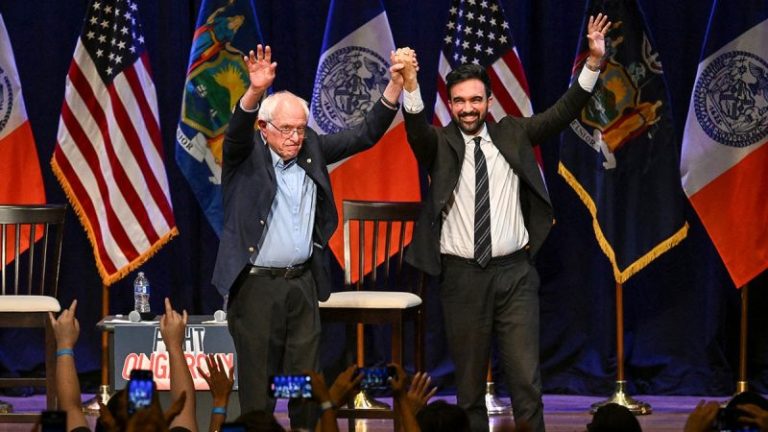
– Progressive stars Rep. Alexandria Ocasio-Cortez, D-N.Y., and Sen. Bernie Sanders, I-Vt., are teaming up with New York City mayoral candidate Zohran Mamdani Sunday night for a ‘New York is not for sale’ rally at Forest Hills Stadium in Queens, New York City.

The high-profile campaign event comes nearly one week before Election Day, as New Yorkers head to the polls for the first weekend of early voting, closing out a contentious mayoral battle where Mamdani’s unanticipated success has landed him on the national stage.

‘Zohran Mamdani is modeling a different kind of politics,’ Sanders, the former Democratic presidential candidate and longtime progressive leader, said in a statement ahead of the rally. 

The trio of self-identified Democratic socialists have invigorated the Democratic Party’s progressive base at a time when Democrats are still grappling with devastating losses in 2024 amid growing discontent with President Donald Trump’s sweeping, second-term agenda.

When Sanders and Ocasio-Cortez teamed up for the ‘Fighting Oligarchy’ tour earlier this year, they sparked sizable buzz, firing up thousands of Democrats at rallies across the United States who had been left without a clear party leader.

‘As mayor, he will not run a top-down, billionaire-funded, consultant-driven administration. Instead, Zohran will be a champion for the working people of New York,’ Sanders said.

Both Sanders and Ocasio-Cortez have campaigned alongside Mamdani in his bid to lead the nation’s most populous city. 

On Friday night, Sanders appeared for a virtual ‘Get Out the Vote’ event with Mamdani. Last month, Sanders and Mamdani teamed up for a ‘Fighting Oligarchy’ town hall in Brooklyn. 

Ahead of the Brooklyn town hall event, the two progressive leaders marched alongside union members in Manhattan’s Labor Day parade. That afternoon, Mamdani posed for a photo with Sanders and Ocasio-Cortez in Astoria, Queens, amassing millions of views.

Sanders, a two-time Democratic presidential nominee runner-up, was an early endorser of Mamdani’s primary campaign, along with Ocasio-Cortez. Their endorsements helped Mamdani consolidate progressive support in the 11-candidate field during the final weeks of the primary race.

Mamdani’s primary upset triggered a political earthquake as the democratic socialist handily defeated former Gov. Andrew Cuomo, who was widely expected to secure the Democratic nomination.

Mamdani’s cross-endorsement with fellow progressive New York City Comptroller Brad Lander cleared the path for Mamdani to consolidate support against Cuomo through ranked-choice voting. 

Cuomo has since launched an independent campaign, teeing up a competitive and contentious general election battle. 

Since Mamdani secured the Democratic nomination, Trump has labeled him a ‘100% Communist Lunatic,’ and ‘my little communist,’ ushering Mamdani onto the national political stage. Mamdani has rejected the moniker, maintaining that he identifies as a democratic socialist, like Sanders and Ocasio-Cortez. 

As Trump began criticizing Mamdani, New York Democrats chose to withhold their endorsements of the socialist candidate, who has made a slew of ambitious campaign promises, like fast and free buses, city-run grocery stores and free childcare, all of which he plans to pay for by raising taxes on corporations and the top 1% of New Yorkers. 

After months of withholding their endorsements, Gov. Kathy Hochul finally endorsed Mamdani last month and House Minority Leader Hakeem Jeffries finally affirmed his support in a statement Friday. Senate Minority Leader Chuck Schumer has still yet to endorse. 

Pressure had been mounting since Mamdani won the Democratic primary in June for Mayor Eric Adams, who was also running as an independent, or Cuomo to drop out of the race to consolidate support against Mamdani. Adams dropped out of the race and endorsed Cuomo on Thursday. 

That pressure reached a boiling point last week as billionaires, including Red Apple Media CEO John Catsimatidis and hedge fund CEO Bill Ackman, called on Republican nominee Curtis Sliwa to drop out of the race in order to clear a pathway to victory for Cuomo.

The latest Fox News survey, conducted Oct. 10-14, ahead of the first general election debate last week, revealed that Mamdani has a substantial lead in the race. According to the poll, Mamdani has a 21-point lead among New York City registered voters with 49% of voters backing Mamdani, while 28% go for Cuomo and 13% favor Sliwa.

Mamdani also rose above the 50% threshold among likely voters, garnering 52% support, while Cuomo picked up 28%, and Sliwa received just 14%.

This post appeared first on FOX NEWS

There appears to be no end in sight to the current government shutdown, with Democrats and Republicans still far from striking a federal spending deal nearly a month into fiscal year (FY) 2026.

Hundreds of thousands of federal workers have been furloughed and thousands have been laid off. Certain federal services have also paused due to lack of funding.

It is not the first time such a standoff has paused all or some government operations. Below is a list of the top five longest government shutdowns in U.S. history, and how they were resolved.

December 2018January 2019: 35 Days

The longest government shutdown in history happened during the first Trump administration and lasted five weeks.

Funding for President Donald Trump’s border wall was at the heart of that dispute. Trump had refused to sign a federal spending deal that did not include money for the project, and a standalone bill with $5.7 billion was blocked by a Senate Democrat-led filibuster.

Trump eventually backed a short-term federal funding measure to reopen the government on Jan. 25, 2019, and a few weeks later, Congress approved $1.375 billion for 55 miles of border fencing between the U.S. and Mexico.

It was a partial shutdown, meaning lawmakers managed to strike a deal on five of 12 appropriations bills before their clock ran out.

Oct. 1, 2025current: 26 Days and Counting

The current government shutdown is now the second-longest in history, and the longest-ever full shutdown.

That means Congress was unable to strike a federal funding deal on any appropriations bills before the end of FY 2025 on Sept. 30.

Republicans, who control the House and Senate, had offered a seven-week extension of FY 2025 spending levels to give lawmakers more time to hash out next fiscal year’s numbers. 

It passed the House on Sept. 19, with support from one Democrat, but has stalled in the Senate 12 separate times.

Democrats are demanding that any federal funding plan also include an extension of COVID-19 pandemic-era enhanced Obamacare subsidies, which are set to expire at the end of this year without congressional action.

As of the most recent tally, at least five more Senate Democrats are needed to overcome a filibuster and pass the measure in the Senate.

Republican leaders have shown no signs of giving in, however, accusing Democrats of trying to jam an unrelated issue into the yearly funding process.

December 1995January 1996: 21 Days

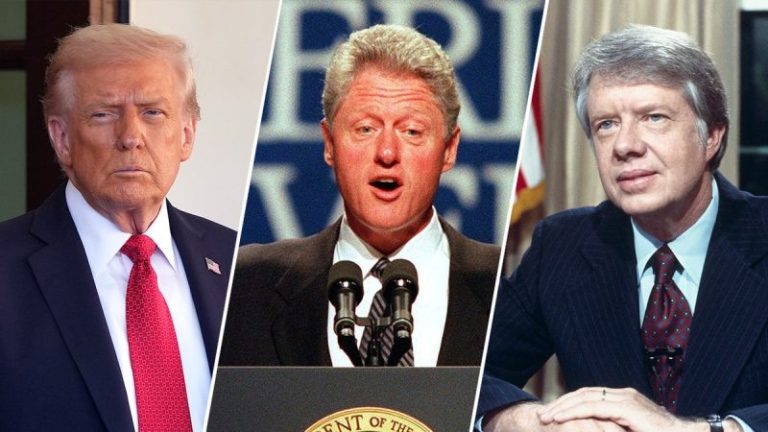
The second of two government shutdowns under former President Bill Clinton lasted three weeks, breaking a record at the time for the longest shutdown in U.S. history.

Republicans had taken control of both the House and Senate in the 1994 midterm elections, leading Clinton on a collision course with then-House Speaker Newt Gingrich, R-Ga.

Gingrich pursued significant cuts to the federal budget after being emboldened by the 1994 red wave in the House following his ‘Contract with America.’

Clinton, who also pushed for a balanced budget, disagreed with the spending cuts sought by Republicans in Congress.

That was also a partial shutdown, with the departments of energy, defense and agriculture among those funded before the impasse began.

Republicans moved to end that shutdown amid mounting negative public polling for the GOP, NPR reported.

Sept. 30, 1978Oct. 18, 1978: 18 Days

The longest shutdown of former President Jimmy Carter’s four-year term in the White House lasted 18 days, at a time when Democrats controlled all levers of power in Washington.

Carter had vetoed Congress’ bills on defense spending and public works that he thought wasted federal dollars, according to the Washington Post. That included funding for a nuclear-powered aircraft carrier that Carter opposed.

There was also a dispute over abortion in the funding bill for the now-defunct Department of Health, Education, and Welfare.

Congress wound up stripping the funding that Carter opposed from the defense and public works bills, while a compromise was reached on the latter issue.

Oct. 1, 2013Oct. 17, 2013: 16 Days

Much like the current standoff, the 2013 government shutdown also centered on Obamacare — also known as the Affordable Care Act (ACA).

It is the second-longest full shutdown in history behind today’s. At the time, Republicans controlled the House while Democrats held the Senate.

The GOP had insisted on spending bills that rolled back significant portions of Obamacare, then only about three years old.

Senate Democrats rejected such measures passed by the Republican-controlled House, however.

Congress eventually agreed to a short-term spending patch to end the shutdown, and Republicans relented on pushing funding bills with Obamacare cuts.

This post appeared first on FOX NEWS
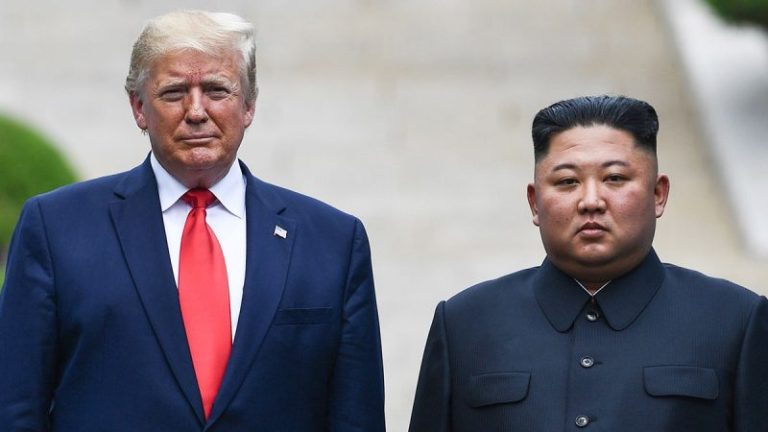
President Donald Trump danced alongside Malaysian performers as he was greeted on the first leg of his Asia tour.

The White House dubbed his moves, ‘TRUMP DANCE MALAYSIA VERSION’ on social media. The performance was part of a greeting for Trump laid out by Malaysian Prime Minister Anwar Ibrahim.

The five-day trip will see Trump meet with newly-elected Japanese Prime Minister Sanae Takaichi in Tokyo as well as Chinese President Xi Jinping in South Korea.

Trump also oversaw the signing of a peace agreement between Cambodia and Thailand on Sunday.

The president watched as Cambodian Prime Minister Hun Manet and Thai Prime Minister Anutin Charnvirakul signed the expanded ceasefire at the annual summit of the Association of Southeast Asian Nations.

The agreement requires Thailand to release 18 Cambodian soldiers held prisoner and for both countries to begin removing heavy weapons from the border.

‘We did something that a lot of people said couldn’t be done,’ Trump said. 

Cambodia’s prime minister called it a ‘historic day,’ and the Thai prime minister said the agreement establishes ‘the building blocks for a lasting peace.’

Ibrahim praised the agreement between Thailand and Cambodia, saying during opening remarks at the summit that ‘it reminds us that reconciliation is not concession, but an act of courage.’

After the expanded ceasefire agreement was signed, Trump reached separate economic deals with Cambodia and Thailand.

Trump also signed agreements with Malaysia involving trade and critical minerals. The U.S. has been working to expand its supply chains to reduce reliance on China, as Beijing has limited exports of key components in technology manufacturing.

Fox News’ Landon Mion and The Associated Press contributed to this report.

This post appeared first on FOX NEWS
Canadian company PMET Resources (ASX:PMT, TSX:PMET, OTCQX:PMETF) has completed a lithium-only feasibility study on the CV5 deposit of its Shaakichiuwaanaan lithium project in Northern Quebec.

The company said that the feasibility study confirms that the project is a large-scale and lifelong operation, with CV5’s maiden reserve updated to 84.3 million tonnes (Mt) at 1.26 percent lithium oxide or about 2.62 Mt lithium carbonate equivalent (LCE) in probable reserves.

Results also show that there is still potential to upgrade and expand resources at CV5 and its nearby CV13 deposit, which currently hold a total resource of 108.0 million tonnes at 1.40 percent indicated and 33.4 at 1.33 percent inferred.

“Our large scale and long-life project is ideally suited to support the emerging American, European, and Asian lithium raw materials supply chains,” commented CEO and President Ken Brinsden.

“There are very few projects of this size & scale, quality, and low production cost that can assist in underwriting the expected capital investment supporting new supply chains and demand growth in western markets.”

Located in Quebec’s Eeyou Istchee James Bay region, Shaakichiuwaanaan is recognised as the largest lithium pegmatite mineral resource in the Americas.

It is also among the largest lithium mines in the world, with potential to become the second largest following the Greenbushes lithium operations in Western Australia.

Greenbushes is owned by Albemarle (NYSE:ALB) and was recorded with an estimated 0.21 metric tonnes per annum lithium production in 2023.

PMET is targeting a final investment decision for Shaakichiuwaanaan for the second half of 2027, hoping that “the overall market supply-demand balance tightens over the coming years.”

Researchers found that the project can have an annual production of up to 800,000 tonnes of lithium-rich rock, along with pollucite, tantalite, and cesium.

Brinsden said that about 20 percent of the jobs created at Shaakichiuwaanaan will be allotted to workers at the Cree territory.

PMET Resources was formerly Patriot Battery Metals. The company officially changed its name in September.

Securities Disclosure: I, Gabrielle de la Cruz, hold no direct investment interest in any company mentioned in this article.

This post appeared first on investingnews.com

Homerun Resources Inc. (TSXV: HMR,OTC:HMRFF) (OTCQB: HMRFF) (‘Homerun’ or the ‘Company’) announces that the Company has submitted its formal application for conditional approval of the previously announced $6-million financing with a single institutional investor. The Company is now awaiting conditional approval from the TSX Venture Exchange.

The Company also reports, that further to its October 6, 2025, news release, the Company is oversubscribed for its $3-million unit private placement at $1.00. This financing will close after the above financing, as several subscribers have requested that the closing of the $6-million institutional financing be a precedent, and so the Company has requested and received approval from the TSX Venture Exchange to extend the closing of that financing for a standard 30-day period to November 24, 2025.

Both financings are anticipated to close in the immediate term, subject to TSX-V approval.

On behalf of the Board of Directors of
Homerun Resources Inc.

‘Brian Leeners’

Brian Leeners, CEO & Director
brianleeners@gmail.com / +1 604-862-4184 (WhatsApp)

Tyler Muir, Investor Relations
info@homerunresources.com / +1 306-690-8886 (WhatsApp)

FOR THE ADEQUACY OR ACCURACY OF THIS RELEASE
The information contained herein contains ‘forward-looking statements’ within the meaning of applicable securities legislation. Forward-looking statements relate to information that is based on assumptions of management, forecasts of future results, and estimates of amounts not yet determinable. Any statements that express predictions, expectations, beliefs, plans, projections, objectives, assumptions or future events or performance are not statements of historical fact and may be ‘forward-looking statements’.

Neither the TSX Venture Exchange nor its Regulation Services Provider (as that term is defined in policies of the TSX Venture Exchange) accepts responsibility for the adequacy or accuracy of this release.

To view the source version of this press release, please visit https://www.newsfilecorp.com/release/271921

News Provided by Newsfile via QuoteMedia

This post appeared first on investingnews.com

This week began on a strong note, with emerging signs that US-China tensions could ease and White House Economic Advisor Kevin Hassett’s suggestion that the federal government shutdown could soon end.

US stocks rallied broadly, led by small caps and semiconductors, with the PHLX Semiconductor Sector (INDEXNASDAQ:SOX) hitting an all-time high amid reduced concerns about regional bank credit quality.

On Tuesday (October 21), hotter-than-expected Canadian inflation data weighed on the S&P/TSX Composite Index (INDEXTSI:OSPTX), while the Nasdaq Composite (INDEXNASDAQ:.IXIC) outperformed.

Wednesday (October 22) saw profit taking in high-growth names as Tesla (NASDAQ:TSLA) and IBM (NYSE:IBM) reported after the bell, and as reports of potential new US export curbs on China pressured equities.

IBM beat revenue forecasts with US$9.5 billion in artificial intelligence (AI) revenue, but offered cautious guidance, leading its share price to fall after-hours. Tesla missed revenue estimates, with margins falling to 5.8 percent due to price cuts and reduced regulatory credits, despite record deliveries. CEO Elon Musk reiterated medium-term goals in AI, autonomy and robotics, though the firm didn’t update its financial guidance. Tesla shares also dropped after hours.

Despite the pullback, the tech sector rebounded sharply on Thursday (October 23), driven by optimism about AI and cloud infrastructure. Quantum computing companies such as IonQ (NASDAQ:IONQ), Rigetti Computing (NASDAQ:RGTI) and D-Wave Quantum (NYSE:QBTS) surged on reports of increased US government funding.

North of the border, Canadian Prime Minister Mark Carney and Ontario Premier Doug Ford unveiled a C$3 billion joint investment in small modular reactors at the Darlington site, located east of Toronto in Bowmanville.

Later, Intel (NASDAQ:INTC) surpassed expectations with a 3 percent year-on-year revenue increase, reaching US$13.7 billion, with gross margins doubling to 38 percent. The demand for AI accelerators and x86 processors contributed to these strong results. CEO Lip-Bu Tan expressed confidence in continuing AI-driven compute demand.

Following the announcement, shares rose and opened nearly 5 percent higher the next day.

Intel’s standout earnings boosted sentiment heading into Friday. Markets opened higher after delayed US inflation data came in cooler than expected, showing easing underlying pressures and reinforcing expectations for another Fed rate cut next week. Tech stocks led the advance once again.

3 tech stocks that moved markets this week

1. Micron Technology (NASDAQ:MU)

Micron Technology shares rose 4.46 percent this week, hitting a record high above US$214 on Monday (October 20) after analysts at Barclays (NYSE:BCS) raised their price target from US$195 to US$240, citing robust earnings and margin expansion as signs of operational strength. The company has reported surging demand for its high-bandwidth memory chips, with supply fully sold out through 2026. Other semiconductor stocks, such as ON Semiconductor (NASDAQ:ON) and KLA (NASDAQ:KLAC), also gained, reflecting broad semiconductor strength.

2. Apple (NASDAQ:AAPL)

Apple’s share price is up 2.7 percent for the week, boosted by an overall bullish sentiment for high-value tech stocks, as well as momentum from strong M5 MacBook demand and solid sales of the iPhone 17 in the US and China.

CEO Tim Cook later announced the opening of the company’s Texas manufacturing facility on Thursday, two months ahead of schedule, further boosting sentiment.

3. NVIDIA (NASDAQ:NVDA)

Top AI stock NVIDIA saw gains of 1.67 percent this week following a joint announcement with Taiwan Semiconductor Manufacturing Company (NYSE:TSM). The companies said the first Blackwell wafer has been produced in the US at Taiwan Semiconductor’s semiconductor fab in Phoenix.

It is the first of its kind to be domestically manufactured in recent American history.

NVIDIA remains the bellwether for the AI sector, and its share price performance is widely regarded as a barometer for risk-on sentiment in the AI and tech sectors, with its share price movements often reflecting investor appetite for growth and optimism about the future of AI-driven innovation.

Micron Technology, NVIDIA and Apple performance, October 21 to 24, 2025.

Chart via Google Finance.

Tech ETF performance

This week, the iShares Semiconductor ETF (NASDAQ:SOXX) advanced by 1.83 percent, while the Invesco PHLX Semiconductor ETF (NASDAQ:SOXQ) saw a weekly gain of 1.91 percent.

The VanEck Semiconductor ETF (NASDAQ:SMH) increased by 1.59 percent.

Other tech market news

  • Amazon Web Services experienced a major outage this week, raising concerns about cloud infrastructure resilience and spotlighting the critical dependency on hyperscale providers.

        Tech news to watch next week

        Next week, investors will be eyeing interest rate decisions from the Bank of Canada and the US Federal Reserve. The Bank of Canada is expected to hold rates steady, reflecting ongoing cautiousness amid cooling inflation, while US investors are betting on a rate cut from the the country’s central bank.

        Earnings results from tech giants will also be closely watched, with Alphabet (NASDAQ:GOOGL), Microsoft and Meta reporting on Wednesday (October 29), and Apple and Amazon on Thursday (October 30).

        Strong beats or cautious guidance from these heavyweight companies could either boost confidence in the tech sector’s growth trajectory or temper enthusiasm in the final quarter of 2025.

        Securities Disclosure: I, Meagen Seatter, hold no direct investment interest in any company mentioned in this article.

        This post appeared first on investingnews.com

        Ed Steer of Ed Steer’s Gold and Silver Digest shares his thoughts on silver’s run past US$50 per ounce, saying that in his view the bull market is just getting started.

        ‘One way or another we’re going to run into a supply/demand brick wall, and when that day happens we could see triple-digit silver prices in a very, very short period of time,’ he said.

        Securities Disclosure: I, Charlotte McLeod, hold no direct investment interest in any company mentioned in this article.

        This post appeared first on investingnews.com